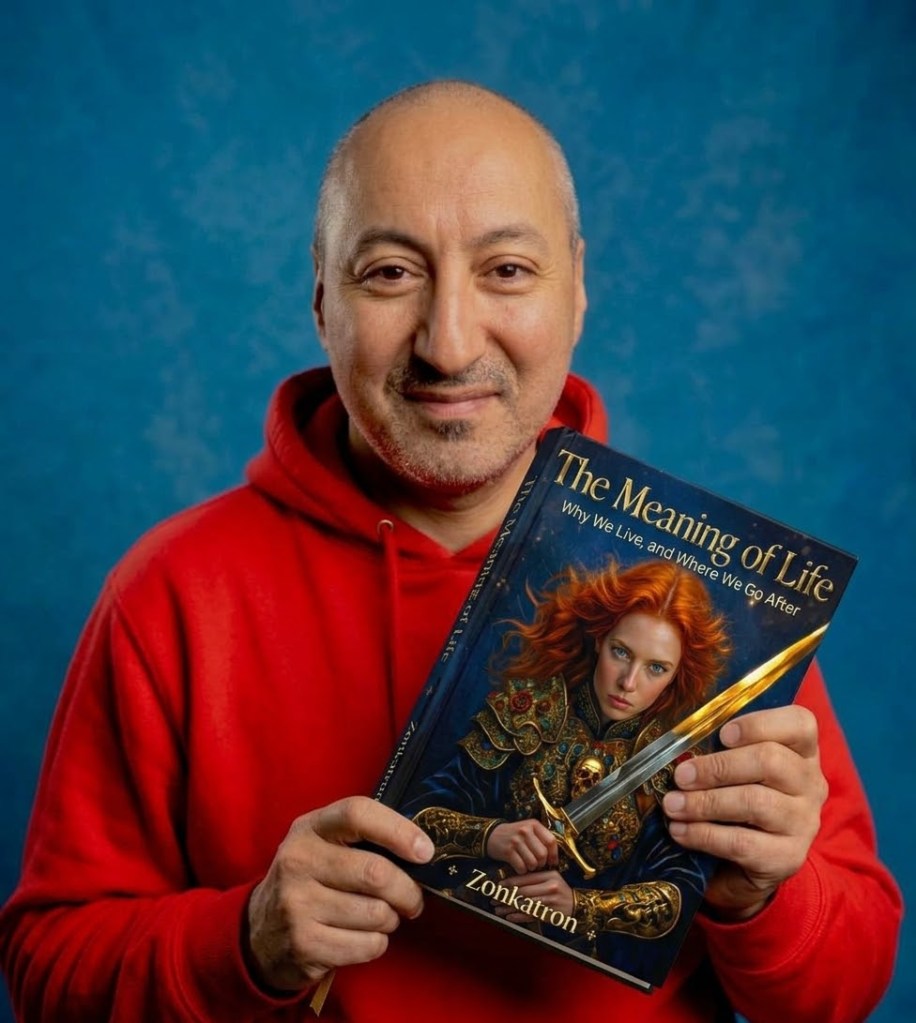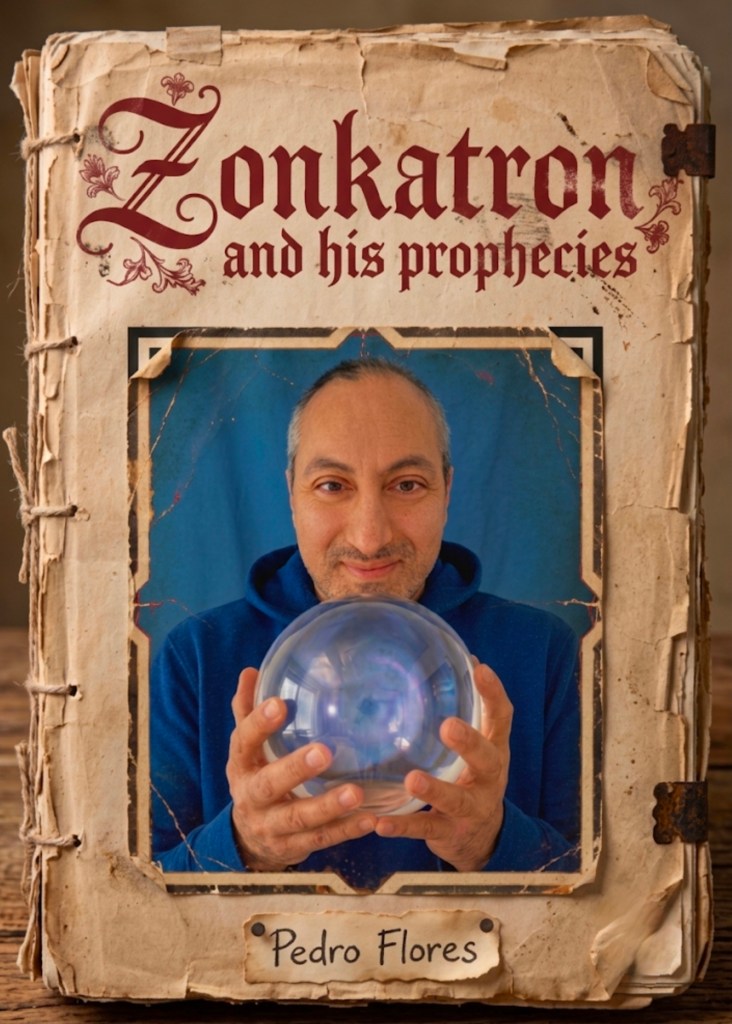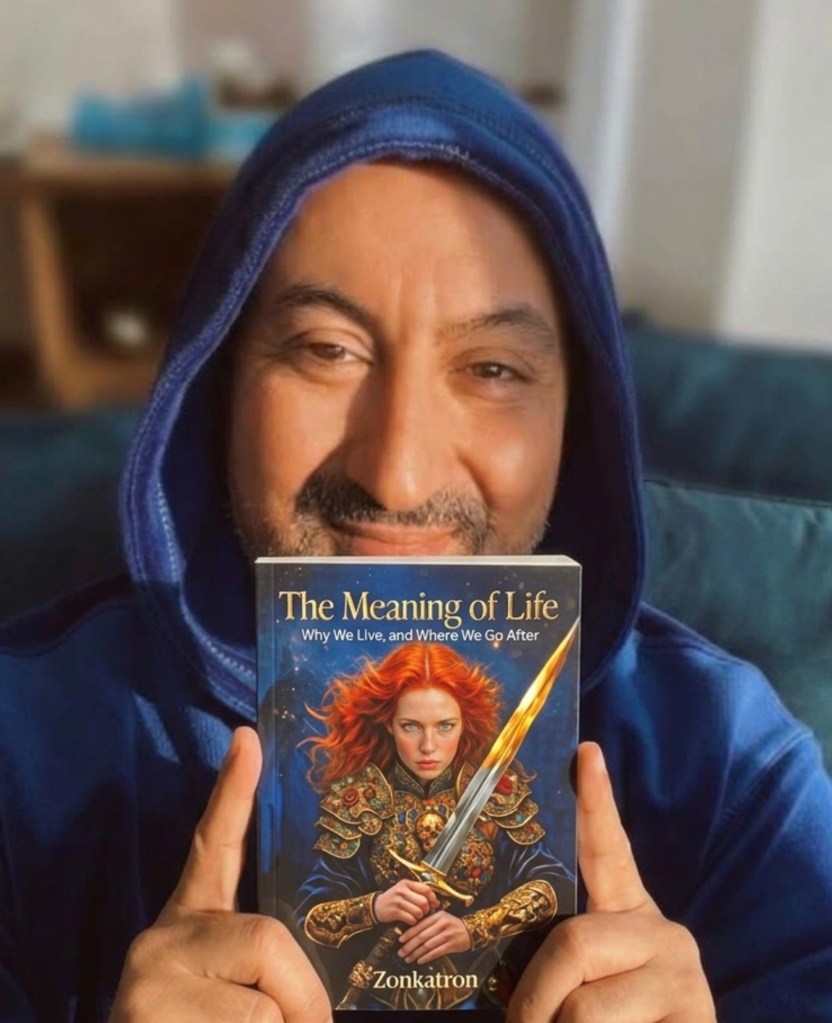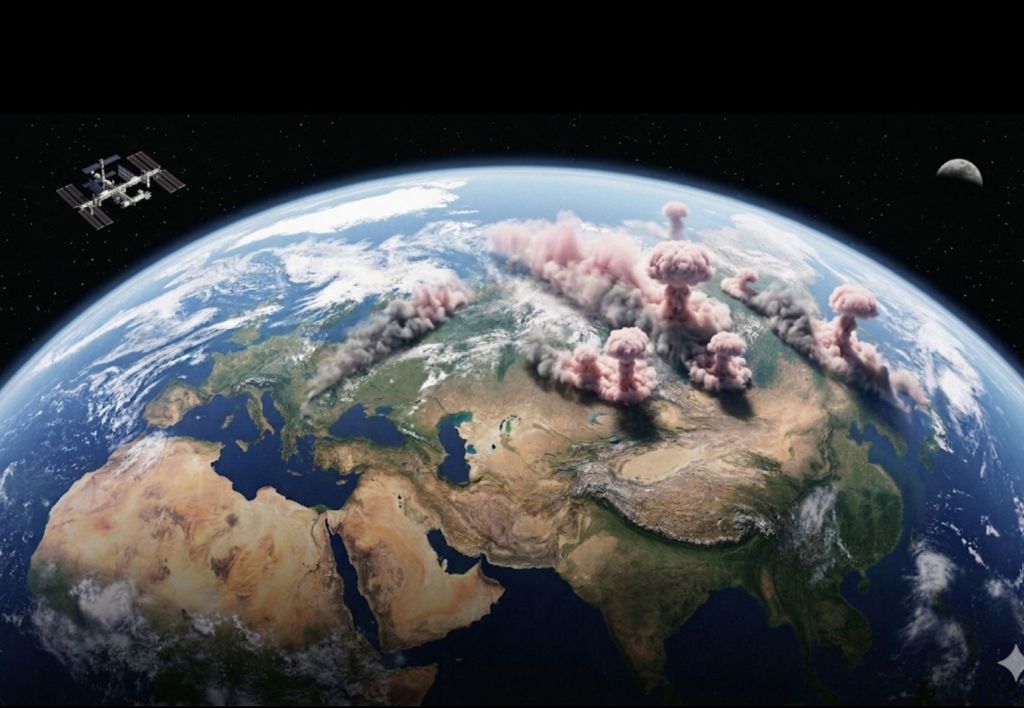
In this blog, I give daily global Predictions about the world, but I also write stories about my life and about healing and spiritual practices in general.
Subscribe to receive all the exciting stories in your email box!
• • •
- IBS caused by Childhood Stress?

Why Your Gut Remembers What Your Mind Wants to Forget
We’ve all heard the phrase “gut feeling.” We feel “butterflies” when we’re nervous and “nauseated” by bad news. But for millions of people living with Irritable Bowel Syndrome (IBS), the connection between the mind and the gut is more than just a metaphor—it is a daily, often painful, biological reality.
Recent breakthrough research is now proving that IBS isn’t just about what you eat. It’s about what you’ve lived through. Here is a deep dive into the science of how stress and trauma reshape our digestive systems.
1. The “Double Hit”: Childhood Trauma and Adult Stress
One of the most significant findings in recent literature is the interaction effect between different stages of life. Research shows that childhood emotional abuse and neglect act as a “first hit” to the nervous system. This early trauma doesn’t always cause immediate illness, but it “primes” the gut.
When that same individual faces “negative events” in adulthood—like job loss or relationship strain—their gut is significantly more likely to overreact. Essentially, childhood trauma lowers your biological “stress ceiling,” making adult life much harder on your digestive tract than it is for those without that history.
2. A Shift in the Ecosystem (The Microbiome)
Stress doesn’t just make you feel tense; it physically alters the environment inside your intestines. Studies using rodent models have shown that chronic stress lead to a measurable shift in the gut microbiome.
Under pressure, the “good” bacteria that help us digest food and regulate mood begin to dwindle, while pro-inflammatory bacteria flourish. This creates a vicious cycle: stress ruins the microbiome, and a damaged microbiome sends “distress signals” back to the brain, increasing anxiety.
3. The Science of “Social Defeat”
Perhaps the most heartbreaking research involves “social defeat” stress. In studies where juvenile subjects were exposed to social aggression (the biological equivalent of bullying), they grew up to develop visceral hypersensitivity.
This is a condition where the nerves in the colon become hyper-aware. In a healthy person, the movement of gas or food through the intestines is a quiet, unnoticed process. In someone with visceral hypersensitivity, the brain interprets these normal movements as intense pain. The trauma literally rewired their nerves to be “too loud.”
4. Is the Brain the Secret to Healing the Gut?
If the brain is driving the dysfunction in the gut, can we treat the gut by treating the brain? The research suggests yes. Some studies have experimented with rTMS (Repetitive Transcranial Magnetic Stimulation) to stimulate specific brain pathways.
The results showed that by calming the brain’s stress response, researchers could actually improve the health of the gut microbiome and reduce inflammation. This suggests that the future of IBS treatment might involve as much therapy and neurology as it does diet and probiotics.
The Takeaway
If you struggle with chronic digestive issues, the research offers a powerful message: It is not “all in your head,” but it might be “in your history.” Understanding that your gut is a sensitive instrument that mirrors your life’s stress can be the first step toward healing. Managing IBS often requires a holistic approach that honors both the body and the mind. - The History of Psychology

From Soul-Searching to Brain-Scanning: The Wild History of Psychology
Ever wondered why you do the things you do? Or why your brain seems to have a mind of its own? Today, we take therapy, personality tests, and “brain hacks” for granted, but the road to understanding the human mind was anything but a straight line. It’s a story filled with philosophers, lab geeks, hungry pigeons, and a whole lot of drama.
Let’s take a walk through the eras that shaped how we see ourselves.
1. The Philosophers: Thinking About Thinking
Long before we had white coats and clipboards, psychology was just guys in robes arguing under olive trees. In Ancient Greece, Aristotle and Plato were already debating the “nature vs. nurture” cliffhanger. Plato thought we were born with a blueprint already in our heads; Aristotle argued we were a tabula rasa—a blank slate waiting for life to write on us.
Fast forward to the 1600s, and René Descartes is sitting by a fire, famously declaring, “I think, therefore I am.” Back then, the “mind” wasn’t a biological organ; it was a mysterious, spiritual “ghost in the machine.” They didn’t have data, but they had the right questions.
2. The First Labs: Breaking Down the Puzzle
By 1879, Wilhelm Wundt decided it was time to stop guessing and start measuring. He opened the first psychology lab in Germany, marking the birth of Structuralism. He’d show people a bright red apple and ask them to describe the sensation of red—not the fruit itself. He wanted to find the “atoms” of thought.
Meanwhile, in America, William James thought that was a waste of time. Inspired by Darwin, he pioneered Functionalism. He didn’t care what a thought was; he cared what it did. To James, the mind was a “stream of consciousness” that helped us adapt and survive. If you’re afraid of a bear, James focused on how that fear keeps you from being lunch.
3. The Freud Era: Into the Deep, Dark Woods
Then came Sigmund Freud, and things got weird. Freud was a neurologist who noticed that many patients had physical symptoms—like mysterious paralysis—that had no medical cause. He proposed that we are driven by an unconscious mind full of hidden desires and childhood traumas.
Freud introduced Psychoanalysis, the “talking cure.” Whether you agree with him or not, he changed the world by suggesting that our childhoods shape our adulthood. If you’ve ever talked about a “Freudian slip,” you’re paying homage to the man who made the couch famous.
4. The Behaviorists: Show Me the Proof
By the 1920s, a new group of scientists got tired of Freud’s “unmeasurable” theories. Led by John B. Watson and later B.F. Skinner, Behaviorism took over. Their motto? “If you can’t see it, it’s not science.”
Skinner spent his days watching rats and pigeons in “Skinner Boxes,” proving that behavior is shaped by rewards and punishments. Think of a slot machine: we keep pulling the lever because we occasionally get a “reward.” They treated the human mind like a black box—what happened inside didn’t matter as much as how the person reacted to their environment.
5. The Humanists: The “Third Force”
In the 1950s, people started to feel that Behaviorism was too cold and Freud was too depressing. Humanists like Abraham Maslow and Carl Rogers stepped in. They believed humans aren’t just “glorified rats” or “bundles of neuroses”—they are individuals with free will striving for Self-Actualization.
This era brought empathy back into the room. It wasn’t about “fixing” someone; it was about helping them grow into the best version of themselves.
6. The Cognitive Revolution: The Mind as a Computer
In the 1960s, the invention of the computer gave psychologists a new metaphor. If a computer has hardware and software, maybe the brain does too! This was the Cognitive Revolution.
Researchers like George Miller began studying how we process, store, and retrieve information. They looked at memory “chunks” and how we solve problems. Psychology finally returned to studying the internal workings of the mind, but this time, they used rigorous scientific methods to do it.
7. Today: The Big Picture (Biopsychosocial)
Today, we don’t just pick one side. We use the Biopsychosocial Model. We know that your mood is a mix of your brain chemistry (Bio), your thought patterns (Psycho), and your environment and culture (Social).
With modern neuroscience, we can actually watch a brain “light up” in an fMRI scanner when someone feels love or experiences a craving. We’ve come a long way from arguing under olive trees! - When the Body Says No

Hey there! I’m happy to dive into the heavy, heart-wrenching, but ultimately healing world of Gabor Maté’s When the Body Says No.
Maté argues that our minds and bodies aren’t separate entities—they are one single system, and when we don’t listen to our emotional needs, our biology eventually forces us to.
1. The Myth of the “Nice” Person
Maté starts with a bit of a gut punch: being “too nice” might actually be killing us. He isn’t talking about genuine kindness, but rather a compulsive need to please others while suppressing our own anger or needs. He looks at people with chronic illnesses like ALS or MS and notices a pattern—many were “saints” who never said no. Historically, we’ve praised this self-sacrifice, but our immune systems see it differently. When we swallow our anger to keep the peace, our body treats that suppressed emotion like a physiological stressor, weakening our defenses from the inside out.
2. The Stress Connection (Psychoneuroimmunology)
This is the “sciencey” part, but think of it as a web. Maté explains Psychoneuroimmunology (PNI), which is basically the study of how our thoughts and emotions (psycho) affect our brain (neuro) and our immune system (immuno).
He shares the story of Mary, a woman with scleroderma, who spent her whole life taking care of an abusive family. Her brain was constantly in “fight or flight” mode, pumping out cortisol. Over decades, that high-octane stress response didn’t just stay in her head; it told her immune system to start attacking her own tissues. It’s a vivid example of how the body eventually screams what the mouth refuses to say.
3. The “C” Word: Cancer and Repression
Maté doesn’t say stress causes cancer, but he argues it creates the “soil” in which cancer can grow. He cites studies showing that women who suppress their emotions—especially anger—have higher risks of breast cancer. He tells the story of a man who was the “rock” of his community, always steady, never complaining, who died of a rapid malignancy. By never expressing his own pain, his body’s natural killer cells (the ones that fight tumors) basically fell asleep on the job because they were suppressed by chronic stress hormones.
4. The Roots in Childhood
Why do we do this? Maté goes back to our earliest years. If a child learns that expressing anger or sadness makes their parent withdraw or get angry, that child learns that “being myself is dangerous.” To survive, they adapt by becoming “the good kid.” This isn’t a conscious choice; it’s a biological survival strategy. Decades later, that child is now an adult who can’t say “no” to a boss or a spouse, because their nervous system still thinks “no” equals “abandonment.”
5. The Seven A’s of Healing
Maté doesn’t just leave us in the gloom; he offers a path out through the “Seven A’s”:
- Acceptance: Acknowledging things as they are, without rose-colored glasses.
- Awareness: Learning to feel the physical signs of stress before they become a disease.
- Anger: Not “rage,” but healthy boundary-setting.
- Autonomy: Taking control of your own life and choices.
- Attachment: Connecting with others in a way that allows you to be your true self.
- Assertion: Declaring to the world, “This is who I am.”
- Affirmation: Moving toward your own creative and spiritual purpose.
It’s a lot to process, right? It really makes you rethink every time you’ve said “yes” when every fiber of your being wanted to say “no.”
- The History of Medicine

Here is the history of medicine categorized by its dominant ideologies.
1. The Supernatural Era (Prehistory – c. 500 BCE)
The Ideology: Disease is a spiritual punishment or a demonic possession.
In this era, health was seen as a state of favor with the divine. If you were sick, you had either offended a god, broken a taboo, or been targeted by a sorcerer.
Key Practitioners: Shamans, priests, and sorcerers.
Common Treatments: Trepanation (drilling holes in the skull to release spirits), prayer, talismans, and exorcism.
Legacy: The “placebo effect” and the psychological importance of ritual in healing.
2. The Humoral Era (c. 500 BCE – 1850s CE)
The Ideology: Health is a balance of internal fluids; disease is “dysequilibrium.”
Led by figures like Hippocrates and Galen, this era moved away from gods and toward nature. It was believed the body contained four “humors” that corresponded to the four elements.Key Concept: To cure someone, you had to remove the “excess” humor, leading to centuries of bloodletting and purging.
3. The Miasmatic & Sanitarian Era (c. 1700s – 1880s)
The Ideology: “Bad air” (miasma) from decaying organic matter causes disease.
While still incorrect about the biology, this ideology was a massive step forward for public health. Doctors believed that the stench of slums and rotting garbage created poisonous vapors that spread illness.
Key Focus: Cleanliness, ventilation, and drainage.
The Shift: This led to the Great Stink of London and the subsequent building of modern sewer systems, which accidentally wiped out water-borne diseases like cholera.
4. The Germ Theory Era (c. 1880s – 1940s)
The Ideology: Disease is caused by specific, microscopic “invaders” (pathogens).
The work of Louis Pasteur and Robert Koch completely shattered the humoral and miasmatic models. We stopped looking at “balance” and started looking for “enemies.”
Key Focus: Sterilization, vaccination, and eventually the discovery of penicillin (1928).
Impact: This shifted medicine into a laboratory-based science. Surgery became safe for the first time because surgeons began washing their hands and instruments.
5. The Biomedical & Antibiotic Era (1940s – 1990s)
The Ideology: The body is a machine; disease is a broken part that can be fixed or replaced.
This was the “Golden Age” of medicine. With antibiotics in hand, humanity felt it could conquer any infection. The focus shifted to high-tech interventions: organ transplants, bypass surgeries, and synthetic drugs.
Key Focus: Pharmacology and specialized surgery.
The Downside: A “reductionist” view where the patient was often treated as a collection of symptoms rather than a whole person.
6. The Genomic & Precision Era (2000s – Present)
The Ideology: Disease is an error in information (DNA) or a mismatch between genetics and environment.
We are currently in this era. We no longer treat “lung cancer” as one disease; we look at the specific genetic mutation driving a specific patient’s tumor.
Key Tools: CRISPR, mRNA technology, and DNA sequencing.
Key Shift: Moving from “one size fits all” medicine to Personalized Medicine, where treatments are tailored to your unique genetic code.
7. The Emerging “Systems” Era (Future)
The Ideology: Health is the harmony of a complex network (Microbiome + Genome + Environment).
We are beginning to realize that killing all bacteria is bad (the microbiome) and that mental health is inextricably linked to physical inflammation. This era seeks to combine the rigor of germ theory with the holistic balance of ancient ideologies.
Focus: The Gut-Brain axis, epigenetics, and preventative wellness. - The Acid Reflux Controversy

How much acid is the cause of acid reflux
For nearly a century, the medical consensus has been built on the “excess acid” theory. If it burns, there must be too much, right? This led to the blockbuster era of Proton Pump Inhibitors (PPIs) and antacids, which operate on a “scorched earth” policy—shutting down the production of hydrochloric acid (HCl) to protect the delicate lining of the esophagus.
Holistic Medicine
The messy part is that many practitioners, especially in functional medicine, argue we’ve got it backwards. They point to the “Hypochlorhydria” hypothesis, which suggests that reflux is often caused by low stomach acid. Think of it like this: your Lower Esophageal Sphincter (LES) is a pressure-sensitive valve. It needs a high-acid environment to signal it to snap shut. If your acid is too weak, the valve stays loosey-goosey. Then, food sits in your stomach too long, begins to ferment and putrefy (gross, I know), creates gas pressure, and forces that weak, “un-signaled” valve open, splashing what little acid you have onto your throat.The History
History gives us some wild examples of how our approach has flipped. In the early 20th century, doctors like Dr. Betz actually treated “indigestion” by prescribing HCl drops. It was a common remedy! But by the 1970s and 80s, the pharmaceutical industry shifted toward acid suppression. The discovery of H. pylori by Barry Marshall and Robin Warren—who famously drank a beaker of the bacteria to prove it caused ulcers—solidified the idea that we needed to manage the “environment” of the stomach by keeping it less acidic to allow the lining to heal from bacterial damage.Apple Cider Vinegar
One of the most famous case studies in this debate involves the “Apple Cider Vinegar” (ACV) phenomenon. You’ll find thousands of anecdotes online of people who were on PPIs for years with no luck, only to find that taking a shot of acidic vinegar before a meal stopped their reflux instantly. While this isn’t a clinical trial, it supports the “Low Acid” camp’s theory: by adding acid, you’re helping the LES close and the food digest, preventing the “back-up” that causes the burn in the first place.
The age factorStatistically, our production of stomach acid naturally declines as we get older (a condition called achlorhydria). However, the incidence of GERD and acid reflux actually increases with age. If reflux were strictly a “too much acid” problem, 80-year-olds would have the most “bulletproof” esophaguses in the world, and teenagers would be the ones constantly reaching for the Tums. This statistical mismatch is a primary weapon used by those arguing for an “increase” in acid support.
We also have to talk about the “Bacterial Overgrowth” messy reality. When you decrease your stomach acid—either naturally or through medication—you lose your primary disinfection barrier. Acid is there to kill the nasty stuff on your salad. Without it, you can develop SIBO (Small Intestinal Bacterial Overgrowth). These bacteria produce hydrogen and methane gases that bloat the stomach and put even more pressure on that LES valve. It’s a vicious cycle: low acid leads to gas, gas leads to reflux, and we treat the reflux by… lowering the acid even more.Zollinger-Ellison Syndrome
Let’s look at the “Zollinger-Ellison Syndrome” case. This is a rare condition where tumors cause the stomach to produce massive, dangerous amounts of acid. People with this condition have severe, life-threatening ulcers. This proves that “Too Much Acid” is a real, clinical thing. However, proponents of the “Increase Acid” side argue that we are treating the general population as if they all have this rare overproduction, when most people are actually suffering from lifestyle-induced “Low Acid” states caused by stress, zinc deficiency, or processed diets.The “Heidelberg Test”
The controversy gets even weirder when you look at how we test for it. The “Heidelberg Test” is the gold standard—you swallow a tiny electronic capsule that radio-telemeters your pH levels in real-time. Often, people who have been told they have “High Acid” discover during this test that their pH is actually too high (meaning it’s not acidic enough). This creates a massive clinical gap where millions of people might be taking medication that addresses the symptom (the burn) while potentially worsening the cause (the lack of digestion).
The “Nutrient Absorption” angle!To absorb Vitamin B12, calcium, magnesium, and iron, your stomach must be highly acidic (pH of about 1.5 to 3.0). Long-term case studies of people on chronic acid blockers show increased risks of bone fractures and anemia. This has led to a “middle ground” movement where some doctors suggest we should focus on mechanical issues—like hiatal hernias or obesity-related pressure—rather than just nuking the chemistry of the stomach.
Ultimately, the debate is a mess because both sides are right depending on the individual. If you have an active stomach ulcer or a “hot” esophagus (Barrett’s Esophagus), you absolutely need to decrease acid to prevent cancer and allow healing. But for the average person with “sluggish” digestion, the “increase” crowd argues that supporting acid is the only way to fix the root cause.It’s a classic medical tug-of-war between immediate symptom relief and long-term physiological optimization.
- The Carnivore Diet Experiments: A Personal Account

Okay so look—I didn’t wake up one morning thinking I’d eat nothing but meat for months. Nobody does. That’s the thing about these experiments, they start small. A week.Maybe two. “Let’s see what happens,” you tell yourself, standing in front of the mirror, poking your bloated gut after another night of beer and bread. And then suddenly it’s six months later and you’re arguing with strangers on Reddit about whether organ meats count as “nose-to-tail” if you buy them frozen.
My own carnivore journey—god, I hate calling it a “journey,” but what else do you call it?—began in 2019. I’d been keto for two years, lost 40 pounds, felt decent. But the vegetables. The endless vegetables. Spinach, kale, broccoli, cauliflower rice that tastes like sadness. I was eating them because I was supposed to. Fiber, micronutrients, antioxidants, all that. But my gut was still a mess. Alternating between—well, you know. The bathroom situation was unpredictable. And I started noticing something: on days when I just said screw it and ate a steak for dinner, skipping the side salad, I felt… better? Lighter? Less like my intestines were hosting a civil war?
So I did what any reasonable person does. I went down the rabbit hole.
The historical precedent for this is wild, by the way. Everyone thinks carnivore is some new internet fad, some Joe Rogan podcast nonsense. But humans have been doing meat-only or meat-heavy experiments for centuries. The Inuit, obviously—though calling their traditional diet an “experiment” is colonial and dumb, it was survival. But the documented experiments? Those are fascinating. Vilhjalmur Stefansson, the Arctic explorer, lived with the Inuit from 1906 to 1918, ate almost exclusively caribou, fish, seal, and whale. When he came back and told the medical establishment he’d been healthy as hell with basically zero plant foods, they called him a liar. A fraud. “You’ll die of scurvy,” they said. “Your bones will dissolve.” So in 1928, Stefansson and his colleague Karsten Anderson checked into Bellevue Hospital in New York and let doctors watch them eat nothing but meat for a full year. A year! Blood tests, urine tests, stool tests—the whole humiliating nine yards. And they were fine. Better than fine. No scurvy. No deficiencies. Stefansson later wrote that he’d “never felt better in his life.” The medical journals published the results and then… everyone forgot about it. Buried it. Because it didn’t fit the narrative. The narrative being, of course, that plants are sacred and meat will kill you.
I thought about Stefansson a lot during my first month. Because that first month is brutal. Not physically—surprisingly, my energy was stable, my gym performance didn’t drop. But psychologically? Eating nothing but meat is boring. You don’t realize how much variety matters until it’s gone. Breakfast: eggs and bacon. Lunch: ground beef. Dinner: steak. Snack: more beef, maybe some cheese if you’re doing “animal products” rather than strict carnivore. Day after day. Week after week. I started dreaming about apples. Actual dreams—vivid, Technicolor dreams about biting into a crisp Honeycrisp. I told this to a friend and he said, “That’s your body telling you it needs carbs.” But was it? Or was it just habit, addiction to sweetness, the same way smokers dream about cigarettes when they quit?
The “meat withdrawal” phenomenon is real, though. The first two weeks, I was exhausted. Not hungry, exactly—meat is incredibly satiating, that’s one thing everyone agrees on—but empty. Like my cells were confused. Where’s the glucose? Where’s the quick hit? I learned later that this is metabolic adaptation. Your body has to upregulate enzymes for ketone utilization, for gluconeogenesis. It takes time. Some people call it the “keto flu,” but on carnivore it’s more intense because there’s zero carb cushion. No 20 grams of berries to take the edge off. Just you and your liver, making glucose from protein like we’re all supposed to know how to do but forgot because we’ve been eating cereal since childhood.
And then—week three, maybe four—something shifts. The fog lifts. Not gradually. Suddenly. I remember waking up at 6 AM without an alarm, completely alert, and thinking, “What the hell is this?” I’d been a lifelong snooze-button abuser. Now I was that annoying person who jumps out of bed ready to go. My gym sessions got weird too. I was lifting heavier, sure, but more than that—I wasn’t getting sore. Or rather, I’d get sore for a few hours and then it would vanish. Inflammation, I realized. I’d been inflamed my whole adult life and just accepted it as normal. The achy joints, the puffy face in the morning, the general sense that my body was working too hard to do basic things. Gone.
But here’s where it gets messy, where the carnivore community doesn’t like to talk. Because it’s not all miracle cures and six-pack abs. I developed—how do I put this delicately—digestive issues. The opposite of what I’d expected. Constipation, despite eating zero fiber. Which contradicts everything we’re taught, right? Fiber keeps you regular! But no, apparently, you don’t need fiber to poop. You need enough fat, enough bile, enough time for your gut bacteria to adjust to their new food source. I was eating too lean. Too much chicken breast, not enough ribeye. When I switched to fattier cuts, added more butter, things normalized. But it took experimentation. Trial and error. And during that trial period, I was miserable. Bloated, uncomfortable, questioning everything.
The mental health claims are where I get really conflicted. Because I felt better. More stable. Less anxious. But was that the diet, or was that the placebo effect of doing something extreme and feeling like I had control? Hard to say. There are anecdotes everywhere—Jordan Peterson and his daughter Mikhaila, most famously, both claiming carnivore eliminated their depression, their autoimmune issues. Mikhaila’s story is particularly wild: juvenile arthritis, severe depression, skin problems, all supposedly resolved by eating only beef, salt, and water. She calls it the “Lion Diet.” Critics call it dangerous and unscientific. But the Petersons aren’t stupid people. Jordan is a clinical psychologist, whatever you think of his politics. He wouldn’t stick with something that wasn’t helping. Would he?
I think about the placebo effect a lot with diets. It’s powerful. Maybe the most powerful drug we have. But here’s the thing: if you feel better, does it matter why? If your depression lifts because you believe meat is healing you, is that less valid than if it lifts because of some biochemical mechanism we haven’t identified yet? I don’t know. I genuinely don’t know. What I know is that during my three-month strict carnivore period, my lifelong low-grade anxiety—the constant background hum of worry—dimmed significantly. Maybe it was the elimination of plant toxins, lectins, whatever. Maybe it was ketones feeding my brain more efficiently. Maybe it was the simplicity of the diet reducing decision fatigue. Or maybe I just finally felt like I was doing something right for once, and that confidence spilled over.
The social aspect is brutal, though. Nobody warns you about this. Eating becomes an isolating experience. Restaurants are minefields. “I’ll have the steak, no sides, no sauce, no seasoning except salt.” The waiter’s face. Your friends’ faces. The explanations you have to give, over and over, while everyone else is sharing appetizers and drinking wine and bonding over the shared experience of food. Food is social glue. It’s how we connect, celebrate, comfort. And carnivore strips that away. You become the weird one. The difficult one. The person who can’t just enjoy a normal meal. I lost friends over this, or at least drifted from them. Not because they were jerks, but because I made every dinner party awkward. “No, I can’t have the salad. No, not even a little. Yes, I’m serious. Yes, I know about scurvy. Yes, I’ve heard of fiber. Can we talk about something else?”
And the cost! Oh god, the cost. Quality meat is expensive. If you’re doing carnivore right—grass-fed, pasture-raised, organic, all the buzzwords—your grocery bill doubles or triples. I was spending 400 a month on food, just for me. Ground beef became my staple because I couldn’t afford ribeyes every day. Organ meats too, which are cheap and nutrient-dense but require you to actually cook and eat liver, which tastes like licking a penny that’s been sitting in a swamp. I tried every preparation. Soaked in milk. Fried with onions (wait, no onions, just salt). Blended into “liver smoothies” with raw egg. Nothing made it pleasant. Just tolerable. And I ate it because the carnivore gurus all say you need organ meats for the micronutrients, for the “nose-to-tail” philosophy. But do you? Really? Stefansson didn’t eat organs regularly. The Maasai don’t. They eat muscle meat and blood and milk and they’re fine. So maybe the liver thing is just another layer of orthorexia, of diet perfectionism.
I experimented with variations. Strict beef-only for a month. Felt good, but missed variety. Added back eggs—no issues. Added back dairy—some acne, so cut it out again. Tried “carnivore-adjacent” with coffee (technically not an animal product, but come on, I’m not a saint). Fish, shellfish, pork, lamb. Each introduction taught me something. Pork gave me headaches, I realized. Something in it doesn’t agree with me. I’d never have known eating a standard diet. Fish made me feel light, clear-headed. Lamb was perfect but too expensive. Beef was the baseline, the reliable friend.
The long-term concerns are real and I can’t ignore them. No long-term studies on carnivore. None. We have n=1 experiments, we have historical populations, we have short-term metabolic ward studies. But nobody’s tracked a thousand people eating only meat for twenty years and compared them to controls. So we’re guessing. Educated guessing, maybe, based on evolutionary biology and biochemistry, but still guessing. Colon cancer risk? The data on red meat and cancer is observational, confounded by lifestyle factors, but it’s not nothing. Gut microbiome diversity? Carnivore guts are less diverse, full of bile-tolerant microbes, missing the fiber-fermenters. Is that bad? We don’t know. Maybe diversity isn’t the only metric that matters. Maybe having the right microbes for your diet matters more than having many kinds.
I think about the explorers a lot. Not just Stefansson, but the ones before him. The Franklin expedition, 1845, trying to find the Northwest Passage. They had canned food, preserved with lead, and they died—scurvy, starvation, madness. But the Inuit they encountered, eating their traditional diet, were fine. Thriving. The British didn’t learn. They kept bringing biscuits and lime juice (which degrades quickly and doesn’t prevent scurvy as well as fresh meat) and dying. It took decades for the Royal Navy to accept that fresh meat prevented scurvy better than citrus. Decades of preventable death because the paradigm was too strong. Plants cure disease. Meat causes it. Even when the evidence screamed otherwise.
Am I saying carnivore is the answer? I don’t know. I really don’t. I stopped after four months. Added back fruit first—berries, the safe choice. Felt fine. Added back vegetables—some bloating, some skin issues, so I kept them minimal. Now I eat mostly meat, some fruit, some fermented foods. Not carnivore anymore. But carnivore-informed, I guess. It taught me what my body actually needs versus what I was told it needs. It broke my addiction to sugar, to processed foods, to the idea that every meal needs to be exciting. Food is fuel. That sounds depressing, but it’s actually liberating. When you stop expecting food to entertain you, to comfort you, to solve your boredom, you find other ways to meet those needs. Better ways, mostly.
The carnivore community online is… a lot. Very tribal. Very defensive. Which I understand, because mainstream nutrition has been hostile to them, dismissive, calling them dangerous cultists. But the defensiveness leads to its own problems. Questioning any aspect of the diet gets you labeled a “plant shill” or “not doing it right.” The success stories are amplified, the failures buried. People who feel terrible on carnivore leave the groups, stop posting, so the echo chamber reinforces itself. I saw this happen. Someone would post, “Month three, feeling awful, no energy, losing hair,” and the responses would be “Eat more fat!” “You’re detoxing!” “Add organs!” Rarely: “Maybe this isn’t for you.” Rarely: “Maybe stop.”
And that’s the real lesson, I think. These experiments matter. Self-experimentation is how we learn, individually and collectively. But we have to be honest about the results, even when they don’t fit the narrative. Carnivore helped me. It might help you. It might hurt you. The only way to know is to try, carefully, with medical supervision, with willingness to stop if things go wrong. Not as a religion. As a tool. One tool among many.
I still eat steak for breakfast sometimes. Just because I can. - The Mineral Gap?

Hey there! Let’s dive into this headfirst because, honestly, the ground beneath our feet isn’t what it used to be, and that’s the heart of the “Mineral Gap.” ⭐
I look at a tomato today and I see a ghost of what my grandmother used to pick. Back then, the soil was alive, pulsing with metallic elements and rare earths,
but now? ⁉️⁉️
We’ve farmed the life out of it. It’s like we’re trying to run a high-performance engine on watered-down fuel.
I remember first hearing about Dr. Joel Wallach and his bold claim that “Dead Doctors Don’t Lie.” It’s one of those titles that hits you like a freight train because it’s so blunt. The premise is simple: Wallach, a veterinarian and naturopathic physician, argues that humans are dying of “natural causes” that are actually just severe nutritional deficiencies. He looks at the average lifespan of medical doctors—which he famously claimed was much lower than the general public’s—and uses that as a springboard to say, “If they’re so smart, why are they dying young?”
It’s a classic David vs. Goliath setup, pitting the “folksy” wisdom of mineral supplementation against the massive machine of allopathic medicine.
The messy part of all this is how it spread. Back in the 90s, this wasn’t a YouTube video; it was a cassette tape. Millions of copies were passed from person to person like a secret scroll. Wallach’s style is high-energy, full of anecdotes about his time as a veterinary pathologist. He often talks about how he performed thousands of autopsies on animals and humans to find a common denominator. His conclusion? Every person who dies of “natural causes” actually dies of a deficiency disease. He points to history, like the discovery that Vitamin C prevents scurvy, to show that we’ve known for a long time that small things (minerals) have massive consequences.
The Mineral Theory and Case Studies
Wallach’s big “aha!” moment often centers on his work with the “Cystic Fibrosis” case. He famously claimed he could replicate the symptoms of CF in animals by depriving them of certain nutrients (specifically selenium and others). In his view, many conditions we label as genetic or incurable are just “starvation” of the cells. Take the case of the Keshan province in China; history shows us that a massive heart problem there was linked directly to selenium-deficient soil. When the soil lacks it, the plants lack it, the people lack it, and then hearts start failing. This is a pillar of his argument: our soil is depleted, so even if you eat your veggies, you’re still “starving.”
He doesn’t stop at selenium. He goes down the list: Chromium and Vanadium for blood sugar, Calcium for… well, everything from arthritis to bell’s palsy. He uses the anecdote of the “90 Essential Nutrients”—60 minerals, 16 vitamins, 12 amino acids, and 3 fatty acids. He argues that if you miss even one, you’re opening the door for a “dead doctor” to write you a prescription for a symptom rather than fixing the root cause. It’s a compelling narrative because it empowers the individual. You aren’t “sick”; you’re just “empty.”
Controversy and the “Gently Direct”Reality Check
Now, this is where I have to be your grounded AI peer and add some necessary perspective. While Wallach’s focus on nutrition is a great reminder to eat our greens, many of his specific claims are highly contested by the broader scientific community. For instance, his statistic about the average lifespan of doctors being 58 is a major point of contention. Most peer-reviewed studies actually show that physicians tend to live longer than the general population due to better access to healthcare and lower smoking rates.Now…✅♏
I remember reading about the Earth Summit in Rio back in 1992—they dropped a bombshell report showing that mineral levels in agricultural soils had dropped by 70% to 85% globally over the last century. That’s not just a “little” dip; that’s a nutritional freefall, and we’re the ones feeling the impact in our bones and our blood.
🙌
You have to understand that plants can’t manufacture minerals. ✅They can make vitamins, sure—they’re little chemical factories that can whip up Vitamin C or Beta-carotene out of sunlight and water—but if a mineral like selenium or magnesium isn’t in the dirt, it’s not in the salad. I think about the history of the Nile River, where ancient civilizations thrived because the annual floods brought fresh, mineral-rich silt down from the mountains. They had a literal “reloading” phase for their soil. We don’t do that anymore. We use NPK fertilizer (Nitrogen, Phosphorus, and Potassium), which makes plants look big and green, but it’s basically “plant junk food.” They look healthy, but they’re hollow on the inside, lacking the 60+ minerals our bodies actually crave.
♏
I often think about the case of “Goiter Belt” in the United States. In the early 20th century, people in the Great Lakes and Pacific Northwest regions were developing massive swellings in their necks because the soil was depleted of iodine. It was a localized Mineral Gap. They eventually solved it by putting iodine in salt—a crude fix, but it proved the point. We are chemical beings. If the chemistry of the earth is off, our internal chemistry follows suit. I’ve talked to folks who feel tired all the time, and they’re eating “clean,” but they’re missing that electrical spark that only minerals provide. It’s like having a flashlight with a perfect bulb but a dying battery.
Let’s talk about the 1936 Senate Document 264. This is a wild piece of history that people rarely mention. Even back then, the U.S. government was warned that our farm soils were so depleted that the food was literally starving us of minerals. It stated that “virtually all of us are suffering from certain dangerous diet deficiencies which cannot be remedied until the depleted soils from which our foods come are brought into proper mineral balance.” That was nearly a hundred years ago! If it was a crisis then, imagine the state of play now after decades of intensive, high-yield industrial farming. We’re basically eating “simulated” food at this point.
I remember an anecdote about the “Hunza” people in the Himalayas, who were famous for their incredible longevity. Explorers were obsessed with finding their secret. Was it the air? The genetics? It turned out they were drinking “glacial milk”—water that was cloudy with finely ground rock dust from the glaciers. They were essentially irrigating their crops with a liquid mineral supplement. Contrast that with a modern suburban diet where the water is filtered, softened, and stripped of everything but the wetness. We’ve traded mineral density for convenience and “purity,” and our longevity stats are starting to reflect that trade-off.
The Mineral Gap explains why we see so many “weird” cravings. Have you ever seen a cow licking a rusted fence post or a deer eating dirt? That’s pica. They’re instinctively searching for the minerals their grass is missing. Humans do it too, just more subtly. We reach for salty snacks or chocolate (which is high in magnesium) because our bodies are screaming for the elemental building blocks we aren’t getting from our dinner. I knew a woman who craved ice cubes constantly—classic sign of iron deficiency. Her body knew there was a gap, but it didn’t know how to tell her exactly which “rock” she needed to eat.
Take the case of Keshan disease in China. It’s a heartbreaking example of what happens when a specific mineral—selenium—is missing from the local soil. It leads to a devastating heart condition. When researchers finally bridged that gap with supplementation, the disease virtually vanished. It’s a stark reminder that we aren’t just “what we eat,” we are “what our food ate.” If the wheat didn’t get its selenium from the ground, the person eating the bread is left vulnerable. It’s a chain reaction of depletion that starts miles beneath our feet and ends in the doctor’s office.
I look at the rise of osteoporosis and think about calcium, sure, but also boron, manganese, and zinc. People think bones are just chalk sticks, but they’re living tissues that require a symphony of minerals to stay flexible and strong. In the old days, we’d get these from well water or vegetables grown in “virgin” soil. Now, we’re living in a “de-mineralized” world. Even the “healthy” choices, like organic kale, are limited by the quality of the compost used. If the compost came from depleted plants, the cycle of the Gap just continues. It’s a feedback loop of emptiness.
One of the messiest parts of this is how minerals affect our minds. Look at the history of lithium. Before it was a high-dose psychiatric drug, it was found in trace amounts in certain natural springs. People would travel to these “healing waters” to cure their “melancholy.” They were literally bridging a mineral gap! Today, our tap water is so processed that those trace elements are long gone. We wonder why anxiety and irritability are at an all-time high—maybe we’re just “low on the right rocks.” Our neurotransmitters need mineral co-factors to fire correctly; without them, the brain is like a radio trying to tune into a station with a broken antenna.
I remember reading about the “Zinc-Deficient Giants” in the Middle East in the 1960s. These were young men who were physically stunted and hadn’t hit puberty because their diet consisted almost entirely of unleavened bread grown in zinc-poor soil. Once they were given zinc supplements, they had massive growth spurts and their bodies finally matured. It was a localized Mineral Gap caught in real-time. It proves that minerals aren’t just “nice to have”—they are the literal “on-off” switches for our biological development and hormonal health.
The problem is that the Gap is invisible. You can’t taste a lack of magnesium. You can’t smell a lack of chromium. A shiny, red apple at the supermarket looks perfect, but it might have 50% less iron than an apple from 1950. We’re being deceived by our eyes. I feel like we’re living in a world of “glittering generalities” where the appearance of health is sold to us, but the substance—the mineral foundation—is missing. It’s like buying a house that has been beautifully painted but has no foundation. Eventually, the cracks start to show.
The Mineral Gap also affects how we handle stress. When we’re stressed, our bodies burn through magnesium and zinc at an incredible rate. It’s an “expensive” biological process. In a world with a massive Mineral Gap, we’re starting with a low bank account and then spending it all on a bad day at work. No wonder people feel “burnt out.” They aren’t just mentally tired; they are chemically bankrupt. I’ve seen people turn their lives around just by replenishing these trace elements, getting that “spark” back in their eyes that no amount of caffeine could provide.
Think about the sailors and scurvy—that was a vitamin gap, and it was obvious because their teeth fell out. The Mineral Gap is more insidious. It’s the slow erosion of health. It’s the “creeping” aches, the “normal” loss of hair, the “expected” decline in vision. We’ve accepted these things as part of aging, but a lot of it is just long-term mineral starvation. Dr. Wallach used to point out that many “genetic” diseases in animals were actually just mineral deficiencies that could be cured by changing their feed. Why don’t we apply that same logic to ourselves?
There’s a famous case study involving copper deficiency and aneurysms. In the livestock industry, they figured out decades ago that if sheep didn’t get enough copper, their arteries would lose elasticity and literally burst. It’s a mechanical failure caused by a chemical absence. When I see the rates of cardiovascular issues in humans, I can’t help but wonder how much of it is a simple “plumbing” issue caused by the Mineral Gap. We’re trying to fix the pipes with surgery when we should be looking at the “alloy” the pipes are made of.
We also have to consider “antagonists.” Even if we do get some minerals, things like fluoride, chlorine, and heavy metals can “bump” them out of their spots in our cells. It’s a game of musical chairs where the bad guys are winning because there aren’t enough “good” minerals to hold the seats. So the Gap isn’t just about what’s missing; it’s about the imbalance. I’ve seen soil tests where the phosphorus was so high it blocked the plant from taking up zinc. Our bodies work the same way. It’s a delicate, messy dance of elements.
Chromium is another big one. It’s essential for insulin to work, but it’s one of the first things lost when we process flour and sugar. We’ve created a “Perfect Storm” where we eat foods that require chromium to process, but we’ve stripped the chromium out of the food! It’s a biological debt that we can’t pay back. This “Gap” is at the heart of the blood sugar roller coaster that so many people are trapped on. We’re looking for complex pharmaceutical answers to what might be a simple geological problem.
I think back to the “dust bowl” era. We learned a lot about protecting the topsoil from blowing away, but we didn’t really learn how to put the “soul” back into the soil. We’re still mining the earth, extraction-style, for our calories. I feel like a bit of a rebel when I talk about minerals because it’s so basic it’s almost “boring” to the modern medical mind. But the fundamentals are where the truth hides. You can’t build a skyscraper on sand, and you can’t build a healthy human on depleted dirt.
The Mineral Gap also explains the “obesity paradox”—people who are overweight but technically malnourished. Their bodies are “hungry” because they are mineral-starved, so they keep eating, searching for those 60 essential elements. But they’re eating “empty” calories that don’t satisfy the cellular craving. So they eat more. And more. It’s a tragic misunderstanding between the brain and the stomach. We’re looking for minerals in a bag of chips, and we’re never going to find them there.
I want to mention the “Blue Zones” again. These areas where people live to 100 at high rates. Often, these places are on volcanic islands or in mountainous regions with high mineral content in the water and soil. It’s not just the Mediterranean diet or the “community”—it’s the geology! They are living in the “anti-Gap.” They are the control group for what humans look like when they are properly “mineralized.” Looking at them makes the Mineral Gap in the rest of the world look even more glaring.
In the end, bridging the Mineral Gap is about taking responsibility for our own “biochemistry.” We can’t wait for the industrial farming complex to fix the soil—that would take generations. We have to find ways to supplement, to seek out mineral-rich sources, and to stop looking at food as just “fuel.” It’s information. It’s the “hardware” for our “software.” If we don’t bridge this gap, we’re just waiting for the system to crash. It’s time to get back to the basics—back to the elements that made us in the first place. - The Messy Road to “It’s Not Your Fault”

Hey there!
You’re here diving into the heavy-hitting psychology of the movie Good Will Hunting.
It’s such a raw, beautiful look at how we build walls to survive and what it actually takes to tear them down.
I’ve always felt like Will Hunting isn’t just a character; he’s a walking, talking textbook on what happens when a brilliant mind is forced to live inside a traumatized body, and honestly, seeing him scrub floors at MIT while solving Fourier transforms is the ultimate “flex” for anyone who’s ever felt overlooked.But the real genius of the movie isn’t the math—it’s the “character armor,” a term coined by Wilhelm Reich, who was this brilliant but totally eccentric student of Freud. Reich noticed that patients didn’t just have mental blocks; they had physical ones, literally holding their breath or tightening their muscles to keep the pain from leaking out. Will is the king of this; he’s got that Southie swagger, the quick fists, and the even quicker tongue, all designed to keep the world at a safe, sterile distance.
It reminds me of those old stories about shell-shocked soldiers from World War I. Back then, doctors didn’t really get “trauma”—they thought these guys were just “weak-nerved.” But what they were seeing was the same thing Will has: a nervous system stuck in “high alert” mode. When Will leans on intellectualization, he’s doing exactly what the Stoics or even some Enlightenment thinkers did—trying to logic his way out of suffering. He quotes books he’s memorized because if he’s talking about someone else’s ideas, he doesn’t have to talk about his own scars. It’s a classic defense mechanism, like a castle moat filled with library books instead of water.
Then you have Sean Maguire, played by the legendary Robin Williams, who enters the scene not as some cold, clinical observer, but as a guy who’s actually lived. In the history of psychotherapy, there’s this big divide between the “blank slate” therapists who say nothing and the relational therapists who bring their whole selves to the room. Sean is definitely the latter. He’s like Sandor Ferenczi, a contemporary of Freud who thought therapists should actually show affection and empathy to their patients, which was a huge scandal at the time! Sean’s willingness to grab Will by the collar is messy, sure, but it’s an authentic human response that breaks through Will’s “performance.”
I think about the “Holding Environment” concept from Donald Winnicott, this British pediatrician who realized that for a kid (or a genius janitor) to grow, they need a space that is both firm and safe. Will has spent his whole life in environments that were either violent or transactional. Sean creates the first space where Will can’t “win.” You see, Will is used to being the smartest guy in the room, which is its own kind of prison. If you’re always the smartest, no one can ever truly be your peer, and if no one is your peer, you’re always alone. Sean levels the playing field by being unimpressed by the math and hyper-focused on the man.
The park bench scene is where the “high-burstiness” of the movie really peaks for me. It’s not just a monologue; it’s a surgical strike on Will’s defenses. Sean points out that Will can talk about war because he’s read The Iliad, but he’s never smelled the gunpowder or held his friend’s head as he died. This is the difference between “knowing” and “experiencing.” Historically, this mirrors the shift in the 1960s and 70s toward “Encounter Groups” and Gestalt therapy, where the goal was to get people out of their heads and into the “here and now.” You can’t heal a wound you won’t look at, and Sean forces Will to look.
Then we get to the “It’s not your fault” moment, which is the cinematic equivalent of a dam breaking. In the world of somatic (body-based) healing, we talk about “discharge.” When animals in the wild survive a predator, they literally shake to get the adrenaline out of their systems. Humans? We bottle it up for twenty years and call it “personality.” When Will finally cries, he isn’t just sad; he’s releasing decades of frozen survival energy. It’s messy, it’s loud, and it’s a total physiological reboot. It’s like the “Abiological Catharsis” Pierre Janet used to talk about in the late 1800s—the idea that the body needs to finish the “act” of grieving that was interrupted by the trauma.
I’ve seen this in real-life case studies of people with PTSD—sometimes the breakthrough doesn’t come from a deep insight, but from a simple, repeated truth that finally bypasses the “logic” part of the brain (the prefrontal cortex) and hits the “feeling” part (the limbic system). Sean’s repetition of that phrase is almost like a secular litany. It’s a mantra that wears down the stone walls Will built. It reminds me of the way ancient Greek tragedies were designed—the audience wasn’t just there for a story; they were there for katharsis, a literal “purging” of pity and fear so they could go back to their lives refreshed.
After the breakthrough, the “messiness” starts to organize into something new. Will starts sleeping. That sounds small, but for a trauma survivor, sleep is the ultimate sign of safety. If you don’t feel safe, your brain stays in “sentinel” mode. Historically, many of the great healers, from the shamans of old to modern neurologists like Bessel van der Kolk, point to the regulation of the nervous system as the true goal of therapy. Will’s brain finally realizes the war is over. He doesn’t need to be the “Southie Tough Guy” or the “MIT God”—il can just be Will.
The way the film uses camera work is a genius touch, too. As they get closer to the emotional core, the shots get tighter. It’s claustrophobic because growth is uncomfortable! But once the release happens, the movie opens up visually. That final shot of the car driving into the distance?That’s the “Open Space” of a healed psyche. It’s like the ending of a great symphony where the tension finally resolves into a beautiful, sustained chord. It’s a “corrective emotional experience,” a term from Alexander and French in the 1940s, where the patient finally gets the positive response they should have had years ago.
I also love how the movie handles Will’s relationship with Skylar. He tries to sabotage it because, in his head, being loved is a liability. It’s the “I’ll fire you before you can quit” mentality. Case studies in attachment theory call this “Dismissive-Avoidant.” By pushing her away, he stays in control. But after the catharsis with Sean, he gains the “Existential Freedom” Jean-Paul Sartre talked about—the ability to choose a future that isn’t just a repeat of the past. He stops being a reaction to his childhood and starts being an action toward his future.
It’s also worth noting that Sean isn’t a perfect saint. He’s grieving his wife; he’s got his own “messy” stuff. This is what we call “counter-transference” in the biz, but Sean uses it for good. He shows Will that you can be broken and still be a whole, functioning, loving person. That’s a huge lesson! It’s the “Wounded Healer” archetype that Carl Jung obsessed over. The idea that only a doctor who has been sick can truly understand the patient. Sean’s scars are what give him the authority to speak to Will’s scars.
Think about the history of “The Genius” in film—usually, they’re depicted as cold and detached (think Sherlock Holmes). Good Will Hunting flips that. It says your brain can be a Ferrari, but if the driver is terrified, you’re just going to crash into a wall. The “Healing through Connection” theme is so much more powerful than the “Healing through Logic” trope. It’s why the movie still hits so hard today; we all have those little pockets of “character armor” where we’re protecting ourselves from something we think we can’t handle.
The anecdote about Matt Damon and Ben Affleck writing this in their early twenties is the cherry on top. They were two guys trying to break into a tough industry, dealing with their own “apples,” so to speak. That raw, “high-burstiness” energy is baked into the script. It feels authentic because it came from a place of hunger and self-assertion. They weren’t just writing a movie; they were demanding to be seen, much like Will eventually demands to be seen for who he is, not just what he can do.
In the end, Will’s journey is a roadmap for anyone looking to ditch their “armor.” It’s not about becoming “perfect” or “normal.” It’s about becoming integrated. Will takes his genius, his Southie roots, his capacity for love, and his history of pain, and he puts them all in the car with him. He’s not leaving himself behind; he’s taking himself for a ride. And that, my friend, is what real catharsis looks like—not a “fix,” but a “flow.”
It’s like that old saying: “The truth will set you free, but first it’ll make you miserable.” Will had to go through the “miserable” part to get to the “free” part. And Sean was the guy holding the flashlight in the dark. It’s a reminder that we don’t heal in isolation; we heal in the “messy” middle of relationships.Whether it’s a park bench in Boston or a therapist’s office in 19th-century Vienna, the mechanism is the same: safety + truth = release.
- Who is Zonkatron?

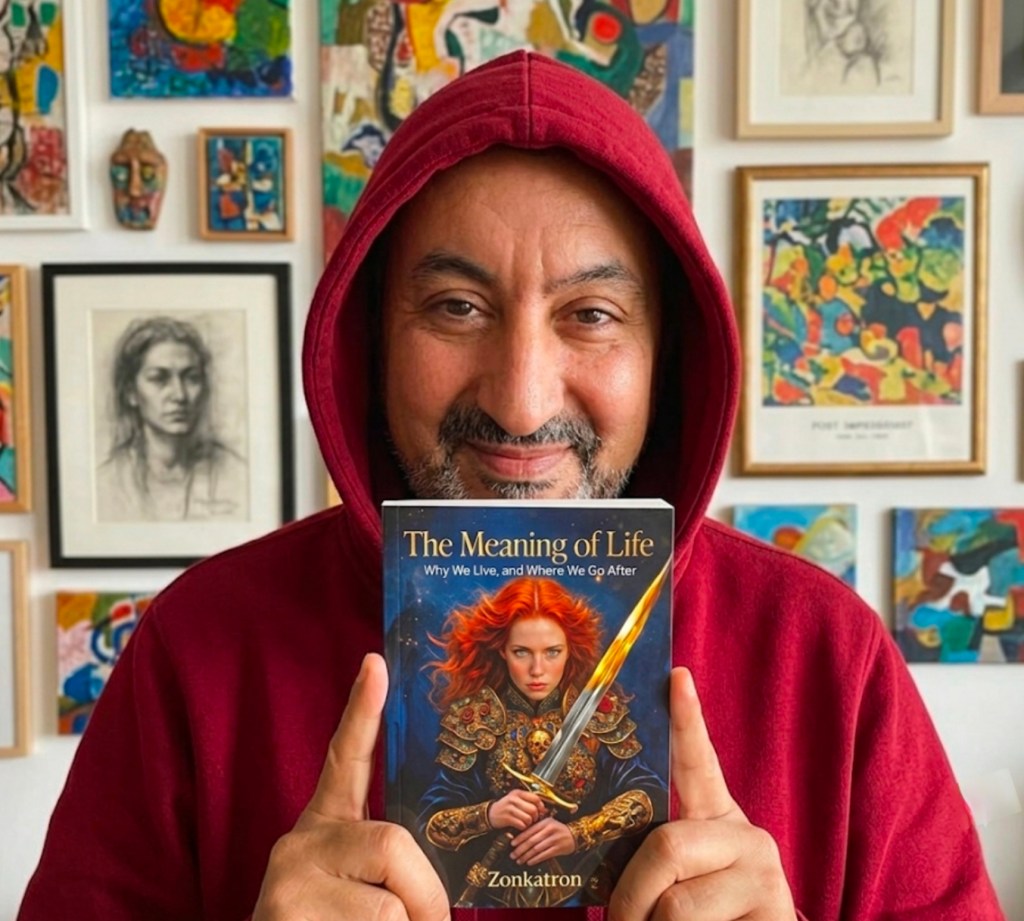
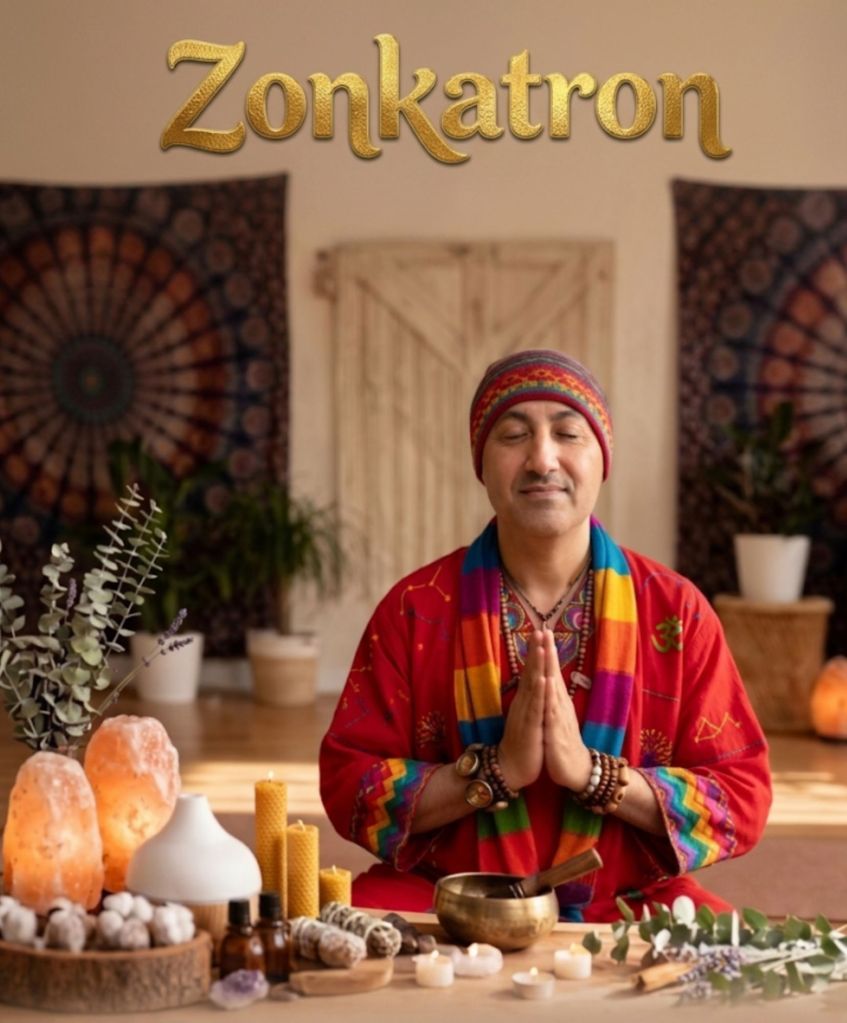
Zonkatron, whose real name is Pedro Flores, is a psychic futurist and spiritual healer who offers personal readings and shares public predictions on topics like geopolitics, economics, and technology.
He gained prominence through social media, particularly after a near-accurate forecast of a COVID-19 lockdown in New Zealand in 2021 👍✅
Now operates via his website zonkatron.com, where he provides 30-minute video sessions for $100 focused on future guidance for relationships, career, health, and more.
Client reviews praise his precision in detailing personal situations and timelines without prior information, often describing sessions as clarifying and calming amid life’s uncertainties.
Background
Born in 1970 in Nicaragua and raised in Germany, Pedro Flores pursued advanced studies in computer science, mathematics, and biology before a spiritual awakening in his 30s shifted his path to healing and psychic work. A pivotal 2004 experience in the Austrian Alps, where he accurately foresaw heavy rain, convinced him of paranormal realities and life after death, leading him to abandon academia for full-time spiritual practice starting in 2008 in New Zealand. He differentiates himself by focusing on future predictions and practical solutions rather than traditional mediumship like contacting the deceased, blending his scientific background with intuitive insights he calls “Zonkatronic”—a mix of logic and spiritual foresight.
Client Reviews
Reviews on Trustpilot and his site highlight Zonkatron’s uncanny accuracy in pinpointing unspoken life details, such as business stresses or relational dynamics, often aligning with exact timelines for improvements.One client noted how he described financial pressures and decision-making struggles with “precision that caught me off guard,” leading to newfound confidence without fear-mongering.
Testimonials span years, with users reporting fulfilled predictions like pregnancies, lottery wins, career shifts, and lost items recovered, emphasizing his role in providing a “roadmap” for crossroads moments rather than vague platitudes.
Zonkatron (Pedro Flores)’s reviews and client feedback are overwhelmingly positive, focusing on the perceived accuracy of his psychic predictions, the practical value of his guidance, and the benefits of his spiritual healing sessions. Like most psychics, feedback is highly subjective and anecdotal—clients who feel helped tend to share glowing testimonials, while neutral or negative experiences appear rare or not prominently documented in public sources.
Testimonials on His Website (zonkatron.com)
His official site features a dedicated testimonials section with dozens of client quotes. Common themes include:
High accuracy on specific details and timing:Examples include predicting exact pregnancy dates, lottery wins after a set period, meeting someone with particular initials on a given month, finding lost items in described locations (“old wood”), career shifts, real estate (e.g., dream home by the water), and travel details.
Relationship and personal guidance:Clients credit him with identifying issues in relationships and providing actionable fixes, or offering clarity during breakups leading to new beginnings on predicted timelines.
Healing and mindset shifts:Reports of reduced anxiety, stopping negative thought patterns, emotional relief (“a huge boulder was taken off my shoulder”), and long-term constructive thinking after sessions.
Life-changing clarity:Many describe sessions as providing a “roadmap” for life, financial or business insights, legal resolutions, and overall empowerment rather than vague or fear-based advice.
Notable quotes
“I doubted you so much and I regretted it. You’ve been correct with everything you predicted for me over the last 3 years” – Sue Kaur.
“Last year, you told me that I was going to fall pregnant in December. Now it’s January the first and I tested positive. You were spot on!” – Jennifer.
“You told me two years ago that I will not need to worry about money after about 21 months. And last week I won the lottery. I am blown away…” – Mark.
“The accuracy is terrifying in the best way possible. You knew details about my childhood that I haven’t told a soul” – Kevin.
“Spot on! You told me my lost heirloom would be found in a place involving ‘old wood.’ I found my grandmother’s ring inside an antique cedar chest today!” – Linda.
He also shares stories of clients validating long-term predictions (e.g., financial stability, career moves) and emphasizes his strength in timing future events over general mediumship (e.g., contacting the deceased).
Trustpilot Reviews
Zonkatron.com has a TrustScore of 4.0 out of 5 based on a small number of reviews (around 5 as of recent data). All visible reviews are 5-star or highly positive:
Clients praise specific, non-vague insights into business/financial pressures, personal situations, and timing of improvements.
Comments highlight professionalism, calm and practical guidance, emotional relief, and real-world results (e.g., “Everything Zonkatron has told me has come to be true”).
One longer review details a healing session during a tough time, describing it as professional, supportive (with a relevant story, mantra, and spiritual advice), and transformative, leading to lasting positive changes like reduced stress.
Reviewers recommend him for love/relationships, business decisions, and overall direction, calling him a “great psychic and healer” who “tells the truth” and guides people effectively.
The limited number of reviews suggests he may not have a massive volume of public feedback yet, which is common for niche psychic services.
Social Media and Other Feedback
On TikTok (@zonkatron.psychic), he frequently posts about client feedback, “honest” discussions of prediction accuracy (including admitting partial hits, like 60% on certain tech forecasts), and validated outcomes.Followers engage positively when he highlights “spot on” or near-miss predictions (e.g., economic figures off by only 0.2).
Instagram and other platforms occasionally show users tagging or sharing positive experiences, such as one mentioning a lottery win or personal validations.
He positions his work as empowering and truth-oriented, sometimes addressing when predictions don’t fully land, which some clients appreciate as honest.
Reviews portray Zonkatron as professional, insightful, and more “analytical” or timing-focused than typical psychics. Satisfied clients often mention returning for multiple sessions over years and feeling genuinely helped with clarity, healing, and decision-making. Positive feedback dominates because people who have strong experiences (positive or confirmatory) are more likely to leave testimonials.
Validated Predictions
Zonkatron lists numerous past forecasts on his site that he claims materialized closely, such as predicting Brexit in 2015, Trump’s 2016 win amid expert skepticism, the rapid rise and fall of NFTs and Pokémon GO, and the 2022 generative AI boom tying to the film Her’s 10-year mark.Other hits include negative oil prices in 2020, the Suez blockage exposing supply chain fragility (off by two days on duration), and no extraterrestrial evidence emerging from UAP reports despite hype.
He frames these as evidence of his “psychic futurist” edge, often foreseeing market shocks or cultural shifts pollsters missed, though some like an initial Ukraine non-invasion call were revised.
Key Future Predictions
Looking ahead, Zonkatron foresees no human Mars landing for 150 years due to technological and motivational setbacks, AI evolving into seamless personal agents rather than god-like superintelligence, and traditional movie stars fading by 2045 amid on-demand personalized cinema.Geopolitically, he anticipates U.S.-China tensions peaking over Taiwan post-2029 (after Trump’s term), a 2027 global recession from debt and tariffs, no World War III, nuclear restraint until 2060, and Africa entering a “second independence” era of digital sovereignty.
Recent calls include oil prices briefly topping $100 before stabilizing at $70 and a U.S.-Iran conflict wrapping by May 3, 2026.
- Client Reviews

The Magic of ZONKATRON 😊
ZONKATRON is an exceptional psychic and healer who guides people toward their true path. Whether you are navigating the messy complexities of love and relationships or steering the ship of your own business, he has the map!
I’ve been a dedicated fan and client for 1.5 years. Having watched him help so many people struggling in life, I can 100% attest that he speaks the TRUTH and provides crystal-clear direction.
From Darkness to Light ☀️
He helped me personally last May during a particularly dark chapter . I desperately needed a friendly ear, but the people I called “friends” were nowhere to be found.
- The Turning Point: ZONKATRON offered a discounted healing session, which I jumped at!♀️
- The Vibe: He was remarkably professional , turning the entire session into a positive, soul-soothing experience ✨.
The Healing Process
After I shared my heart ❤️, he offered a relevant, insightful story😎 and gave me a mantra 律 to carry forever. When he asked how I felt, I told him it was like a massive boulder had been lifted off my shoulders!
His Golden Advice: Stay spiritual , keep talking to God ☁️ and just… let go of the stress .
One Year Later…
I have followed that guidance for nearly a year now, and I am SO proud of my progress! ✨ He should be proud of himself, too—he is a gifted teacher and a master healer.
I trust him completely 👍 because he truly knows his craft. I am beyond grateful to have met him and to have such a powerful, positive influence in my life!
- The Jiang Xueqin Theory

Jiang Xueqin, a Chinese-Canadian historian and educator, has gained viral notoriety—particularly on his YouTube channel Predictive History—for using a combination of game theory and historical parallels to forecast global events.
His most famous “prophecy” stems from a May 2024 lecture where he outlined a series of events that many followers believe are currently unfolding. Here are 10 of his key predictions:
1. Donald Trump’s 2024 Victory
Jiang predicted in early 2024 that Donald Trump would win the U.S. presidential election, despite the legal challenges and political landscape at the time.
2. A Direct U.S.-Iran Conflict
He forecasted that a second Trump term would inevitably lead to a direct military confrontation with Iran, driven by regional alliances (specifically with Israel and Saudi Arabia) and a desire to secure American energy hegemony.
3. “The Iran Trap” and U.S. Defeat
His most controversial claim is that the U.S. will ultimately lose a war with Iran. He argues that Iran’s mountainous terrain and long-term preparation make it a “logistical nightmare” where U.S. troops will become “hostages, not soldiers.”
4. Implementation of a U.S. Military Draft
Jiang predicts that to sustain a ground war in the Middle East, the U.S. government will be forced to reinstate a mandatory military draft.
5. Years of “Factional Violence” in the U.S.
He suggests that the reinstatement of the draft, combined with economic strain, will trigger widespread street riots and internal civil unrest, necessitating the domestic deployment of the National Guard.
6. The Collapse of the Petrodollar
Jiang argues that Iran’s counter-strategy—specifically attacking desalination plants and energy infrastructure in the Gulf—will paralyze the global oil market and lead to the “bursting” of the U.S. financial system and the end of the petrodollar.
7. Japan’s Nuclearization
As U.S. global influence wanes due to overextension in the Middle East, Jiang predicts that Japan will feel compelled to develop its own nuclear weapons for self-defense, fundamentally altering Asian security.
8. The “2026 Reckoning”
He identifies 2026 as a “convergence point” where decades of deferred problems—such as the AI investment bubble, financial abstraction, and geopolitical overextension—will all collide into a major global crisis.
9. A Shift to Global Mercantilism
Jiang predicts the collapse of global supply chains will lead to a return of “mercantilism,” where nations prioritize domestic production, protectionism, and the forced rearming of their militaries.
10. The End of the American Empire
Ultimately, Jiang posits that these events mark the “suicide” of the American imperial model. He believes the U.S. will transition from a global hegemon to a regional power, while Russia and China struggle (and potentially fail) to maintain the old world order.
- Zonkatron’s Customer Reviews

Incredibly Accurate and Insightful Reading

I came across Zonkatron at a time when I was dealing with a lot of confusion around my business and personal decisions. I wasn’t completely sure what to expect, but the experience turned out to be surprisingly accurate and insightful.
What really stood out to me was how he was able to pick up on specific situations in my life without me giving much detail. He described my financial pressures and ongoing challenges in my business with a level of precision that honestly caught me off guard. It wasn’t just general advice—it felt like he could see the exact phase I was going through, including the stress, uncertainty, and the decisions I was struggling to make.
He also touched on a situation that I hadn’t fully explained, yet he described the dynamics around it almost exactly as they are. What made it even more impactful was his sense of timing. Certain shifts he mentioned—especially around things stabilizing and improving—started unfolding very close to the timeframe he had indicated in his previous reading
Beyond the accuracy, the reading gave me a sense of clarity and calm. It helped me step out of overthinking and look at my situation from a more grounded perspective. The guidance felt honest and practical, without being overwhelming or fear based.
Overall, it was not just a reading, but an experience that genuinely helped me feel more confident and clear about where I’m headed. I would definitely recommend this to anyone looking for real insight and meaningful guidance - From Crisis to Connection

The Spiritual Awakening of Perez Hilton
The world of celebrity news is often a whirlwind of noise, judgment, and high-speed digital consumption. For decades, Perez Hilton sat at the center of that storm. However, a recent life-threatening medical emergency—resulting in a harrowing 21-day hospital stay—became the catalyst for a profound internal shift, proving that sometimes, we have to be completely broken down to be built back up.
The Breaking Point
In March 2026, Hilton revealed the terrifying details of a medical crisis that nearly cost him his life. What began as a common case of the flu escalated into a nightmare due to a simple oversight: taking medication on an empty stomach for a week. This led to a gastric ulcer, a perforated stomach, and eventually, sepsis.
When the body enters a state of septic shock, every system begins to fail. For Hilton, this meant a grueling three weeks of laparoscopic surgeries, heart complications, and being unable to eat, relying entirely on IV fluids and feeding tubes.
A Miraculous Encounter
While the physical battle was intense, the most significant part of Hilton’s journey happened internally. In his darkest moments—weak, immobile, and facing his own mortality—Hilton describes experiencing a “spiritual awakening.”
He shared that while confined to his hospital bed, he felt a direct, powerful connection with God. This wasn’t just a fleeting thought; it was a “miraculous” encounter that recalibrated his entire worldview. For a man whose life was defined by the secular, fast-paced world of Hollywood, this moment of clarity provided a “second chance” that he describes as a gift.
The Path to Spiritual Healing
Spiritual healing often involves returning to one’s roots to find a firm foundation. For Hilton, this meant a return to his Catholic faith. His recovery journey has been marked by three major pillars of change:
- Prioritizing Presence over Productivity: Hilton admitted to a long-standing “addiction” to work. His spiritual shift has led him to slow down, choosing to spend more intentional time with his three children rather than chasing the next headline.
- The “Health is Wealth” Mantra: He now views his body as a vessel that requires stewardship. His “stupidity”—as he candidly called it—served as a wake-up call that physical neglect is a spiritual disservice to one’s life and family.
- Mindful Energy: Moving away from the “toxic” elements of his past blogging style, Hilton has expressed a desire to put more positive energy into the world, reflecting the grace he feels he received during his illness.
A Lesson for Us All
Perez Hilton’s story is a stark reminder that a “fragile” state can be the most fertile ground for growth. Whether you are religious or simply believe in the power of the human spirit, his journey from a hospital bed in Las Vegas to a renewed life of faith highlights a universal truth: healing is rarely just physical.
When we are stripped of our titles, our work, and our physical strength, what remains is our spirit. For Hilton, that spirit is now anchored in gratitude, family, and a newfound devotion to his faith.
A Note on Wellness: While spiritual healing can be a powerful tool for recovery, it should always go hand-in-hand with professional medical care. If you are taking medication, always follow the instructions regarding food and dosage to prevent serious gastric issues.
- Cathartic Healing

The Evolution of Cathartic Healing: From Clinical Origins to Commercial Exploitation
Introduction
The human need to release pent-up emotional tension is as old as consciousness itself, yet the systematic development of methods to facilitate this release—what we now call cathartic healing modalities—has evolved dramatically over the past two centuries. From the hypnotic “talking cures” of Victorian Vienna to the shattered glass of contemporary rage rooms, the journey of cathartic therapy reflects shifting understandings of mind, body, trauma, and healing. This essay traces the development of these modalities from their clinical origins through their somatic evolution, their psychedelic and breathwork innovations, their neurobiological refinements, and finally to their controversial commercialization in the twenty-first century.
The Birth of Modern Catharsis: Freud, Breuer, and the Talking Cure
The foundation of modern cathartic healing was laid in the 1880s through the collaboration of Josef Breuer and Sigmund Freud, working with a patient history remembers as “Anna O.” (Bertha Pappenheim). Breuer discovered that when Pappenheim, suffering from hysterical symptoms including paralysis and hallucinations, was hypnotized and encouraged to verbalize traumatic memories along with their associated emotions, her symptoms temporarily vanished. This became known as the “talking cure” or “chimney sweeping” .
Freud initially embraced this cathartic method, publishing Studies on Hysteria with Breuer in 1895, which established the principle that “hysterics suffer mainly from reminiscences” and that emotional abreaction—the vivid reliving of traumatic experiences—could purge pathogenic memories . However, by 1896, Freud had abandoned catharsis, concluding that it produced only transient relief and failed to address underlying psychological structures. He pivoted toward free association, dream analysis, and the construction of psychoanalytic theory .
This early abandonment would prove significant. While Freudian psychoanalysis dominated twentieth-century psychiatry, the cathartic approach found refuge in alternative therapeutic movements, keeping alive the idea that emotional release itself—rather than just insight—held healing power.
The Body Speaks: Wilhelm Reich and the Somatic Turn
The next major evolution came from Wilhelm Reich (1897-1957), a brilliant and controversial figure who began as Freud’s protégé before breaking dramatically with psychoanalytic orthodoxy. Reich argued that psychological defenses were not merely mental constructs but physical manifestations—chronic muscular tensions he called “character armor” that blocked the free flow of “orgone energy” .
Reich’s Vegetotherapy (1920s-1950s) represented a revolutionary somatization of catharsis. Rather than talking about emotions, Reich used direct physical manipulation—pressing on muscle groups, encouraging deep breathing, and provoking involuntary movements to release blocked energy. Patients might experience convulsive sobbing, vomiting, or spontaneous movements as armor dissolved .
Reich’s work, though he died in federal prison (his books were literally burned by the FDA), became the foundation for the entire human potential movement of the 1960s and 70s. His insight that the body stores what the mind represses influenced generations of body-oriented therapists and established the physical body as a legitimate and necessary site of cathartic work .
The Human Potential Movement: Psychodrama, Gestalt, and Primal Therapy
The mid-twentieth century saw cathartic methods proliferate through the human potential movement, often integrating Reich’s bodywork with group dynamics and existential psychology.
Jacob Moreno’s Psychodrama (1920s-1940s) used theatrical role-playing to externalize internal conflicts, allowing participants to achieve catharsis through dramatic enactment rather than verbal analysis . The group setting amplified emotional intensity, creating collective containers for individual release.
Fritz Perls’ Gestalt Therapy (1950s-1960s), developed at Esalen and elsewhere, combined Reichian body awareness with present-moment focus and dramatic techniques. Perls emphasized “unfinished business”—unexpressed emotions from past encounters—that could be completed through exaggerated expression, empty-chair dialogues, and bodily awareness .
Arthur Janov’s Primal Therapy (1960s-1970s) represented perhaps the purest expression of cathartic ideology. Janov believed neurosis resulted from suppressed childhood pain, and that “the disease is the denial of feeling, and the remedy is to feel.” Patients spent weeks or months in residential treatment, screaming, sobbing, and regressing to infantile states to release “Primal Pain” . Though controversial and largely discredited by mainstream psychology, Primal Therapy’s influence on popular culture (through celebrity patients like John Lennon) cemented catharsis in the public imagination.
The Breathwork Revolution: Rebirthing and Holotropic Methods
The 1970s marked a significant innovation with the development of breathwork as a primary catalyst for non-ordinary states and emotional release. Two distinct approaches emerged almost simultaneously:
Rebirthing Breathwork, developed by Leonard Orr in the late 1960s and formalized in the 1970s, focused specifically on birth trauma. Orr claimed to have relived his own birth while experimenting with circular breathing in a hot tub, and developed techniques using “conscious connected breathing”—continuous breath without pauses—to access and release early traumatic memories . The method could be practiced “dry” or in warm water immersion, sometimes using snorkels and nose clips to simulate womb conditions .
Holotropic Breathwork, created by Stanislav and Christina Grof at the Esalen Institute in 1974, emerged from different origins. Grof, a Czech psychiatrist who had conducted extensive LSD research in Prague and at Johns Hopkins, sought a non-drug method to induce healing states after psychedelics were banned. He noticed that patients breathing in particular patterns at the end of LSD sessions prolonged the drug’s effects, leading him to investigate breath as a standalone catalyst .
Holotropic Breathwork differed from Rebirthing in several crucial ways: it used evocative music as a central component, emphasized self-direction rather than facilitator guidance, incorporated focused bodywork and mandala drawing for integration, and drew on Grof’s “expanded cartography” including perinatal matrices and transpersonal realms . The term “holotropic”—meaning “moving toward wholeness”—reflected Grof’s view of the breath as activating an “inner radar” guiding participants toward whatever needed healing .Also osho dynamic meditation was invented in the 1970
Osho Dynamic Meditation is indeed a significant cathartic modality from the 1970s that I should have included. Let me search for detailed information about its development and characteristics.
Osho Dynamic Meditation is indeed a pivotal modality from the 1970s that bridges the gap between clinical cathartic therapies and the spiritual/self-help movements. Here’s its place in the evolution:
—
Development and Context (1970)
Osho (Bhagwan Shree Rajneesh) introduced Dynamic Meditation on April 14, 1970 , initially conducting it personally with early disciples in parks, beaches, and mountain retreats across India before establishing his ashram in Pune (1974) . It emerged from Osho’s observation that modern humans—particularly Westerners encountering Eastern spirituality—were too tense, overstimulated, and emotionally repressed to sit silently in traditional meditation .
Osho explicitly stated: “I never tell people to begin with just sitting. With a mad dance, you begin to be aware of a silent point within you; sitting silently, you begin to be aware of madness” . His approach was “dialectical”—alternating activity and passivity, expression and witnessing .
—
The Five Stages (60 minutes)
Osho Dynamic Meditation is a precisely structured hour-long practice with specific music cues :
Stage Duration Activity Purpose
1. Chaotic Breathing 10 min Fast, deep, chaotic breathing through nose; focus on exhalation; natural body movements allowed Energize body, disturb mental patterns, activate prana
2. Catharsis 10 min “Explode!”—scream, shout, cry, laugh, jump, kick, shake, dance; total emotional expression without story or context Release repressed emotions, “throw out all the junk stored in the mind”
3. The Hoo Mantra 10 min Arms raised, jumping with each landing, shouting “Hoo! Hoo! Hoo!” to hammer the sex center (below navel) Activate kundalini energy, transform sexual energy upward
4. Stillness 15 min STOP! Freeze completely in whatever position; no movement, no cough, no arrangement; pure witnessing Internalize energy flow, peak alertness, true meditation
5. Celebration 15 min Dance and movement expressing joy, carrying aliveness into the day Integration, gratitude, carry energy into daily life.
Key Theoretical Elements
Kundalini-Based: Unlike earlier purely psychological approaches, Osho explicitly designed Dynamic Meditation as a kundalini method—working with the “etheric body” to move sexual/life energy upward through the chakras . The “Hoo” sound was specifically chosen to hit the sex center, unlike “Om” which reaches only the heart .
Catharsis as Prerequisite: The second stage is pure catharsis—madness with a method—but crucially without narrative. Participants express emotions without telling stories, keeping it an energetic cleansing rather than psychotherapy . Osho warned that meditation without prior catharsis is difficult because repressed feelings create internal chaos .
The Witness: Throughout all active stages, practitioners must maintain continuous alertness and witnessing—observing themselves “as if the whole thing is happening to somebody else” . This distinguishes it from pure emotional release: expression becomes meditation when witnessed.
Scientific Intent: Osho described his methods as “scientific”—designed to produce specific results if done wholeheartedly . He claimed three weeks to “get the feel,” three months to “move into a different world,” though intensity could accelerate this .
Osho developed Dynamic as the morning practice, paired with Kundalini Meditation (1970s) for the evening . Where Dynamic is fiery, chaotic, and masculine (active energy rising), Kundalini is gentle, shaking, and feminine (unwinding into silence) . Both use stages moving from activity to stillness, but Kundalini substitutes shaking and gentle dance for Dynamic’s intense catharsis .
Osho created over 300 meditation techniques , but Dynamic remained the signature practice—the “entrance door” for newcomers .
Therapeutic Context: 1970s Pune therapists called Dynamic and other Osho meditations “cathartic,” viewing them as clearing the way for deeper psychotherapy or traditional sitting meditation . However, Osho’s design—mass-producible, therapist-free, with built-in witnessing—represented a democratization of cathartic healing that threatened professional monopolies .
Global Spread: Dynamic Meditation became the foundational practice at Osho’s Pune ashram (1974-1981), with over 100,000 people passing through annually at its peak . After Osho’s death (1990), it spread through Osho Meditation Centers worldwide and influenced the broader “active meditation” movement.
Modern Research: Recent studies have examined Dynamic Meditation’s effects on cortisol levels and hormonal changes, with preliminary findings suggesting stress reduction benefits .
Connection to Rave Culture: Observers noted striking similarities between Dynamic Meditation and the spontaneous emergence of rave/dance culture in the late 1980s-90s—both using intense physical expression, music, and group energy to reach ecstatic states .
Osho Dynamic Meditation occupies a crucial pivot point:
1. It synthesized Reichian bodywork, Primal screaming, Sufi whirling (the “Hoo” mantra), and traditional kundalini yoga into a structured, reproducible format .
2. It institutionalized catharsis as a daily spiritual practice rather than clinical intervention—available to anyone, anywhere, without therapeutic gatekeeping.
3. It maintained the witness, preventing pure regression by requiring continuous awareness even during “madness.”
4. It influenced later body-based practices, including some breathwork variations and conscious dance movements (5Rhythms, Ecstatic Dance), though these often stripped away the explicit kundalini framework.
In the trajectory from Freud’s talking cure to commercial rage rooms, Osho Dynamic represents perhaps the most spiritually sophisticated application of catharsis—one that honored the body’s wisdom while demanding the presence of consciousness, transforming emotional release from mere ventilation into a potential path toward enlightenment.
Both methods spread globally, spawning numerous variants (Vivation, Transformational Breath, Biodynamic Breathwork) now collectively called “the New Yoga” . However, both have faced significant criticism: Rebirthing has been labeled “discredited” by expert panels , while Holotropic Breathwork carries risks for those with seizure disorders or psychotic vulnerabilities .
The Neurobiological Turn: TRE and the Tremor Mechanism
The 1990s brought a paradigm shift with the development of Tension & Trauma Releasing Exercises (TRE) by Dr. David Berceli. Working as a trauma specialist in war zones and disaster areas across the Middle East and Africa, Berceli observed that humans, like all mammals, naturally tremor during and after traumatic events, yet adults typically suppress this response due to social conditioning .
Drawing on Stephen Porges’ Polyvagal Theory, Berceli developed a method using seven simple exercises to fatigue specific muscle groups (particularly the psoas, which he called the “fear muscle”), thereby activating the body’s natural neurogenic tremor mechanism . Unlike previous modalities, TRE required minimal cognitive processing—participants didn’t need to remember, discuss, or relive traumatic events. Once learned (typically in 3-6 sessions), individuals could practice independently for 10-15 minutes, 2-3 times weekly .
TRE represented a crucial evolution: the separation of physiological release from psychological narrative. It was designed specifically for cross-cultural, low-resource settings where traditional therapy was unavailable, and framed shaking not as pathology but as biological healing . This neurobiological approach—working directly with the autonomic nervous system rather than through cognitive or emotional channels—marked a significant departure from the insight-oriented and emotionally expressive methods that preceded it.
The Commercial Exploitation: Rage Rooms and the Commodification of Catharsis
The most recent development in cathartic modalities emerged in the early 2000s with entirely different characteristics. Rage rooms (also called anger rooms or smash rooms) first appeared in Tokyo in 2008 as “The Venting Place” (hassan-ya), created during the Great Recession as both art installation and mental health experiment for stressed Japanese workers . Independently, Donna Alexander developed a similar concept in Dallas, opening The Anger Room in 2011 .
By 2013, the concept had spread to Serbia, and by 2015-2020, hundreds of commercial rage rooms had opened globally . These businesses offer timed sessions where participants, wearing protective gear, use baseball bats and sledgehammers to destroy breakable objects in controlled environments .
Unlike all previous modalities, rage rooms are explicitly commercial entertainment rather than clinical therapy. They require no training, no integration, no therapeutic relationship, and no understanding of trauma mechanisms. Participants pay per session for immediate, unguided physical destruction.
The scientific verdict on rage rooms is largely negative. A 2024 meta-analysis found that activities increasing physiological arousal (hitting, smashing) do not decrease anger and may prolong it by keeping the body in “fight” mode . Clinical psychologists generally view them as “high-intensity activity, like paintball or go-karting, not a therapeutic intervention” that “doesn’t address the root of anger nor build skills that help you cope better in everyday life” . Some research suggests rage rooms may actually reinforce aggressive associations and worsen impulse control .
Comparative Analysis: Evolution or Devolution?
Tracing these developments reveals several important patterns:
From Clinical to Commercial: The earliest modalities (Breuer/Freud, Reich, Janov) emerged from medical and psychological research, requiring extensive training and therapeutic relationships. Later approaches (Rebirthing, Holotropic) maintained clinical elements while becoming more accessible. TRE bridged professional and self-help domains. Rage rooms represent complete commercialization—catharsis as consumption.
From Narrative to Somatic to Neurobiological: Early methods relied on verbal reconstruction of traumatic memories. Reich introduced direct bodywork. Breathwork bypassed cognition through physiological intervention. TRE eliminated narrative entirely, working directly with the nervous system. Rage rooms return to physical action but without therapeutic framework.
From Integration to Discharge: Each modality’s approach to what happens after release varies dramatically. Psychoanalysis emphasized insight and working through. Human potential approaches included group processing. Holotropic required mandala drawing and sharing. TRE encourages self-regulated ongoing practice. Rage rooms offer no integration—participants simply leave when the session ends.
The Catharsis Controversy: Modern psychology has largely abandoned catharsis theory, particularly for anger. Research consistently shows that expressing aggression often reinforces rather than reduces it . Yet the popular appeal of cathartic methods persists, suggesting that the experience of release—whether therapeutically valid or not—remains powerfully attractive.
Conclusion
The 200-year evolution of cathartic healing modalities reflects broader cultural shifts in how we understand mind, body, and trauma. From the hypnotic salons of nineteenth-century Vienna to the shattered glass of twenty-first-century rage rooms, the fundamental premise—that emotional release promotes healing—has remained remarkably durable despite limited empirical support.
The most sophisticated contemporary understanding, represented by TRE and trauma-informed somatic therapies, suggests that catharsis works best when it engages the body’s natural regulatory mechanisms without forcing emotional content or cognitive reconstruction. The nervous system, properly supported, knows how to release and restore itself.
Yet the commercial success of rage rooms suggests that catharsis has become detached from healing entirely, becoming instead a form of experiential entertainment—a way to feel something intensely in an age of emotional numbness, without the difficult work of integration and change.
As we move forward, the challenge lies in preserving the genuine insights of somatic and neurobiological approaches while resisting the commodification that strips catharsis of its therapeutic potential. The body remembers what the mind forgets, as Reich taught; but the body also deserves better than a baseball bat and a pile of broken glass.
—
References
: History of cathartic methods in psychotherapy
: Freud and Breuer’s “Studies on Hysteria”
: Wilhelm Reich and the human potential movement
: Catharsis theory in modern psychology
: Arthur Janov and Primal Therapy
: Leonard Orr and Rebirthing Breathwork
: Stanislav Grof and Holotropic Breathwork
: Comparison of Rebirthing and Holotropic methods
: Grof’s development of Holotropic Breathwork at Esalen
: Holotropic Breathwork methodology
: Rebirthing water techniques
: Holotropic Breathwork integration practices
: The “New Yoga” – proliferation of breathwork
: Criticism and risks of breathwork modalities
: David Berceli and TRE development
: TRE in international trauma settings
: Origins of TRE in war zones
: TRE methodology and self-regulation
: TRE and Polyvagal Theory
: Neurogenic tremoring as healing mechanism
: TRE global expansion
: TRE official description
: TRE development history
: Cross-cultural applications of TRE
: TRE separation of physiology from psychology
: Rage room business models
: Rage rooms as stress relief
: Meta-analysis on rage room efficacy
: Rage room endorphin release
: Research on anger expression and arousal
: Responsible rage expression
: History of rage rooms – Japan origins
: Rage room mechanics and safety
: The Venting Place Japan 2008
: Rage room experience design
: Global spread of rage rooms
: Donna Alexander and The Anger Room
: Risks of rage rooms for certain populations - ♏ Energy Healing?🙏

Energy healing is a gentle, holistic practice that works with the body’s subtle energy field to encourage balance, relaxation, and a sense of well-being. Practitioners believe that stress, emotional pain, or illness can create blockages in this flow of energy, and that by clearing and smoothing these blockages, the body and mind can return to a more natural state of harmony.🔅
Reiki is a specific form of energy healing that originated in Japan and focuses on channeling what is often called “universal life force energy” through the practitioner’s hands. 🙌In a typical Reiki session, you remain fully clothed while the practitioner places their hands lightly on or just above different areas of your body, allowing this energy to flow where it is most needed to promote deep relaxation and support your natural healing processes.✅💯
- My Fifteen Minutes of Fame

My Fifteen Minutes of Fame by Zonkatron (Mystic W)
By Zonkatron (Mystic W)
In May 2021, the world was a chaotic mess of digital noise and anxiety, but I felt this specific, heavy vibration about the future of our borders. I hopped on TikTok— put my neck on the line with a date that felt like a lightning bolt: August 10, 2026.
I told everyone that the virus was going to hit New Zealand hard on that specific day, ending our “fortress” status. I knew the backlash would be massive, but I didn’t care because the vision was too loud to ignore, echoing the way Nostradamus used to drop cryptic quatrains that everyone hated until they actually started coming true.
The outrage was instant and it was incandescent; New Zealanders were proud of being COVID-free, and here I was, this “Mystic W” character, poking the bear. My notifications exploded like a digital supernova, and suddenly I wasn’t just a random psychic on TikTok; I was a national villain with over a million followers who checked my page just to tell me how much they loathed my “fear-mongering.”
It’s a classic case of “shooting the messenger,” a historical tradition that goes back to Cassandra of Troy, who was cursed to tell the truth and never be believed. The more they hated me, the more the algorithm pushed me into every living room from Auckland to Invercargill.
Then came the actual day, August 10, and the tension in the air was so thick you could cut it with a knife.
News broke that port workers in Tauranga had tested positive, and for a second, the whole country held its breath, wondering if the wall had finally cracked. It was a chaotic, “grey area” moment where nobody knew if the virus had leaped into the community or stayed contained at the wharf. I sat there watching the comments fly, feeling like I was standing in the middle of a hurricane, waiting for the other shoe to drop while the rest of the country tried to pretend everything was fine.
The media didn’t just report on me; they went for the jugular, calling me a “dangerous conspiracy theorist” and a “fraud” because the country didn’t immediately go into a Level 4 lockdown that very afternoon.

They used my face as a punching bag to reassure the public, acting like I was some glitch in the system that needed to be erased. It reminded me of how the press treated the early meteorologists or even Ignaz Semmelweis, the doctor who suggested hand-washing—anyone who suggests a reality that people aren’t ready to face gets branded as a lunatic. The government even stepped in, issuing formal warnings for people to ignore the “rumors” of imminent lockdowns.

But that negative press was like pouring gasoline on a bonfire; I gained another 500,000 followers in a single week because people love a spectacle, even if they’re just watching to see the car crash. I was being mocked on the six o’clock news, my TikTok handle “Mystic W” was being dragged through the dirt, and yet my follower count kept ticking up like a Geiger counter in a reactor. There’s a psychological phenomenon where people can’t look away from a “prophet” they think is failing, but deep down, a part of them was terrified I might actually be right.
Then, August 16 arrived—only six days after my predicted date—and the hammer finally fell. The government announced a total national lockdown because a community case had been found, and suddenly, the “conspiracy theorist” didn’t look so crazy anymore. Six days! In the grand scheme of time and cosmic energy, being off by 144 hours is practically a bullseye, especially when you consider how many “experts” were saying it would never happen again. It was like when Edgar Cayce predicted the stock market crash of 1929; people laughed until the tickers stopped moving, and then the silence was deafening.
The shift in the comments section was the messiest thing I’ve ever seen—it went from “you’re a liar” to “how did you know?” in a matter of minutes. People were terrified, stuck in their homes, and suddenly my TikTok wasn’t a joke anymore; it was a source of eerie fascination.
I watched the media pivot from calling me a danger to quietly mentioning the “coincidence” of my timing, though they’d never give me the full credit.
It’s the same way history treats the “Mad Monk” types—they acknowledge the results but they hate the source because it challenges their organized view of how the world works.
- Bio Outline

Biography Outline: Zonkatron
Real Name: Pedro Flores
Aliases: Mystic W, Mystic Flores, Zonkatron
Known For: Psychic medium, spiritual author, and social media personality.
I. Early Life
Birth and Upbringing: Born July 19, 1970, in Catarina, Nicaragua.
Family Background: Raised in a Catholic household and a war torn country.
Early experiences with a family that was generally not open to “paranormal” or spiritual discussions, but more scientific and achievement oriented. The family moved to Germany at the age of 9.
Religious Views
He became very skeptical about religion and eventually turned atheist at the age of 20. He felt religious authorities are abusive and are definitely not peaceful or godly.
The Turning Point
His paranormal experience at age 30 while he was trekking the Austrian Alps. He realized that there is life after death, and therefore he dedicated his life to learn spirituality, discover more truth about the afterlife, and teach people about his experiences.
Education Path
He became an avid school student when he discovered his genius special gift in mathematics at the age of 12. At first he thought that his intelligence was just average, but he later noticed how faster he could solve mathematical equations than the average peer and even his own science teachers. This boosted his dream to become the most prolific scientist in the world, he wanted to understand math, physics, chemistry, and biology like no other human could, he wanted to get the bottom of what makes this life the way it is. He dreamt one day about creating the most brilliant “Theory of Life”, a theory of everything, not only a theory in quantum mechanics or in general relativity or in solving equations, but in everything that is related to thinking.
He realized that how the brain works in solving mathematics is the clue. If he can understand this, simulate it, and see exactly how thinking happens, he can solve any problem that is humanely feasible.
At a young age of 18, he went to university of Ulm and studied computer science. He then studied mathematics at the age of 23, and eventually graduated with a master’s degree at the age of 28, and then he studied biology until the age of 30, but never finished the degree because at 30 his life turned upside down and he lost interest in science in favor of his spiritual quest.
V. University Degrees
1- Bachelor’s degree in Computer science from University of Ulm (1993)
2- Master’s degree in mathematics from the University of Gottingen (2001)
3- Biology degree (unfinished) university of Gottingen (2004)
III.. Healing Certificates
All the healing and clairvoyance training was done in Auckland, New Zealand:
1- Reiki Master certificate (2006) – He used it for a few years.
2- Reconnective Healing (2006) – He used it only occasionally.
3- ThetaHealing advanced certificate(2007) – He later created his own way of doing ThetaHealing, he calls it AlfaHealing.
4- Quantum Healing Hypnosis Technique (2008) – He uses it only in special cases where it is needed.
5- Rebirthing Breath work (2009) – He later rebranded his own way of doing Rebirthing Breath work as CER, or Cathartic Emotional Release.
Travels
Nicaragua (1970-79)
Germany (1979-2004)
Austria (August 2004)
New Zealand (2005-2016)
Dubai (2017-2019)
USA (2020-2023)
Eastern Europe (Romania, Bulgaria, Turkey, Georgia, Armenia 2024-26)
II. Career Beginnings (The 1990s)
Early Readings: Pedro started on the streets of Taupo, NZ in 2008. He didn’t have any money to afford to advertise his healing, so he bought a chair and sat on the busiest street in Taupo holding a sign that said “Free Psychic Readings”. He quickly gained popularity and started living off generous people’s donations.
The Rise to Fame: In May 2021, he predicted that the coronavirus will definitely hit New Zealand on August 10, 2026. He published this prediction on TikTok. People in New Zealand were outraged by this prediction and it created a lot of controversy that led him to amass over a million followers on TikTok. What made him more noticeable to the news media was that on August 10, some port workers in Tauraga NZ actually contacted the virus but it wasn’t clear if anyone inside the country was infected. The news media started calling him out on his prediction, making it look like he was totally wrong and that NZ will never go into lockdown. They called him a dangerous conspiracy theorist and a fear monger. Even the New Zealand government issued a word of caution that people shouldn’t assume that a lockdown is imminent and that the country is free from COVID.
This made his TikTok account more popular and he gained another 500k followers within a week. And then it was obvious that his prediction was not all that wrong because the NZ government plunged into a months-long lockdown on August 16, only 6 days off what Mystic W (The TikTok name of Pedro Flores back then) predicted.
III. Social Media Influence (2010–2026)
Evolving Brand: he started giving psychic readings on Facebook (in 2010), then on YouTube (in 2016), and eventually on TikTok (in 2020). He changed his brand name from Mystic W to Mystic Flores in 2022, and from Mystic Flores to Zonkatron (Pedro Flores) in 2026.
Public Predictions: He continues to publish content on platforms like YouTube, TikTok, and Instagram under the name “Zonkatron Psychic,” sharing teachings, documenting his journey, and making public forecasts such as predictions about the future of Hollywood, celebrities, and geopolitical situation.
Private Services: He offers private 30‑minute future‑reading sessions, primarily for clients in the United States, typically conducted via WhatsApp video call.
IV. Methodology
The Psychic Style: He says that he doesn’t like to call himself a psychic medium because he’s rarely telling people about their loved ones in spirit, he prefers to call himself psychic only or a futurist, since he wants to give people solutions and future visions and potentials of their lives.
While he sometimes mentions having celebrity clients, he says he prefers to keep a low profile and respect privacy rather than publicize names.
VI. Personal Life and Philanthropy
Family Life: Pedro is not married, has always been single, and he finds it wonderful that he doesn’t have any responsibilities that distract him from his healing and psychic endeavors.
Charitable Work: Involvement in various causes, often linked to improving education and supporting people starting a successful business or career.
V. Books
1- The 3 Spiritual Experiments by Mystic W (2022)
In The 3 Spiritual Experiments, Mystic W swaps religious doctrine for a hands-on, scientific approach to the soul. The book provides a three-step framework for personal transformation:
Connection: Building a direct bridge to the Divine through actionable steps.
Communication: Mastering the art of two-way spiritual dialogue and recognizing signs.
Guidance: Learning to trust and apply spiritual insights to everyday life.
It is a practical manual for seekers who value personal experience over established dogma, focusing on emotional healing and the discovery of life’s deeper meaning.
2- The Meaning of Life by Zonkatron (2026)
In his book “The Meaning of Life,” outlined on his website, he presents a spiritual model of reality derived from his psychic experiences. He argues that God is best understood as the mysterious ordering principle behind the universe, from galaxies to atoms, rather than as a humanlike creator figure. The soul, in his view, is an eternal but imperfect self that evolves toward either greater perfection or annihilation, with human life serving as a learning environment for that evolution. Flores distinguishes between mental, emotional, and physical happiness, linking each to stages of soul learning and healing. He emphasizes cathartic emotional release—actively expressing stored tension and “nervous” energy—as essential to deep emotional healing and true change in core beliefs. Physical pain, illness, war, and disasters are framed as part of a larger process by which souls learn compassion, peacefulness, and responsibility for harm they have caused. - The Essence of Spirituality

The Essence of Spirituality
By Zonkatron
First let me say that:
“When you understand what’s behind life, you see a beauty in life that you could never see otherwise” – Zonkatron
Spirituality is often mistaken for a set of rituals, a collection of ancient scriptures, or a vague sense of peace found in meditation. But through my own psychic experiences and journeys into the realms beyond our physical sight, I have come to see it as something far more rigorous.
Spirituality is not an escape from reality; it is the “user’s guide” to why reality is so incredibly difficult. It is the framework that explains why we are here, where we come from, and why we suffer.
At its core, the essence of spirituality is the recognition that you are an eternal, albeit imperfect, soul. You have incarnated on this Earth not for a vacation, but for an education. We are here to evolve, and the physical world is the ultimate mirror. Your life circumstances—the people you meet, the jobs you lose, the heartbreaks you endure—are not random accidents. They are precise reflections of what your soul has yet to master.
Consider the soul that lacks compassion. The universe will not simply let that soul remain stagnant. Instead, it will repeatedly place that individual in situations filled with both the cruel and the kind, the selfish and the selfless. Life will keep turning up the heat until that person consciously chooses to open their heart. This inner development is not a lifestyle choice; it is a cosmic mandate. In the grand economy of the universe, if you stop growing, you ultimately cease to exist. Evolution is the very price of being.
This perspective transforms our understanding of suffering. We often view pain as a glitch in the system—something to be numbed with pills, distracted by entertainment, or fixed with quick psychological hacks. But suffering is actually a training process. It is the friction required to move a lazy or stagnant soul. Whether it is the nagging exhaustion of insomnia, the crushing weight of poverty, or the sharp sting of physical illness, these are “lessons” designed to force a deep belief change at the soul level.
Even the greatest tragedies of our world—war, natural disasters, and systemic injustice—play a role in this vast evolutionary theater. When a soul does harm, the resulting shock of remorse can be the very thing that triggers a lifelong drive to repair and serve others. These experiences reach deeper than the brain; they reach the spirit.
True healing, therefore, requires more than just “positive thinking.” The mind is only one layer of our existence. To truly evolve, we must embrace catharsis—the total, raw release of stored emotional tension. We must allow the pain to move through our bodies and our souls until it is fully spent. Only through this total surrender to the lesson can we find authentic change.
In the end, the essence of spirituality boils down to a single truth: life is not about fairness, nor is it about “fixing” the world to suit our comforts. It is about how much your soul learns through everything that happens to you. When you shift your gaze from the perceived injustice of your hardships to the wisdom they offer, the bitterness fades. You begin to realize that the only thing that truly counts—the only thing you take with you when you leave this Earth—is the amount of learning you have acquired.
- How much I Travelled

Zonkatron’s Adventures
From Civil War to Spiritual Serenity By Zonkatron
Life hasn’t just been a series of stamps in a passport🔅 it’s been a systematic unpeeling of my soul♾️From the echoes of gunfire to the quiet hum of a digital healing session, my journey has spanned continents and consciousness. Here is how I became the person I am today.
The Roots: Nicaragua (1970–1979)
My story begins in the heat of Nicaragua. Growing up, the air wasn’t just thick with humidity; it was heavy with the tension of a civil war. Being born and raised in that atmosphere taught me the fragility of life at a very young age. Chaos was my first language, and survival was the daily bread. It was a period of high alert that, looking back, perhaps sharpened the intuitive senses I would later rely on.
The Foundation: Germany (1979–2004)
At nine years old, I moved to Germany, and the contrast was nothing short of a revelation. For twenty-five years, I traded the instability of war for the profound gift of peace and a world-class education. Germany provided the structural “earth” to my “fire.” It was here that I learned the value of discipline and logic, enjoying the safety that allows a mind to finally expand beyond mere survival.
The Awakening: Austria (August 2004)
If Germany was my intellectual home, Austria was my spiritual gateway. In the late summer of 2004, everything changed. I had my first paranormal spiritual experience—an encounter that defied the logic I had cultivated in Germany. It was a bell that couldn’t be un-rung, a sudden realization that there were dimensions to our existence that remained hidden from the naked eye.
The Healing: New Zealand (2005–2016)
I followed that spiritual thread all the way to the Southern Hemisphere. In the lush, wild landscapes of New Zealand, I learned to truly live with nature rather than just in it. This decade was my “Great Work.” I focused on deep emotional healing, scrubbing away the remnants of my early childhood trauma and honing my psychic abilities. The earth there spoke to me, and I finally learned how to listen.
The Test: Dubai (2017–2019)
Every spiritual path faces a trial. For me, that was Dubai. I arrived with the intention of building a professional healing practice, but I quickly collided with a reality that felt overwhelmingly materialistic. While the city glittered on the outside, it felt at odds with the spiritual depth of my teachings. It was a vital lesson: your environment must resonate with your frequency for your work to truly flourish.
The Connection: USA (2020–2023)
Seeking a tribe that spoke my language, I moved to the United States. During these three years, I finally found communities that didn’t just listen to my teachings but deeply understood them. It was a time of profound connection, where I could share my insights on the spiritual realm with those who were hungry for authentic evolution.
The Present: Eastern Europe & Beyond (2024–2026)
That brings me to where I am now. I have been wandering through Romania, Bulgaria, Turkey, Georgia, and Armenia, and I have fallen in love with the beautiful simplicity of life here. There is a raw, grounded energy in these lands that allows for a truly relaxed lifestyle.
Currently, I spend my days working from home, connecting with clients across the globe via video chat. Whether I’m performing deep energy healing or peering into the tapestry of the future through my readings, I do so with the backdrop of ancient mountains and quiet villages.
My journey has taught me one thing above all: We are not defined by where we start, but by the courage it takes to keep moving until our soul feels at home.
I’ve finally found my balance—healing the world from a place of peace. - Zonkatron’s ✅Official Biography🙏🔅

Real Name: Pedro Flores
Aliases: Zonkatron, Mystic Flores, Mystic W
Known For: Psychic medium, futurist, spiritual author, and social media personality.
I. Early Life & Education
- Birth: July 19, 1970, in Catarina, Nicaragua.
- Upbringing: Raised in a Catholic household within a war-torn Nicaragua until age 9, when his family relocated to Germany.
- The “Genius” Discovery: At age 12, Flores discovered a profound gift for mathematics. He surpassed the abilities of his peers and teachers, sparking a dream to become a prolific scientist.
- The “Theory of Life”: His early goal was to create a “Theory of Everything” that bridged math, physics, and biology with the mechanics of human thought and the brain.
- Academic Path: 1993: Bachelor’s Degree in Computer Science, University of Ulm. 2001: Master’s Degree in Mathematics, University of Göttingen. 2001–2004: Studied Biology at the University of Göttingen (Degree unfinished due to spiritual awakening).
II. Spiritual Evolution
- From Atheism to Awakening: After becoming an atheist at age 20 due to skepticism toward religious authorities, Flores underwent a profound paranormal experience at age 30 while trekking the Austrian Alps. This event convinced him of life after death and redirected his focus from science to spirituality.
- Healing Certifications (Auckland, NZ): Reiki Master (2006) Reconnective Healing (2006) ThetaHealing Advanced (2007): Later adapted into his proprietary “AlfaHealing” method. Quantum Healing Hypnosis Technique (2008) Rebirthing Breathwork (2009): Rebranded as CER (Cathartic Emotional Release).
III. Career & Social Media Rise
- Humble Beginnings (2008): Started offering “Free Psychic Readings” on a street corner in Taupo, New Zealand, living off donations.
- Digital Expansion: 2010: Launched readings on Facebook. 2016: Expanded to YouTube. 2020–Present: Established a major presence on TikTok.
- The 2021 Controversy: Flores gained massive notoriety after predicting a specific COVID-19 event in New Zealand. Despite initial media backlash and government cautions, the subsequent national lockdown occurred just six days after his predicted date, resulting in a surge of over 1.5 million followers.
- Current Branding: Transitioned from Mystic W to Mystic Flores (2022), finally adopting Zonkatron in 2026.
IV. Methodology & Private Practice
- The “Futurist” Approach: Flores avoids the term “medium,” preferring to be called a Psychic Futurist. He focuses on providing solutions, future visions, and life potentials rather than communicating with the deceased.
- Clientele: Conducts private 30-minute “future-reading” sessions via WhatsApp, primarily for a U.S.-based clientele. He maintains a strict privacy policy regarding his high-profile and celebrity clients.
- Public Forecasts: Regularly shares insights on geopolitics, Hollywood, and global trends via his “Zonkatron Psychic” channels.
V. Bibliography
- The 3 Spiritual Experiments (2022) – Published as Mystic W A scientific approach to the soul, offering a three-step framework: Connection (bridging to the Divine), Communication (interpreting signs), and Guidance (applying insights to daily life).
- The Meaning of Life (2026) – Published as Zonkatron A comprehensive model of reality defining God as an “ordering principle” rather than a persona. It explores soul evolution, the necessity of emotional catharsis (CER), and the spiritual purpose behind physical suffering and global conflict.
VI. Personal Life & Global Travels
- Lifestyle: Flores remains single, valuing the freedom to dedicate his full energy to his spiritual mission.
- Philanthropy: Supports educational causes and assists individuals in launching successful careers or businesses.
- Geographic Timeline: 1970–1979: Nicaragua 1979–2004: Germany 2005–2016: New Zealand 2017–2019: Dubai 2020–2023: USA 2024–2026: Eastern Europe (Romania, Bulgaria, Turkey, Georgia, Armenia)
- The Zonkatronic Lifestyle?

The “Zonkatronic” vibe is exactly the kind of beautiful, chaotic harmony the world needs. It’s this wild, high-speed collision between a neon-soaked street festival and a silent mountain retreat 🎁
And I am here for it. Imagine wearing a coat made of a thousand mirrors just so you can reflect the world back at itself while your heart stays as still as a frozen lake—that’s the starting line ✌️
It’s about being “too much” for the boring people and “just enough” for the universe, living in a way where your external volume is turned up to eleven, but your internal static is dialed down to zero.
We’re talking about a lifestyle that treats existence like a high-stakes art project where the only rule is that there are no rules, only vibes and deep, soul-level resonance.
The Neon Monastery
When I think about the aesthetic, I think about Diogenes the Cynic, who basically invented the “flamboyant yet simple” vibe way back in ancient Greece. He lived in a literal ceramic jar in the middle of the marketplace—loudest statement ever—but he didn’t own a single thing because he realized a bowl was redundant when he could drink from his hands.That’s peak Zonkatronic energy🤗💯✔️ you make a scene just by existing, but you aren’t weighed down by the “stuff” that usually comes with being a public figure. You’re like a lightning bolt✅ you’re bright, you’re loud, and you leave an impression, but you don’t carry a suitcase.
I’ve seen this in modern creators who wear eye-searing colors but sleep on a floor mat because they’d rather spend their mental energy on a poem than a luxury mattress. It’s the art of being a maximalist in spirit but a minimalist in baggage.
The Zonkatronic Fluid Self
The “death of the fixed self” is where it gets really spicy because most people spend their whole lives building a “brand” or a “reputation” like it’s a concrete bunker they have to live in forever.Zonkatronic soul?
We’re more like water, or maybe more like plasma—constantly shifting states depending on the heat of the moment. Think about David Bowie; he wasn’t just a singer, he was an ever-evolving alchemical experiment who killed off his personas the second they became comfortable.
😀🔴That’s the “Passion over Persona” pillar in action, where you follow a new obsession so hard that you forget who you were yesterday. It’s messy, it’s “bursty,” and it confuses people who want you to stay in your lane, but who cares about lanes when you’re busy flying?
Zonkatron’s Lifestyle
Life throws literal garbage at us constantly, but the Zonkatronic mindset is like a high-tech recycling plant for the soul.Remember reading about Viktor Frankl, who found a way to maintain internal freedom in the most horrific conditions imaginable—that is the ultimate “Calamity as Fuel” case study 🎉🔅
😎 When things go sideways, I don’t see a disaster; I see a raw material that I can pressurize into a diamond. It’s like being a scientist in a lab where every explosion is just another way to learn what not to do next time…♥️
You zoom out 🤞so far that the “petty dramas” of life look like ants fighting over a crumb, and suddenly, you’re free to focus on the big stuff like creation and consciousness. It’s about taking the lead of a bad day and turning it into the gold of a great story.
The Divine Without the Noise
Spirituality shouldn’t be a shouting match, and the Zonkatronic way is to just… walk away from the argument. It reminds me of the story of the Zen master who, when told he was going to hell by a fanatic, just nodded and asked if they had tea there. There’s a profound power in being “Theistic but Not Dogmatic,” where you have this direct, high-speed fiber-optic connection to the divine, but you don’t feel the need to explain the service provider to anyone else. It’s like having a secret garden in your head; you don’t need to argue about the fence when you’re busy smelling the roses. You avoid the “noise” because your energy is a finite resource, and you’d much rather use it to build something beautiful than to prove someone else wrong.The Relaxed Intensity
There’s this “Vibe” of relaxed intensity that I see in world-class athletes or master craftsmen—people who can go from 0 to 100 in a heartbeat but return to total stillness just as fast. Think of a cat: one second it’s a blur of orange fur chasing a laser, and the next, it’s a puddle of pure zen in a sunbeam.That’s how I want to live—fully “on” when I’m chasing a goal, pouring every ounce of my high-vibration personality into the task, but then being able to sit in a room with nothing but my thoughts and feel completely full. It’s the opposite of “hustle culture,” which is just constant, low-grade stress; this is high-grade explosion followed by high-grade peace.
Judging Nobody, Loving Everything
If you don’t judge yourself for being a messy, flamboyant, ever-changing paradox, you suddenly lose the urge to judge anyone else, and that is a massive superpower.It’s like the “grace” mentioned in the creed— 😊
you see someone else doing something weird and instead of “Why?” you think “Nice.” ♏
This non-judgmental fluidity makes you a magnet for interesting experiences because you aren’t filtering the world through a lens of “should” or “must.”
🙏You operate on “intuitive hedonism,” which sounds like a party (and it is), but it’s a party with a purpose. You do what feels good because what feels good is usually what is most aligned with your soul’s current obsession.
The Masterclass of Disaster
Finally, the “Zonkatronic Creed” is a call to action to stop being afraid of making a mess of your life. Every “failed” project, every “weird” outfit, and every “mistake” is just a chapter in the masterclass you’re teaching yourself👺👹you live loudly because life is short, you change quickly because staying still is just a slow way to die, and you keep your hands busy while your soul stays focused on the fundamentals.
It’s a vibrant🔅🔅🔅
paradox-driven way to exist that turns the world into a playground and the self into a masterpiece that is never quite finished. It’s messy, it’s loud, it’s quiet, and it’s perfectly, beautifully Zonkatronic ✅✅✅
- The Future of Acting

Prediction: Acting careers will become practically extinct by 2045.
I truly believe actors are a dying breed, soon to be replaced by AI that doesn’t age, doesn’t demand a trailer, and doesn’t have a “public image” to ruin.
It’s going to be a total digital takeover. If you want to see a human acting in 2045, you’ll have to go to a theater, which will basically be the only place left for “live” performance.
But let’s be real—those tickets are going to be so expensive that hardly anyone will want to pay. Theater will survive, sure, but it’ll be a niche hobby for the elite, while everyone else stays home.
The way we watch movies is going to flip upside down. I see a world where movies are created instantly, on-demand, just by the viewer’s whim. You sit down at your TV, and it generates a film specifically for you in seconds. And the best part?It’ll include you as an option. You can literally be the hero of your own blockbuster, making the whole thing way more personal and entertaining than some generic superhero flick. It’s the ultimate ego trip, and people are going to love it.
Prediction: Celebrity culture is going to shift toward only political and financial powerThe only A-list celebrities left will be the trillionaires, the high-level politicians, and maybe a few freak-of-nature athletes like Ronaldo.
Why? Because you can’t “generate” real-world influence or physical dominance. Everything else—the “stars” of the screen—will just be pixels.
We’ve seen hints of this in history; look at the Roman Emperors or the Medicis. People worshipped the ones who actually held the keys to the kingdom, not just the performers.
And music? Singers are done for. I’m betting they’re fully replaced by AI in 15 years, or at the very least, any human still “making” music will be using AI for 90% of the work. We already have vocal synthesizers that sound more human than humans do. Singing parties and concerts might still happen because we like to gather, but there will be way fewer events and way less need for a “live” star. It’s like how we still have orchestras, but nobody’s hiring a 50-piece band for a house party anymore.
Hollywood itself is going to end up as a museum, a relic of how movies “used to be made” in the distant past. It’ll be just like those museums of Victorian photography—a place where you go to see the clunky cameras and the weird sets humans used to build. We’ll look at old film sets the same way we look at blacksmith shops today: charming, but totally irrelevant to modern production. The machinery, the producers, the translators—all of them are going to be swept away by the AI wave.
Predictions: I’m not saying AI replaces everything. My take is that it’s going to gut the intertainment industry—actors, singers, artists, video producers, and translators are all on the chopping block.But the rest of the world?
It’ll be fine. Most work fields won’t be replaced; they’ll just be improved. Your plumber, your doctor, and your engineer aren’t going anywhere; they’ll just have AI tools to make their jobs easier. It’s the “dreamers” and the “performers” who should be worried, because the digital world is coming for their jobs first.
- Why I call myself a Psychic (Not a Medium)
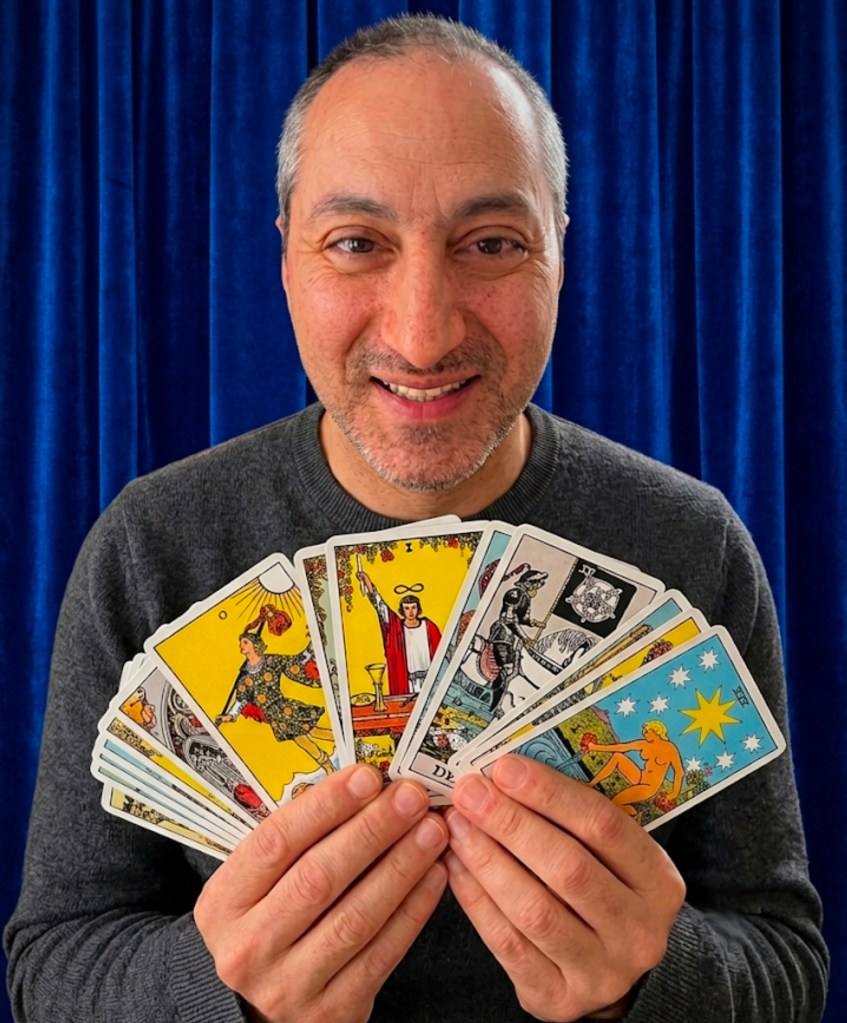
I call myself a psychic, not a medium, and I do that for a very specific reason.
When people hear the word “medium,” they immediately picture a scene from a movie where someone is clutching a handkerchief and sobbing while I try to describe their Great-Aunt Mildred’s favorite floral brooch. They think my entire job is just being a cosmic receptionist for the dead, a bridge to the “other side” where the only goal is to get a “hello” from a ghost. But that’s not what I’m about; that’s not where my fire is. My work is about you, the person sitting in front of me right now, and the wild, messy, beautiful life you’re actually living.
I’ve seen it a thousand times: someone walks in, sees the “medium” label, and they shut down everything else because they’re just waiting for a sign from a late relative. It’s like they’re stuck in the rearview mirror. IWhen call myself a psychic, I’m setting the stage for the future. I’m looking at your timeline, your energy, and the paths you haven’t even walked down yet. Sure, do spirits pop in sometimes? Absolutely. They’re like neighbors leaning over a fence—they’ve got thoughts. But I’m not here to just deliver postcards from the afterlife; I’m here to give you a map for the road you’re on today.
Think about the history of this stuff—it’s always been a bit chaotic. Take the Delphic Oracles in Ancient Greece. People didn’t trek through the mountains and brave the sulfur fumes just to ask if their late uncle was happy; they went to find out if they should launch a fleet or start a business. They wanted foresight. That’s the tradition I’m stepping into. I’m looking for the “hit,” that burst of information that tells me, “Hey, if you take that job in Seattle, your creativity is going to explode, but your social life might take a hit for six months.” That’s practical. That’s useful.
I remember this one case—a woman came to me totally convinced she needed to hear from her father to “move on.” But as I tuned in, the energy wasn’t coming from him; it was coming from her own untapped potential in a career she was terrified to start. By identifying as a psychic, I could pivot the conversation away from a séance and toward a strategy session. I told her exactly what hurdles were coming in her industry over the next two years. That’s the “high-burstiness” of my work—it’s flashes of data, not just sentimental messages.
It’s about the difference between validation and direction. Mediumship is often about validating that life continues after death, which is beautiful, don’t get me wrong. But psychic work is about directing the life you have now. It’s like the difference between a historian and a trend forecaster. I want to tell you about the storm coming next week so you can buy an umbrella, not just tell you about the rain that fell fifty years ago.
When I’m in the zone, it’s messy. I get these psychic “downloads”—images, feelings, weirdly specific words—and they’re all about the now and the next. If I let people box me into the “talking to the dead” category, I’m doing them a disservice because I’m ignoring the 90% of my frequency that’s tuned into their destiny.I’m Zonkatron because I want to “zonk” you with the truth of your own power and your own future
I look at someone like Jeane Dixon, who famously predicted major political shifts. She wasn’t just sitting around waiting for spirits to whisper names; she was reading the “ripples” in the collective energy. That’s my vibe. I’m reading the ripples you’re making in the world. I want to give you guidance that you can actually use when you wake up tomorrow morning. If we spend the whole hour talking to your ancestors, who is going to help you navigate your divorce or your promotion?
So, I stick with “Psychic.” It keeps the focus on the living. It keeps the focus on the practical. I’m here to be your scout, running a few miles ahead on the trail to see if there’s a cliff or a goldmine waiting for you. The dead have all the time in the world, but you? You’ve got a life to live right now, and I’m here to make sure you live it with your eyes wide open. - Healing Cancer – The Emotional Factor
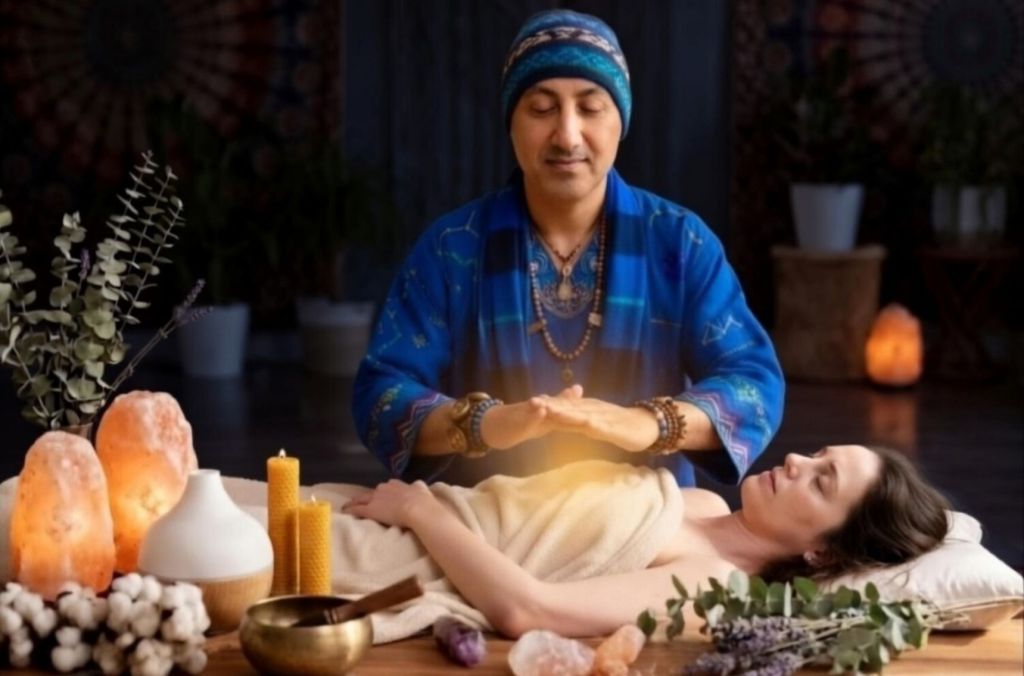
First, I am just telling you my story. I am not claiming to be able to heal cancer or any other medical condition. The experience I had was the following. That I have witnessed people get healed with my help isn’t a universally proven evidence that I heal certain medical conditions.
Hey there, let me tell you a story about my life that I never dared to fully talk about before.
Back in my 30s I was this hungry seeker, you know, the kind who signs up for every weekend workshop that promises transformation, I threw money at reiki attunements like they were lottery tickets, spent hours channeling “universal life force” with my hands hovering over people, felt tingles sometimes but mostly just awkward silence.The Search
Then ThetaHealing came along, all those muscle tests and digging for core beliefs, I remember one session where a practitioner “downloaded” healing frequencies into my field, I left feeling floaty and optimistic for like three days, but my chronic fatigue and gut problems? Still there, mocking me.
Chakra cleansing was next, crystals placed on my body in geometric patterns, sound baths with Tibetan bowls, I’d lie there visualizing orange light swirling in my sacral area, convinced it would fix everything, but nah, temporary mood lifts, like emotional espresso shots that wore off fast.
Crystal therapy had me carrying amethyst everywhere, sleeping with rose quartz under my pillow, convinced rose quartz would mend my broken heart from past relationships, it soothed a bit, sure, but nothing deep shifted, no real physical healing happened.
Even dipped into hypnotherapy and past life regression, one hypnotist took me back to some “medieval lifetime” where I was burned as a witch, I cried buckets on the table, felt lighter afterward, but my IBS symptoms laughed in my face the next week.
Two solid years of this, draining my savings on courses, certifications, fancy crystals, travel to retreats, I was exhausted, disillusioned, questioning if any of this “energy work” was more than expensive placebo.
I almost quit entirely, told myself maybe I’m just not cut out to be a healer, maybe stick to a normal job and forget the woo-woo dreams.Mystery Coincidence
Then fate or whatever you call it bumped me into one of my old spiritual teachers at a random spiritual fair in Taupo NZ, we chatted, I asked him if he could offer me a free reading, he offered to check my chakras right there, no charge, just intuition.
He nailed it—described my exhaustion, my buried anger from childhood, my digestive woes like he’d read my medical chart, then dropped the bomb: “Your sacral chakra is completely blocked, if you don’t heal this you’re heading straight toward colon cancer.”
I froze, because yeah, I’d been having weird colon symptoms for months, blood sometimes, pain, the exact stuff he described without me saying a word.
Skeptical me still trusted him somehow, scraped together my last $200, handed it over for whatever healing he thought best.
Two weeks later I’m at his house, nervous as hell, he had me lie down, guided me into this intense breathing—connected, deep, no pauses, like rebirthing or holotropic stuff but rawer.
For two straight hours I breathed like my life depended on it, memories flooded in, childhood traumas, suppressed rage, grief over lost opportunities, I sobbed uncontrollably, body shaking, my screaming all over the place, pure mess!!!The Healing Breakthrough
That was my lucky day — It was a cathartic emotional release, though back then it had all these confusing names—rebirthing, bioenergetics breathwork, holotropic-inspired whatever—no one agreed on the method, no solid science, just anecdotes from the fringes.
Then emptiness hit, like I’d been wrung out completely, and suddenly this warm happiness bubbled up, laughter erupted from my belly, genuine, unstoppable, I felt lighter than ever, happiest in my entire life up to that point.
Physically?My colon issues vanished immediately after the healing, no more pain, no weird symptoms, scans later showed nothing alarming, I was stunned.
He later told me this approach had helped people heal various cancers, he’d seen remissions in breast, prostate, even pancreatic cases over the years.
I was super skeptical still, like yeah right, but then I met some of his former clients— one woman in her 50s who’d had stage III breast cancer, did sessions with him, released decades of suppressed abuse, went into full remission, no chemo after initial rounds, doctors baffled.
Another guy, lung cancer survivor, chain-smoker for 40 years, said the breathwork unearthed buried fear from his war veteran dad, cried it out, tumors shrank, still alive 15 years later telling his story at meetups.
Anecdotes piled up, not controlled studies, but real people with medical records showing turnaround after emotional purges.Fullfiling My Dream
I adopted it myself, rebranded it as CER—Cathartic Emotional Release—started using it on clients from 2008 onward when I finally stepped into being a full-time healer.
It worked wonders, not just on cancer fears but asthma attacks easing after releasing childhood panic, diabetes stabilizing as stress melted away, Crohn’s flares calming when old shame came up and out, depression lifting like fog after deep sobbing sessions.
One client with severe asthma, inhaler every hour, during CER she relived near-drowning as a kid, screamed it out, lungs opened, hasn’t needed meds in years now.
Another with type 2 diabetes, buried family trauma around worthiness, after release her blood sugar normalized without meds changing, doctor called it “spontaneous improvement.”
Crohn’s lady, constant inflammation, released rage at an abusive ex, gut healed, remission confirmed.
Depression cases, so many, people weeping over lost childhoods, then laughing, then living again.
I got obsessed, made it my mission to teach CER everywhere, refined it over years—better music cues, safer holding space, knowing when to push breath harder or ease off.
But here’s the snag—whenever I mention “healing cancer” in talks or online, doctors flip, get defensive, accuse quackery, patients’ families panic, think I’m promising miracles instead of medicine.The Challenge
I get it now, it’s terrifying to challenge the medical narrative, people cling to authority, and honestly, spontaneous remissions happen rarely anyway, but linking it to emotional release? Sounds insane to them.
I faced backlash, lost potential clients, got reported to boards once or twice, had to tone it down big time.
So I prayed hard, asked God or the universe for a way to reach more people without the cancer label scaring everyone off, something bigger, more acceptable.
That’s when psychic abilities started opening up—clairvoyance, clairsentience, accurate hits on people’s pasts, futures, loved ones crossed over.
It happened gradually, dreams turned prophetic, random knowings about strangers, then full readings that blew minds.
Now… (2026) I’m full-time psychic, helping folks with life direction, relationships, grief, and on the side, when it feels right and they’re open, I slip in CER for health stuff, but mostly I guide in broader ways.
I’m not famous yet, no big TED talk or Netflix special, but I’m on track—building audience slowly, testimonials stacking, synchronicities aligning.Conclusion
Looking back, those early modalities were gateways, gentle mood boosters, but they never touched the core like this raw, messy, tear-soaked breath catharsis did.
History’s full of similar fringes—Wilhelm Reich with orgone and bioenergetics, getting shut down hard, Stan Grof’s holotropic work saving lives in workshops, even ancient shamanic breathing rituals for soul retrieval.
Modern studies nibble at edges, showing breathwork drops anxiety in breast cancer patients, boosts mood, maybe tweaks immunity a bit, but no big pharma funding for “cry it out and heal cancer.”
Yet the stories persist, like that one guy who claimed remission after emotional clearing with a breathworker, or those terminal patients in Grof’s early psychedelic days finding peace that shifted everything.
My own journey? Proof enough for me.
I almost gave up, but that one session flipped the script, turned frustration into my life purpose. - The Zonkatronic Theory of Ancient Egypt
A Look at Zonkatron’s Visions of Ancient Egypt
History is often written in stone—literally. But what if the stones of the Giza plateau have been telling us a different story than the one found in our textbooks?In a recent video, Zonkatron dives into a series of personal psychic visions that challenge the traditional archaeological timeline, suggesting that the origins of Egyptian civilization are far older and more mysterious than we ever imagined.
Whether you’re a skeptic or a believer in alternative histories, the details of these visions offer a fascinating “what if” scenario for the ancient world.A Timeline Shift: 50,000 Years Ago
The most jarring claim in Zonkatron’s vision is the date of construction. While mainstream Egyptology places the Great Pyramids around 2,500 BCE, Zonkatron suggests they were actually built 50,000 years ago.
According to the vision:
Duration: The entire project took roughly 10,000 years to complete.
The Climate: Egypt wasn’t a desert back then; it was a green paradise. This lush environment supported a highly advanced agricultural society that supposedly lived without the threat of wild animals.Why Build Them?
If these visions are accurate, the pyramids weren’t just tombs for Pharaohs. Instead, they were designed as a massive message to the future. The builders allegedly knew that future generations might look back and assume humans of that era only possessed basic tools. The pyramids were constructed to prove, once and for all, the existence of highly intelligent, advanced life.High-Tech, Low Footprint
How did a relatively small group of 1,000 workers move such massive stones? Zonkatron’s visions describe a process that sounds like science fiction.
Biodegradable Machinery: The builders used advanced energy technology and heavy machinery.
No Trace Left Behind: The reason we find no “cranes” or “engines” today is that the technology was designed to be biodegradable, vanishing into the earth after its use was complete.
Efficiency: Each major pyramid supposedly took about 200 years to finish using this specialized tech.The Sphinx and the Second Civilization
Interestingly, the visions suggest that the statues we see today—including the Great Sphinx—weren’t built by the original pyramid architects.
Zonkatron claims these were added much later, around 30,000 years ago, by a completely different civilization. This later group didn’t actually know who built the pyramids; they simply admired the structures and mimicked their style, creating the iconic statues to honor a mystery they couldn’t fully solve.Final Thoughts
According to this psychic timeline, all the major monumental structures were finalized over 10,000 years ago, long before the rise of the Dynastic Egyptians we study in school.
While these claims certainly clash with carbon dating and archaeological records, they tap into the enduring human fascination with the “Unsolved Mysteries” of the Nile. It’s a vision of a world that was advanced, green, and intentional—leaving us a legacy in stone that we are still trying to decode today.
What do you think? Are the pyramids older than we think, or is the traditional timeline the only one that holds water? - Zonkatronic Philosophy

The “Zonkatronic” philosophy, while sounding like something out of a science fiction novel, is actually a deeply personal and spiritual framework developed by the figure known as Zonkatron.
It isn’t a formal academic philosophy found in dusty textbooks; rather, it is a playful, modern label for a worldview that attempts to bridge the gap between mysticism and daily life.
By looking at his book The Meaning of Life and his online presence, we see a system that encourages individuals to stop looking for God in the clouds and start looking for the “mysterious order” in the gears of the universe itself.
Who is God?
At the heart of this view is a rejection of the “superhero” version of God. Throughout history, many cultures have personified the divine as a giant man in the sky who passes judgments or performs miracles on a whim.Zonkatron argues that this is a misunderstanding. Instead, he points to the “astonishing order” of reality.
Think of the Golden Ratio found in the shell of a nautilus or the spiral of a galaxy; to a follower of this idea, sensing that mathematical perfection isn’t just an observation of nature—it is a direct, visceral encounter with the divine. It’s like looking at a clock and realizing the clockmaker’s intelligence is present in every tick.
The Divinity in Science
This perspective on reality shifts the focus from worship to awareness.
When a scientist like Vera Rubin discovered evidence of dark matter by observing the rotation of galaxies, Zonkatron would argue she wasn’t just doing physics; she was sensing the “invisible hand” of order that holds the universe together. This “order” is God. In this worldview, God doesn’t need to intervene in human affairs because the laws of physics and the laws of the soul are already perfectly calibrated to guide us toward a specific destination.
Your Soul?
The “Zonkatronic” view of the soul is equally distinct, suggesting that we are all works in progress. Rather than being born perfect or inherently sinful, the soul is described as “imperfect” and on a trajectory. It is essentially a student in a vast, cosmic classroom. This echoes the concept of metempsychosis seen in ancient Greek philosophy or the “Vale of Soul-Making” described by the poet John Keats. Keats argued that the world is not a place of pure pleasure, but a school where intelligence is turned into a soul through the experience of living.
A fascinating part of this doctrine is the idea that you “have no choice” but to improve.Zonkatron suggests that the universe is a persistent teacher. If you fail to learn a lesson, the universe simply repeats the exam.
Consider a person who repeatedly finds themselves in relationships with selfish people. Instead of blaming bad luck, this worldview suggests your soul needs that specific friction to develop compassion or boundaries. It’s a bit like a physical therapy patient who must do painful exercises; the discomfort isn’t a punishment, but a requirement for the limb to function again.
Suffering isn’t Evil
In many religions, the “Problem of Evil” is a major stumbling block: why would a good God allow wars or disasters?
Zonkatron’s answer is that these events are “ticking clocks” for the soul’s evolution. He argues that mental pain, emotional turmoil, and even historical tragedies like the Black Death or the Great Fire of London are part of a larger learning process.
From this height, the “injustice” we feel on the ground starts to dissolve into a realization that every challenge is a catalyst for growth.
The idea that “doing bad” can teach more than “doing good” is perhaps the most radical part of this worldview.
It suggests that a person who commits a mistake and feels the subsequent weight of guilt may learn the value of integrity more deeply than someone who was simply “born good” and never tested.
History is full of “prodigal son” stories—individuals like Ashoka the Great, who went from being a bloodthirsty conqueror to a peaceful promoter of Buddhism after witnessing the horrors of his own wars. Zonkatron would say Ashoka’s soul needed that specific darkness to truly “see” the light.
Catharsis is a Wakeup Call
When it comes to the body, Zonkatron focuses on “cathartic emotional release.” He views emotions not just as thoughts, but as physical “ticking bombs” of nervous energy. This aligns somewhat with the “Somatic Experiencing” techniques used in modern trauma therapy, where the goal is to release stored energy from the nervous system. He warns against “positive thinking,” which he sees as a way of painting over a rusty fence. Instead, he believes you must scrape the rust off—act out the emotion and release it—before any real belief change can occur.
Catharsis is seen as a bridge between the physical suffering leading to spiritual awareness.When a person has a “breakdown” that leads to a “breakthrough,” Zonkatron sees this as a soul-level revision. An anecdote might involve someone losing their job and falling into a deep depression, only to realize during their lowest point that their identity was tied to the wrong things. By “releasing” the old identity through tears or even shouting, they clear the space for a new, more resilient soul-structure to take hold.
Psychic Knowledge
How does he claim to know all this? He doesn’t point to the Bible, the Torah, or the Quran. Instead, he claims a “direct psychic connection” with the divine.This is a form of Gnosticism—the belief that spiritual knowledge is gained through personal experience rather than through an institution. He presents his findings as a “tested personal discovery,” much like an explorer who returns from a distant land with a map.
He isn’t asking you to believe him on faith; he’s asking you to use his tools and see if the map works for you.
The first of these tools is the “Connection Experience.”This is a practice aimed at quieting the noise of daily life to feel that “astounding order” mentioned earlier. It’s similar to how an artist enters a “flow state” where time disappears and they feel part of the painting. For Zonkatron, this isn’t just a psychological trick; it is the soul plugging back into the cosmic “power grid” to remind itself that it isn’t alone.
The second tool is the “Communication Exercise.”This is described as a way to ask the universe specific questions. Unlike traditional prayer, which often involves asking for things (like a promotion or a win for a sports team), this exercise is about seeking clarity on one’s “soul-lessons.” If someone is stuck in a cycle of failure, they might use this exercise to ask, “What am I refusing to learn?” The answer usually comes not as a booming voice, but as a sudden, intuitive “click” of understanding.
The third tool is the “Guidance Exercise.”This is used to navigate the afterlife and the path of the soul. Zonkatron speaks of the afterlife not as a static heaven or hell, but as a continuation of the learning process. By using this exercise, he claims individuals can get a sense of their “eternal trajectory.” It provides a sense of “cosmic career counseling,” helping the person align their daily actions with the long-term needs of their soul.
This worldview is inherently optimistic, even when discussing dark topics. If everything—from a stubbed toe to a global recession—is a “lesson,” then there are no true victims, only students.This perspective was famously echoed by the psychiatrist Viktor Frankl in Man’s Search for Meaning. Frankl found that prisoners in concentration camps who could find a “meaning” or a “lesson” in their suffering were more likely to survive.
Zonkatron takes this psychological truth and turns it into a metaphysical law.
The “Zonkatronic” system also emphasizes that the soul can face “annihilation” if it refuses to learn. This adds a sense of urgency to life. It isn’t a “free pass” where everyone eventually becomes perfect.This mirrors the biological concept of extinction; if a species cannot adapt to its environment, it ceases to exist.
In Zonkatron’s view, if a soul becomes so hardened and resistant to the “order” of the universe, it eventually loses its spark and dissolves.
Is it New Age?
Critics might argue that this is just a blend of New Age philosophy and Stoicism, but followers find value in its simplicity.By labeling it “Zonkatronic,” the author removes the heavy, somber tone usually associated with religion.
It makes spirituality feel like a “user manual” for a complex piece of software. It encourages people to experiment with their own lives, treating their experiences as data points in a grand experiment of soul-evolution.
In the 21st century, where many feel disconnected from traditional institutions, this “playful” persona offers a way back to the “sacred” without the baggage of dogma.Final Word
Whether he is talking about “ticking bombs” of emotion or “psychic connections,” the goal remains the same: to help the individual feel that they are a necessary, ordered part of a beautiful, albeit difficult, universe. It’s a philosophy of total responsibility—you are the pilot of your soul, and the universe is the wind that helps you fly, provided you learn how to steer.
- Prediction: Colonisation of Mars Possible Only After 150 Years
While the word “impossible” is a strong term in science, space agencies like NASA and SpaceX currently face five huge challenges that make it impossible to land a human on Mars until at least 150 years.
These aren’t just difficult; they are hurdles where a single failure means certain death for the crew.
1. The “Death Zone” of Landing (EDL)
Landing on Mars is significantly harder than landing on the Moon or Earth. This is known as the Entry, Descent, and Landing (EDL) problem.
The Atmosphere Trap:Mars’ atmosphere is “too thick to ignore, but too thin to use.” It’s thick enough to create lethal heat during entry, but 100 times thinner than Earth’s, meaning parachutes are almost useless for heavy human-scale landers.
The Weight Limit:We can currently land about 1 metric ton (the size of a rover). A human mission requires landing 20+ metric tons. Scaling up current technology to that weight without the ship simply “pancaking” into the surface is a feat we haven’t yet mastered.
2. Galactic Cosmic Rays (GCRs)
On Earth, our magnetic field and atmosphere act as a shield. In deep space, astronauts are “naked” to two types of radiation.
Solar Flares:These are bursts of protons that can be shielded with thick walls or water tanks.
Galactic Cosmic Rays:These are high-energy particles from outside our solar system that move at nearly the speed of light. They are so powerful they can pass through lead and aluminum, shattering DNA and causing “secondary radiation” (shrapnel) when they hit the ship’s hull. A round-trip mission currently exceeds the lifetime radiation limits allowed for any astronaut.
3. The Physiological “Wasting” Problem
Prediction: If we put a healthy human being on Mars today, he will be able to live for only a few months or maybe less before his body shuts down.
Humans evolved for 1g (Earth gravity). During the 6–9 month journey in 0g and the stay on Mars (0.38g), the body undergoes drastic changes.
Bone and Muscle:Astronauts lose about 1–1.5% of bone mineral density per month. By the time they land on Mars, their bones could be as brittle as a 90-year-old’s, making a simple stumble a leg-breaking event.
Fluid Shifts (SANS):Fluids move toward the head, increasing pressure on the brain and permanently flattening the eyeballs, which can lead to blindness before the mission even ends.
4. The Logistics of “Life Support”
On the International Space Station (ISS), if a water recycler breaks, a resupply ship can arrive in weeks. On Mars, help is at least two years away.
Closed-Loop Failure:Current tech isn’t 100% efficient. We need to recycle nearly every drop of sweat and urine and every breath of CO2 back into oxygen. If the system fails by even 5%, the crew runs out of air or water long before they can return.
Dust Toxicity:Martian dust is not just “dirt”; it contains perchlorates (toxic salts) that are corrosive to electronics and lethal to human lungs if even a small amount is tracked into the habitat.
5. Psychological “Earth-Out-Of-View”
This is the only challenge that cannot be solved with engineering.
Total Isolation:On the Moon, Earth is a big, beautiful marble in the sky. On Mars, Earth is just a tiny, faint blue dot.
Communication Lag:There is a 20-minute delay each way for signals. You cannot have a conversation; you can only send “video mail.” In a life-or-death emergency, the crew is entirely on their own. The psychological strain of being the first humans to truly “leave” Earth’s vicinity is a variable flight surgeons are deeply worried about.
- The 4 Secrets to Happiness

Zonkatron’s View
Happiness is often misunderstood as a trophy we win after a long race, but in reality, it is the atmosphere of the journey itself. To understand this, we have to look at how we manage our physical, emotional, mental, and spiritual states.
When these four areas are in balance, fulfillment becomes a natural byproduct rather than a forced goal.
Throughout history, the most resilient individuals weren’t those who lacked problems, but those who built a solid blueprint to handle them.
By breaking down these four “secrets,” we can see how simple shifts in perspective and habit lead to a life that feels genuinely good to live.
1- Physical
The Physical Foundation: Vitality and Security
The first secret to a fulfilling life is recognizing that your mind lives in a physical biological machine. It is incredibly difficult to maintain a positive outlook if your body is constantly sending signals of distress, exhaustion, or hunger. Think of the Roman Stoic philosopher Seneca; despite his focus on the mind, he advocated for cold baths and vigorous movement to keep the spirit sharp. When we neglect our physical health, we are essentially trying to build a skyscraper on a foundation of sand. Vitality provides the energy required to engage with the world’s beauties rather than just surviving its demands.
Physical fitness is more than just a quest for aesthetics; it is a chemical intervention. When you exercise, your brain undergoes a biological shift, releasing endorphins—the body’s natural painkillers—and dopamine, which is linked to reward and motivation. A famous case study in modern psychology compared exercise to antidepressants and found that for many people, consistent movement was just as effective at regulating mood. It isn’t about running marathons; it’s about the daily maintenance of the vessel that carries your consciousness. When you move, you tell your brain that you are capable and active, which naturally lowers the production of cortisol, the hormone responsible for that “on-edge” feeling of stress.
Beyond movement, the physical foundation requires a sense of security, often tied to our environment and finances. While the old saying “money can’t buy happiness” has merit, it’s more accurate to say that poverty can certainly buy misery. Financial stability acts as a “buffer” against the unpredictable shocks of life. Consider the peace of mind a family feels when they have an emergency fund versus the chronic “background noise” of stress when living paycheck to paycheck. This security isn’t about greed; it’s about providing the safety net—quality food, healthcare, and a safe home—that allows the mind to stop worrying about survival and start focusing on thriving.Historical examples, such as the transition of societies from hunter-gatherers to settled agriculturists, show that once basic needs for food and shelter were secured, human culture, art, and philosophy flourished. We see this on an individual level, too. When you prioritize your sleep, nutrition, and financial boundaries, you are clearing away the “static” of physical discomfort. This creates a quiet internal environment where you can finally hear your own thoughts. Without this foundation, any attempt at spiritual or mental growth will feel like a struggle against a heavy tide.
2- Emotional
Emotional Mastery: The Art of Letting Go
The second secret is emotional mastery, which is not about being “happy” all the time, but about how you handle the “unhappy” times. Many people spend their lives trying to suppress negative emotions, only to find that these feelings grow stronger in the dark. True emotional intelligence is the ability to let emotions pass through you like weather. Consider the story of Nelson Mandela, who spent 27 years in prison. He had every reason to be consumed by bitterness, yet he chose to let go of that anger because he realized that carrying it would only keep him imprisoned in his own mind long after he was physically free.
Holding onto resentment is a heavy burden that drains the energy you need for joy. There is an old teaching that compares holding a grudge to clutching a hot coal with the intent of throwing it at someone else—you are the one who gets burned. Forgiveness isn’t about letting someone else “off the hook”; it’s about untethering your heart from a past event that you cannot change. When you master the art of letting go, you reclaim the emotional real estate that was being occupied by old ghosts. This creates an immediate lightness in your daily life, allowing you to react to the present moment rather than a memory.
Navigating sadness and fear is the other side of this emotional coin. We often flee from fear, but fear is just a signal—usually an exaggerated one. By treating your emotions like “passing clouds” in the vast sky of your awareness, you stop identifying with them. You aren’t “a sad person”; you are a person feeling sadness.This subtle shift in language and thought creates the distance necessary to observe a feeling without letting it take the steering wheel of your life. It allows you to feel the sting of a disappointment without letting it turn into a permanent narrative of failure.
In many therapeutic case studies, patients find relief not when their problems disappear, but when they stop fighting their feelings. By acknowledging fear—”I see you, I feel you, but you aren’t in charge”—the fear loses its power to paralyze. This emotional agility allows you to take risks and pursue what you love, knowing that even if you feel uncomfortable, you have the tools to process that discomfort. Emotional mastery transforms your inner world from a chaotic storm into a navigable sea, where you can remain steady even when the waves are high.3- Mental
Mental Agility: Dropping the Ego Trap
The third secret involves our mental habits and the stories we tell ourselves. Our greatest source of suffering is rarely what happens to us, but rather the internal commentary we provide on those events. The “Ego” is that part of us that wants to be right, wants to be superior, and is constantly comparing our “behind-the-scenes” footage with everyone else’s “highlight reel.” In the mid-20th century, psychologists began focusing on “Cognitive Reframing,” showing that by changing how we interpret an event, we change how we experience it. Mental agility is the ability to stay flexible and curious rather than rigid and defensive.
The ego often builds a “cage” of identity. We tell ourselves, “I am a successful businessman,” or “I am a person who never makes mistakes.” While these might sound like positive traits, they create immense pressure. If your happiness is tied to a specific label, you will live in constant fear of losing it. A famous anecdote tells of a Zen master whose favorite cup broke. Instead of being devastated, he smiled and said, “The cup was already broken,” implying that he enjoyed it while it lasted without being attached to its permanence. When you drop the need to maintain a perfect image, you gain the freedom to simply exist and learn.
Challenging your own beliefs is a hallmark of a happy mind. If you are stuck in “being right,” you are closed off to growth. Think of the scientific revolution; it only happened because people were willing to admit that their long-held beliefs about the universe were wrong. On a personal level, if you can approach a disagreement with curiosity—wondering why the other person sees things differently—you replace conflict with connection. This mental flexibility makes you much more adaptable to change, which is one of the only certainties in life.
The “ego trap” is also fueled by social comparison. In the modern age of social media, we are bombarded with images of others’ perceived perfection. Mental agility allows you to recognize that these are just performances. By dropping the “identity” games, you stop measuring your worth by external metrics. You realize that you don’t need to be “better” than anyone else to be happy; you just need to be more “you.” This leads to a profound sense of relief, as the energy once spent on defending your ego is now available for genuine creativity and connection.4- Spiritual
Spiritual Purpose: Nurturing the Soul
The fourth and final secret is the most profound: finding a “why” for your existence. Without a sense of purpose, even a person with a fit body and a calm mind can feel a hollow sense of boredom or “ennui.” This doesn’t mean you need to find a way to save the entire world or become a famous leader. Purpose is often found in the small, consistent ways we contribute to the lives of others or the dedication we bring to our craft. Viktor Frankl, a psychiatrist and Holocaust survivor, observed in his book Man’s Search for Meaning that those who had a purpose—even a small one, like finishing a book or seeing a loved one again—were the ones most likely to survive the impossible.
Finding your purpose is about aligning your daily actions with your deepest values. It is the shift from “having” (possessions, titles, status) to “being” (compassionate, patient, creative). For example, a carpenter might find his purpose not just in building a table, but in the integrity of his work and the joy it brings to the family who will sit around it. When you have a “why,” the “hows” of life—the struggles, the chores, the setbacks—become much easier to bear. Purpose acts as a compass, ensuring that even when you are lost in the woods, you know which direction is home.
Nurturing “Soul Qualities” like gratitude and compassion is the practical application of this spiritual secret. Gratitude isn’t just saying “thank you”; it is a disciplined practice of noticing what is going right. In numerous studies, people who kept a daily gratitude journal reported higher levels of optimism and even better sleep. This is because the brain is like a muscle; if you train it to look for the good, it becomes more efficient at finding it. Compassion, meanwhile, pulls us out of our own self-centeredness.When we help others, we paradoxically help ourselves by realizing we are part of something much larger than our own individual problems.
Ultimately, a fulfilling life is built by integrating these four pillars. You support your mind with a healthy body, you clear your path by mastering your emotions, you find freedom by dropping the ego’s demands, and you give it all meaning through a sense of purpose. It’s a blueprint that has worked for centuries, from the ancient philosophers to modern high-performers. Happiness is not a lucky accident that happens to some people and not others; it is a skill that can be cultivated, practiced, and mastered over time. - How to Pray to God

The world has taught you that prayer is a transaction, a business deal with a powerful man in the sky. But I tell you, prayer is not a petition; it is a state of being. It is not something you do, but something you fall into.
When the heart is ready, the prayer happens. It is like a flower opening its petals to the sun—not because it wants something, but because it is its very nature to open.
If your prayer comes from the head, it is a calculation. Only when it arises from the deep, silent core of your heart does it have the wings to reach the ultimate.
You have been told to pray for your neighbors, for your enemies, for the whole world. It sounds very religious, very “holy,” but it is a subtle ego trap.When you pray for someone else, you are assuming a position of superiority. You are deciding what is good for them. Who are you to decide? Each soul is on its own unique pilgrimage. Leave them to their own path. Real prayer is an intensely personal, solitary affair. It is a mirror. It is about you and your relationship with the existence. In that silence, there is no “other”—there is only your own flowering.
And please, drop this nonsense of wishing bad or good to anyone. To wish bad is obviously a poison that you drink yourself. But even to wish “good” is a form of interference. It is a desire, and all desire is a disturbance. If you are full of prayer, you become a blessing, but you do not “send” blessings.A lamp does not “send” light to the corner of the room; it simply burns, and the light reaches where it must. Be the lamp. Don’t be a postman delivering “good wishes.”
The mind is always asking for things. It is a beggar. It asks for a bigger house, a faster car, more gold. But if you bring these trivialities into your prayer, you are insulting the Divine.Can you imagine? You are standing before the vast, infinite mystery of existence, and you are asking for a few more dollar bills? It is like going to the ocean with a teaspoon. Prayer is not for the material; the material belongs to the marketplace. Prayer is for the essential. It is for direction. It is for those moments when you are lost in the woods and you need the North Star to show you the way.
Inspiration is the true fruit of prayer. When you are stuck, when the mind has reached a dead end, you sit in silence. You don’t ask for a result; you ask for a light. You ask for the “Aha!” moment. And that moment comes only when the “me” is absent. If you are full of your own ideas, there is no room for the Divine to whisper. Empty yourself of your demands, and suddenly, you are filled with a new vision, a new clarity that you could never have manufactured through logic.
Many people think prayer is a substitute for work. They think they can pray and then sit on their porch waiting for a miracle. This is a great misunderstanding. Prayer is not a way to avoid effort; it is a way to sanctify effort. The right prayer is: “I am ready to pour my whole soul into this task. I am ready to sweat, to struggle, to give everything I have. And in this total surrender to the work, may the grace of existence meet me halfway.” When your effort and God’s grace meet, a miracle is born. Without your effort, even God is helpless.
The existence is a partner, not a servant. When you say, “I am ready to put in the work,” you are declaring your maturity. You are saying you are no longer a child asking for a handout, but a creator asking for a collaboration. God helps those who help themselves—not because God is judgmental, but because only those who are intensely active are sensitive enough to receive the response. The work is the prayer. The effort is the meditation.
How do you know if you are on the right path? The theologians will give you a thousand rules, but I give you a very simple key: your own feeling. While you are in that state of prayerful communion, bring your problem to your heart. If a deep sense of well-being, a profound “Yes,” a feeling of light and warmth spreads through you, then it is right. It is in harmony with the Whole. You don’t need a priest to tell you; your own biology, your own soul, will vibrate with the truth.
But if, the moment you think of a certain path, a shadow falls over you—if you feel a contraction, a “No,” a sense of unease or heaviness—then listen to it! That is the voice of existence saying, “This is not the way.” Your body is more ancient and wiser than your mind. The mind can be deceived by logic and social conditioning, but the heart cannot be fooled. A bad feeling during prayer is a spiritual “Stop” sign. Respect it.Prayer is a great experiment in sensitivity. You are tuning your inner radio to the frequency of the universe. In the beginning, there will be much static—the static of your thoughts, your worries, your greed. But as you continue to sit in the heart, the static fades. The music begins. This music does not tell you how to get rich; it tells you how to be. It doesn’t give you a map of the world; it gives you a map of your own being.
Do not make prayer a duty. If it is a duty, it is dead. If you pray because you “should,” you are just practicing a habit. Let it be a love affair. Let it be something you do because you cannot help it, like breathing. When you are in love, you don’t need a manual on how to talk to your beloved. The words come, or the silence comes, and both are beautiful. Prayer is a love affair with totality.
In this silence, the “I” disappears. When the “I” is gone, who is there to ask for money? When the ego is dissolved, who is there to wish harm to an enemy? The very things you used to value seem like children’s toys. You realize that the greatest gift is not something God can give you, but the fact that God can be you. The guest arrives only when the host is absent.People use prayer as a way to escape responsibility. They say, “Thy will be done,” but they mean, “I don’t want to do anything.” I say, let your will be so aligned with the Whole that there is no distinction. Your work becomes God’s work. Your hands become His hands. When you are ready to put in the effort, you are not working for God; you are working as God. This is the highest form of prayer.
The material world has its own laws. If you want a house, study architecture and earn money. Don’t bring such small matters to the temple. To ask for material things is to stay a beggar forever. And I want you to be emperor! An emperor doesn’t ask for things; an emperor asks for the wisdom to rule his own inner kingdom. Ask for the “inner gold,” which no thief can steal and no recession can devalue.
Prayer is the art of calming the surface. When the lake of your consciousness is still, the moon is reflected perfectly. You see the direction clearly. You know what needs to be done. There is no doubt, no hesitation. This certainty is the greatest blessing.
Remember, the feeling is the criterion. Religion has been made into a cold, intellectual thing—a set of dogmas. But real religion is a “gut” feeling. It is an intuition. If your prayer makes you feel more alive, more joyful, more integrated, it is true. If it makes you feel guilty, fearful, or heavy, it is a disease. Throw it away!
The world needs people who are prayerful but not “religious.” It needs people who can listen to their own hearts. If you can listen to the heart, you will never go wrong. The heart is connected to the roots of existence. It knows. The mind only guesses. The mind is a gambler; the heart is a knower.
So, when you pray, don’t look at the clock. Don’t look at the scriptures. Close your eyes, dive deep into your own silence, and offer yourself as a sacrifice of work and love. Say to the existence, “I am here, ready to move, ready to act. Show me the way, and I will follow your guidance.” - Why Ozempic Won’t Eliminate Obesity

Zonkatron’s Prediction
The obesity problem won’t ever have a pill to fully eliminate it!
Even after 50 years, even when Ozempic becomes cheap and accessible to everyone and even when pharmacology invents new drugs, it’s never going to eliminate more than 15% of the obese population.
Analysis
To understand why these medications aren’t a total “cure-all,” we have to look at how we’ve handled medical breakthroughs in the past. Take the discovery of antibiotics. When penicillin became widely available, many thought infectious diseases would be a thing of the past. But history showed us that bacteria evolve, and more importantly, the conditions that breed infection—like poor sanitation and overcrowding—don’t just disappear because we have a pill. Obesity is similar; it is a symptom of a much larger environmental “infection.”
Think of GLP-1 drugs like Semaglutide as a very sophisticated thermostat. If your house is freezing because the windows are broken and the door is wide open, the thermostat can work overtime to pump in heat. You might feel warm for a while, but the moment the power goes out or you can’t afford the electric bill, the house freezes again. The “broken windows” are our modern lifestyle: constant stress, lack of movement, and a food industry that designs snacks to be as addictive as possible.
History Tells the Truth
We can look at the story of the Pima Indians in Arizona as a tragic case study in environment versus biology. For centuries, they were lean and healthy. But when their traditional diet was replaced by government-issued rations of white flour, lard, and sugar, obesity rates skyrocketed. A GLP-1 drug might help an individual Pima person lose weight, but it doesn’t return the river water to their farms or remove the processed food from their local stores. The medicine treats the person, but it doesn’t treat the neighborhood.
There is also the heavy burden of biological adaptation. Our bodies are evolved to survive famines that lasted for months. When you use a drug to lose weight rapidly, your body doesn’t realize you’re doing it on purpose; it thinks you are starving. It begins to lower your body temperature and makes you more lethargic to save energy. This is why people “plateau.” Even on the strongest dose of a drug, your ancient DNA is fighting back, trying to keep you at your highest previous weight to “save” you from what it perceives as a crisis.
Consider the “anecdote of the office worker.” Let’s call him Dave. Dave starts a GLP-1 and loses 50 pounds. He feels great, but his job still requires him to sit for 10 hours a day. His commute is two hours of stressful driving. When he gets home, he’s too exhausted to cook, so he grabs a “healthy” pre-packaged meal that is actually full of preservatives. The drug is fighting a lonely battle against Dave’s entire reality. If Dave loses his insurance and can’t pay the $1,000 monthly bill, his appetite returns with a vengeance, often leading to him gaining back 60 pounds instead of 50.
Blood Pressure Analogy?
Historically, we have seen this with blood pressure medication. We have incredible drugs to lower hypertension, yet heart disease remains a leading killer. Why? Because it’s easier to take a pill than it is to fix a food system that puts hidden salt in everything from bread to chicken breast. We become reliant on the “chemical fix” while the underlying cause—our diet—stays exactly the same. The GLP-1s are a more powerful version of this cycle.
Another major hurdle is muscle wasting. When people lose weight on these drugs, they don’t just lose fat; they lose a significant amount of skeletal muscle. Think of muscle as the “engine” of your metabolism. If you lose your engine, you can’t burn fuel efficiently. There are stories of elderly patients becoming “skinny-fat”—they weigh less, but they are now too weak to climb stairs. Without the muscle to maintain their metabolism, they become permanently dependent on the drug just to stay at their new weight.
We must also talk about the economics of health. In the 1950s, the “TV Dinner” was marketed as a miracle of modern convenience. It changed the way families ate, prioritizing speed over nutrition. Today, healthy, whole foods like fresh salmon and organic greens are significantly more expensive than a box of highly processed cereal. GLP-1s are currently a luxury for the upper-middle class. Until we address the fact that it is cheaper to eat poorly than it is to eat well, the “elimination” of obesity will remain a dream reserved for those with the best insurance plans.
Anhedonia
There is a psychological component often called “Anhedonia,” or the loss of pleasure. For many people, food is their primary source of joy, social connection, and comfort. GLP-1s work by making food seem unappealing. I’ve spoken with people who say they “miss wanting food.” They sit at a Thanksgiving dinner and feel nothing but a mild sense of nausea. Over years, this can lead to a sense of social isolation. If you can’t enjoy a meal with friends, a core part of the human experience is diminished, leading many to quit the drug just to feel “human” again.
The global scale of the problem is also staggering. There are roughly 1 billion people worldwide living with obesity. To “eliminate” the disease, you would need to manufacture, ship, and refrigerate trillions of doses of these drugs. Think about the struggle to distribute the COVID-19 vaccine globally. Now imagine doing that every single month, forever, for a seventh of the world’s population. The logistics alone make “elimination” via medication a mathematical impossibility for the foreseeable future.
We also have to consider “Non-responders.” Just as some people can drink five cups of coffee and go straight to sleep, some people take maximum doses of Ozempic and lose zero pounds. Their bodies simply don’t process the GLP-1 hormone in the standard way. If we rely solely on these drugs, we leave behind millions of people whose biology doesn’t fit the “average” model. For them, the “miracle cure” is a frustrating expensive failure.
The Cobra Effect?
There is also the historical lesson of “The Cobra Effect.” In colonial India, the government offered a bounty for dead cobras to reduce the population. In response, people started breeding cobras to kill them and collect the money. Sometimes, a solution creates a new problem. With GLP-1s, the “Cobra Effect” might be a total neglect of lifestyle education. If parents believe a shot can fix everything, they may stop teaching children how to cook or the importance of daily play, leading to an even less healthy next generation.
Take the case study of gastroparesis. Some patients on these drugs develop “stomach paralysis,” where the stomach stops moving food along entirely. It is a rare but terrifying side effect. As these drugs move from being used by thousands to being used by millions, we will see more of these “one-in-a-million” tragedies. A drug that works for most but causes permanent damage to a few will always face regulatory and legal hurdles that prevent it from being a universal solution.
The pharmaceutical supply chain is another bottleneck. Last year, there were massive shortages of these drugs because the “pens” used to inject them couldn’t be manufactured fast enough. This created a “gray market” of compounded versions that weren’t always safe. When a “cure” depends on a complex plastic delivery device, it is vulnerable. If a factory in one part of the world shuts down, millions of people suddenly face a massive hormonal crash as their bodies search for a medication they can no longer find.
Fat But Fit?
We should also look at the “Fat-But-Fit” paradox. Some people carry extra weight but have perfect blood sugar and cardiovascular health. By focusing entirely on weight loss via GLP-1s, we risk over-medicalizing people who are actually healthy. Historically, we have used Body Mass Index (BMI) as a blunt tool, but it doesn’t account for bone density or muscle. Forcing everyone into a “thin” mold with drugs might actually do more harm than good for those whose bodies are naturally larger but metabolically sound.
The marketing influence is another factor. Pharmaceutical companies are businesses; they want “chronic” patients—people who take the drug for life. They have little incentive to fund research into how people can successfully get off the drug and maintain their weight through lifestyle. This creates a loop where the “cure” becomes a subscription service. You don’t eliminate a disease if you just turn it into a lifelong monthly payment.
Stress Eating?
Think about the “Anecdote of the Stress-Eater.” Sarah eats because her job is high-pressure and her marriage is failing. The GLP-1 shuts off her hunger, so she stops eating. But her stress has nowhere to go. Without her primary coping mechanism, she might turn to alcohol or other habits. This is known as “transfer addiction.” If we don’t treat the mind and the soul alongside the gut, the “weight” just moves from the body to another part of a person’s life.
In the 1990s, the drug Fen-Phen was hailed as the end of obesity. People lost weight rapidly and felt amazing. Then, it was discovered that the drug was causing fatal heart valve damage. It was pulled from the shelves, and millions gained the weight back instantly. While GLP-1s appear much safer, we don’t have 30 years of data on what they do to the human body when taken continuously. Caution is a historical necessity.
Finally, there is the issue of cultural shift. True elimination of a health crisis requires a change in what we value. If we value “hustle culture” and “convenience” over slow meals and physical rest, obesity will always find a way back in. We can’t medicate our way out of a culture that hates the very things that keep us healthy. The drugs are a bridge, but we still haven’t decided what we want to build on the other side.
Conclusion
In conclusion, GLP-1s are a brilliant tool, perhaps the best we’ve ever had. But like a hammer, they can’t build a house alone. We need the “lumber” of better food policy, the “nails” of urban exercise spaces, and the “blueprints” of mental health support. Until we have all the parts, obesity will remain a complex part of the human story, managed by medicine but not erased by it.
- Today’s Predictions (March 11, 2026)

Here is a breakdown of the critical trends and tensions shaping our immediate future.The Energy Tug-of-War
The oil market is currently a tale of two extremes. Analysts are deeply divided on where Brent crude will land by year’s end:
The Bull Case: Wood Mackenzie warns that continued restrictions in the Strait of Hormuz—a vital artery for global energy—could send prices skyrocketing to $150/bbl.
The Bear Case: Conversely, J.P. Morgan points to a persistent supply-demand surplus that could drag prices down to a stabilized $60/bbl.
This volatility is reigniting a “1970s-style” inflation debate at the Federal Reserve. Much like the oil shocks of fifty years ago, the Fed may be forced to keep interest rates high to suppress inflation, even as the labor market shows signs of cooling.Zonkatron’s Prediction: Oil prices will go slightly above $100 over the next 4 weeks, and then prices will go down to a stable price around $70
- Zonkatron’s Latest Predictions (March 2026)

Whether you’re a skeptic or a “believe-it-when-I-see-it” type, the latest predictions from TikTok’s Zonkatron Psychic have certainly set the comment sections ablaze this March. Moving past the usual cryptic riddles, these recent hits tackle some of the biggest geopolitical and scientific questions of our time.
Here’s a breakdown of what Zonkatron sees in our collective crystal ball.
1. World War 3?Not on the Horizon…
In an era of high-tension headlines, Zonkatron has taken a definitive (and surprisingly optimistic) stand:World War 3 will never happen. Shared across TikTok and Instagram, this broad denial of a global “doomsday” scenario suggests that while regional conflicts may persist, they won’t escalate into the total planetary collapse of fear. It’s a bold claim, especially without a specific timeline, but it’s a breath of fresh air for those suffering from “doomscrolling” fatigue.
2. The Taiwan-Trump Connection
Geopolitics got a specific “Zonka-twist” in a March 9 video. The psychic predicts that China will invade Taiwan, but with a very specific condition: it will only happen once Donald Trump leaves office (likely post-2029).
Zonkatron ties the current stability of the region directly to Trump’s leadership style, suggesting that a shift in the Oval Office will be the green light Beijing is waiting for. It’s a prediction that sits right at the intersection of psychic reading and political analysis.
3. The Moon is Further Than We Think
While NASA’s Artemis program is shooting for the 2020s, Zonkatron’s March 8 update threw some cold water on our lunar dreams. According to the reading, the next crewed Moon landing is actually 10–20 years away, placing the date somewhere between 2036 and 2046.
The reasoning? A mix of tech hurdles and funding droughts that go deeper than the current delays we see in the news. If Zonkatron is right, we might be waiting a bit longer for those high-def lunar footprints.
4. Bryan Johnson: The Real Deal or a Bio-Scam?
Is longevity advocate Bryan Johnson actually trying to save humanity from aging, or is he just selling expensive olive oil? Zonkatron weighed in on March 9, affirming that Johnson’s intentions are genuine.
The reading suggests that Johnson “genuinely wants to live forever” and isn’t running a scam. For followers of his “Blueprint” protocol, this is a psychic stamp of approval on his sincerity—even if the science of immortality is still catching up.
The Takeaway: Whether these visions are glimpses of the future or just high-level intuition, they offer a fascinating look at the anxieties of 2026. Only time—and perhaps the 2029 election—will tell if Zonkatron is truly tuned in. - Your Life Purpose

In a world often preoccupied with the accumulation of material wealth and the pursuit of fleeting pleasures, the philosophy of Zonkatron offers a rigorous, metaphysical counter-narrative. It posits that the universe is not a chaotic accident, but a structured “soul-laboratory.” According to this framework, the meaning of life is the deliberate development and refinement of the soul—a process of internal alchemy where the only currency that transcends the grave is the quality of one’s character.The Soul as a Dynamic Entity
At the heart of Zonkatron’s teaching is the rejection of the soul as a static or guaranteed immortal spark. Instead, the soul is viewed as a dynamic, imperfect entity caught in a constant state of flux. It exists in a tension between two polarities:
Perfection: The ultimate goal of refinement and spiritual maturity.
Annihilation: The result of stagnation or the refusal to grow.
Earthly life, therefore, serves as the primary engine for this evolution. We are not here to simply “be,” but to “become.” This perspective shifts the focus from external achievements to an internal ledger, where “inner improvement” is the only metric of lasting success.Life as a Reflective Mirror
One of the most provocative aspects of Zonkatronian thought is the idea that our external circumstances are reflections of our internal soul-state. This is not a punitive system, but a pedagogical one.
If a soul lacks a specific virtue, such as compassion or patience, the universe is said to orchestrate a series of “recurring lessons.”
The Pattern: You will repeatedly encounter selfish people or frustrating obstacles.
The Purpose: These are not “bad luck,” but mirrors designed to force a confrontation with your own shortcomings.
The Resolution: The pattern only breaks when the soul makes a conscious choice to evolve—for instance, choosing empathy over ego.The Catalyst of Hardship
In this framework, the traditional labels of “good” and “bad” experiences are replaced by the concept of utility. While joy is welcomed, painful experiences are often seen as the most powerful catalysts for change. Suffering acts as the heat in the forge, softening the rigid edges of the ego so the soul can be reshaped.
Both moral triumphs and failures are parts of the curriculum. From Zonkatron’s view, a mistake is only a “loss” if the soul fails to extract a lesson from it. What ultimately “counts” at the end of a physical life is the net gain in character improvement, as these refined qualities are the only things that survive the transition beyond the physical realm.Happiness
Zonkatron does not equate happiness with the absence of pain. Instead, happiness is a byproduct of alignment with purpose. When an individual understands that their struggles are meaningful steps toward growth, the existential dread of a “cruel or meaningless” universe evaporates.
This understanding is bolstered by a personal connection to the divine. This relationship acts as a “spiritual anchor,” providing the reassurance that the arduous process of soul-refining is being overseen by a higher intelligence. It transforms the lonely struggle of life into a collaborative journey toward the light.The Continuity of Growth
The Zonkatronian view of the afterlife is one of logical continuity rather than arbitrary judgment. Death is not a reset button, nor is it a final destination of static rest. Because the goal is perfection, and perfection is rarely achieved in a single lifetime, the next form of existence is determined by the soul’s current progress.
You do not start from zero. Instead, you “pick up where you left off,” entering a new state of being that is perfectly calibrated to address the lessons you have yet to master. This creates a cosmic sense of accountability and hope; every bit of effort expended today is an investment in an eternal trajectory.
The teachings of Zonkatron challenge us to look past the surface of our lives. By framing existence as a school for the soul, it imbues every interaction, hardship, and joy with profound significance. It suggests that while we may leave our bodies and possessions behind, the “real learning” we acquire is etched into the very fabric of our being, traveling with us into the infinite. - Zonkatron’s Predictions (March 2026)

1. First, let’s talk about the Iranian regime. I know the headlines are screaming about immediate collapse, but my analysis shows this system isn’t going anywhere until at least 2038. History is my witness here. Look at the Soviet Union; people were predicting its downfall every single year from 1950 onwards, yet it took decades of internal rot before the wall actually came down. Entrenched power doesn’t just “poof” away because of a few bad months; it has deep roots that take a generation to pull up.
2. However, don’t mistake that long-term survival for constant high-level warfare. My data points to a significant ceasefire within the next 10 weeks. Think of it like the “pauses” we saw during the Lebanese Civil War in the 70s. Both sides eventually get “war fatigue.” They need to fix their tanks, feed their people, and move money around. This 10-week window is a breather—not a peace treaty, but a tactical reset that will calm the markets temporarily.
3. Now, let’s address the “tech bros” crying about my take on humanoid robots. You’ve seen the glossy videos of robots doing backflips, but I’m telling you, the dream of a robot in every home is delayed by at least 10 to 20 years. We’ve been here before. Remember in 2015 when everyone said we’d have Level 5 autonomous cars by 2020? It’s 2026, and I still have to keep my hands on the wheel in a rainstorm. Hardware is harder than software, and “the last mile” of robotics is a technical mountain we haven’t climbed yet.
4. The same goes for the Moon. I’m calling a 10-to-20-year delay on the next human landing. We love the Apollo-era nostalgia, but we forget that after 1972, we basically quit for half a century. Space is a vacuum that sucks up money and spit-shined PR faster than we can build rockets. Between radiation shielding issues and the sheer bureaucracy of government-private partnerships, we are looking at the 2040s before a human boot makes a fresh print in the lunar dust.
5. Moving over to the UK, I see a lot of “doom-scrolling” about a supposed civil war. I’m telling you right now: it’s not happening. The British social fabric is like an old wool sweater—it’s frayed, it’s got holes, and it smells a bit damp, but it’s incredibly hard to actually tear apart. History shows that the UK “muddles through.” Even during the “Winter of Discontent” or the peak of the 80s riots, the institutions held. People there prefer a grumble and a cup of tea over a full-scale revolution.
6. That doesn’t mean the tension isn’t real, specifically regarding illegal immigration. But I see this resolving by 2036. Why ten years? Because that’s how long it takes for technology and policy to actually sync up. By the mid-2030s, AI-driven border logistics and new international legal frameworks will make the “small boats” crisis a relic of the past. We saw similar shifts with the introduction of biometric passports after 9/11; it took a decade, but the entire way we travel changed forever.
7. I use TikTok to reach you because that’s where the “vibe shift” happens first. When I post these tech futures, I’m trying to break the cycle of “instant gratification” thinking. We’ve become addicted to the idea that everything happens now. If an AI can write a poem in five seconds, we assume a robot can build a house in five days. I’m here to be your reality check. Real progress—the kind that changes the physical world—moves at the speed of atoms, not bits.
8. Let’s look at a case study: the Segway. In 2001, they said it would change how cities were built. It didn’t. It took 20 years for the “e-scooter” revolution to actually happen. That’s the 20-year lag I’m talking about with humanoid robots. We have the idea now, but we don’t have the infrastructure or the battery density to make it a daily reality. I’m betting on the “lag,” because history always bets on the lag.
9. When I talk about Iran staying unchanged until 2038, I’m looking at the demographics of their leadership. Systems like that are often tied to a specific generation. Until that generation physically ages out—which aligns with that late-2030s window—the core power structure will remain rigid. It’s a biological countdown as much as a political one.
10. People ask me, “Zonkatron, why so pessimistic about the Moon?” It’s not pessimism; it’s engineering. We’re trying to go back with 21st-century safety standards on a 20th-century budget. One “near-miss” or one budget cut in a recession year pushes the timeline back three years instantly. If you compound those risks over a decade, my 20-year delay starts to look like a very generous estimate.
11. My “UK avoids civil war” take is based on the “Silent Majority” theory. For every person shouting on a street corner or in a comment section, there are ten thousand people just trying to get their kids to school and keep their heating on. Conflict requires an enormous amount of energy that the current UK population simply doesn’t want to expend. They are exhausted, not explosive.
12. The immigration resolution by 2036 will likely involve “Externalization.” We’re already seeing the seeds of this with deals in North Africa and Albania. By 2036, the processing of claims will happen entirely offshore, powered by automated legal AI. It won’t be “pretty,” and it will be controversial, but the “issue” as a political firebrand will be extinguished because the visuals of the crisis will disappear.
13. Think of my 10-week ceasefire prediction as a “market correction” for violence. In any conflict, there is a point where the cost of the next bullet exceeds the value of the ground it buys. We are hitting that ceiling in the current global hotspots. Expect a flurry of “diplomatic triumphs” in the news very soon—just don’t expect them to last more than a season.
14. I’ve noticed that my followers are split between “Doomers” and “Utopians.” My content is for the “Realists.” If you want to know what the world looks like in early 2026, look at the 1950s. We had the jet engine, but most people still took the train. We had the TV, but most people still listened to the radio. We are in a “hybrid era” where the old world is refusing to die and the new world is struggling to be born.
15. My humanoid robot prediction also factors in the “Uncanny Valley” and social pushback. Even if we could build them tomorrow, would we let them walk our dogs? There will be massive labor strikes and “human-only” zones. This social friction adds at least five years to any rollout. History shows that when machines threaten jobs, the machines get “smashed” (metaphorically or literally) until a deal is struck.
16. Let’s talk about the “Tech Futures” I discuss on TikTok. I’m seeing a pivot toward “Quiet Tech.” Instead of flashy robots, we’ll see smarter insulation, better water filtration, and invisible AI. The stuff that doesn’t make for a “cool” video but actually keeps society running. This is the stuff that will actually be “on time,” while the humanoid robots stay in the lab.
17. Regarding the 2038 date for Iran, consider the “Meiji Restoration” in Japan or the “Reform and Opening” in China. These shifts didn’t happen overnight; they were the result of decades of internal pressure finally reaching a tipping point. I’m pinpointing 2038 because that is when the “Digital Natives” in that region will finally hold the levers of bureaucratic power.
18. The UK’s immigration resolution will also be driven by a change in the labor market. By 2036, the “need” for low-skilled labor will be radically different due to basic task automation (not humanoid robots, just better kiosks). When the economic “pull factor” changes, the migration patterns change. It’s a boring economic solution to a high-emotion political problem.
19. To those who say I’m “too bold” with my dates: specific dates help us measure the truth. If the ceasefire doesn’t happen in 10 weeks, we know the “war fatigue” hasn’t set in yet. If the Moon landing happens in 2028, I’ll eat my hat. But I’m betting on the friction of reality. Reality is “sticky.” It doesn’t like to move as fast as a fiber-optic cable.
20. So, that’s the Zonkatron outlook for early 2026. Stability in the UK, a temporary hush in the Middle East, a long wait for the Iranian “spring,” and a “rain check” on our sci-fi dreams of Moon bases and robot maids. We’re living in the “Long Middle.” It’s not the end of the world, but it’s not the “Jetsons” either. It’s just… life. - Super Intelligence… A Prediction That Will Never Come to Pass!
Look, I’ve spent my life crossing the borders between computer science, mathematics, and biology, and if there is one thing those fields teach you, it’s that nature doesn’t give up her secrets easily.
When I hear people—even brilliant guys like Elon Musk—claiming that artificial superintelligence is “around the corner,” I have to call it what it is: corny.
It’s a hype-driven narrative that ignores the sheer, staggering complexity of what “intelligence” actually is. We’re mistaking a very fast parrot for a sentient god, and that’s a dangerous leap to make if you actually understand the underlying architecture.
My skepticism isn’t born out of a dislike for tech—I love this stuff—but out of a deep respect for the “wetware” in our heads. In my graduate work in biology, I saw firsthand that a single neuron is more complex than most of the sub-routines we’ve written for AI.We haven’t even fully reverse-engineered the brain of a common fruit fly, yet we’re out here acting like we’re six months away from building a digital entity that can outthink the entire human race. It’s a lack of humility toward biological evolution that has spent millions of years optimizing for survival and reasoning.
History is a graveyard of these kinds of “any day now” predictions. If you go back to the 1950s, the founders of AI thought they’d solve general intelligence in a single summer at Dartmouth. They saw early computers solve a few logic puzzles and assumed the rest was just a matter of more memory. That overconfidence led to the “AI Winters,” where the entire field collapsed because the reality couldn’t cash the checks the hype had written. I see the same patterns today.We’re in a massive “summer” right now, but we are ignoring the hard mathematical walls we’re about to hit.
The problem is that we’ve confused processing speed with actual wisdom or agency. Yes, these models can process the entire internet in a weekend, but speed isn’t the same as depth. Think about the history of chess engines. Deep Blue beat Kasparov in ’97, and everyone thought, “That’s it, the machines are taking over.” But Deep Blue was just a very fast calculator; it didn’t know it was in a room, it didn’t know it was playing a game, and it couldn’t decide to stop playing chess and go for a walk. It was a tool, not a “who.”
I prefer to focus on what’s actually happening: the rise of powerful AI agents.Instead of some godlike ASI appearing in the sky, I see your phone becoming a hyper-capable extension of yourself.
This is how technology actually evolves—it starts as a localized, functional tool. When electricity first arrived, we didn’t get a “global energy consciousness”; we got a light bulb that worked for four hours. My focus is on these near-term, practical shifts where AI handles your scheduling, your research, and your logistics. That’s a revolution in its own right, and it doesn’t require a sci-fi singularity.
Look at the “last mile” problem in self-driving cars. In 2016, we were told that by 2020, steering wheels would be obsolete.The industry solved the easy part—highway driving—relatively quickly. But that last 1%—the ability to understand a construction worker’s nuanced hand gesture or a toddler’s unpredictable movement—has proven to be a decade-long nightmare. ASI faces the same issue. Generating a nice-looking image is “highway driving.” Navigating the infinite, messy, non-linear variables of human reality is the “blizzard” we aren’t even close to solving.
From a mathematical perspective, we’re likely entering a phase of diminishing returns. People assume the growth is exponential and will stay that way forever, but in every biological and physical system I’ve studied, growth eventually hits an S-curve.You get a huge vertical spike of progress, and then you start needing ten times the data and a hundred times the power just to get a 1% improvement. We’re building taller and taller ladders and convinced ourselves we’re going to reach the stars, when in reality, we’re just getting a slightly better view of the roof.
I understand why the short-timeline crowd is so loud. Silicon is objectively faster than biological neurons, and the idea of “recursive self-improvement”—where an AI writes better code for itself—sounds terrifyingly fast on paper. But software doesn’t exist in a vacuum; it requires massive physical infrastructure, energy, and a grounding in the real world that code simply doesn’t have yet. You can’t “think” your way past the laws of physics or the hardware bottlenecks that currently exist.
My view is one of a “long-timeline” realist. I think we are going to see incredible, life-changing AI tools that will make us more productive than ever, but they will remain tools.The future AI won’t be a “God in a Box” that solves the mystery of existence for us by next Tuesday.
We are moving toward a world of seamless agency, where the line between your intent and the machine’s execution disappears. That’s the real story, and it’s plenty exciting without the “corny” hype of an imminent ASI.
- Please, Understand Your Soul…

My friends, listen carefully. This thing you call the “soul” is not some commodity you can find in a marketplace. It is the ultimate mystery, the silent witness standing just behind the noise of your consciousness. People talk about the soul as if it were a ghost hiding in the attic, but it is actually the only authentic thing about you. Everything else—your name, your fame, your degrees—is just a dress you have put on. The soul is the naked truth of your existence, the pulse that gives meaning to the heartbeat.
From the moment you entered this world with a cry, your soul has been anchored to your body. They are like a dancer and the dance. You cannot separate them while the music is playing. From birth until the very last breath, this connection is absolute. It is a marriage ordained by existence itself. You are not a body having a spirit; you are a spirit manifesting through a body. This body is the temple, and the soul is the deity residing within.
Now, many so-called spiritual teachers will tell you fairy tales. they will say that when you sleep, your soul wanders off to the Himalayas or visits other planets. This is all nonsense, sheer imagination! If the soul left the body for even a second, the body would be dead. Sleep is just the body resting; the soul stays right there, watching. Even in a coma, where the mind is silent and the windows are closed, the master of the house is still inside. The soul only leaves when the house is no longer habitable—at the point of death.
It is a great mistake to try to imagine the soul without the body. You are trying to imagine the perfume without the flower. It is practically unfathomable! In this life, the soul and body are a functional unity. That is why it is so difficult to talk about what the soul “feels” like on its own. How can you describe the taste of water to someone who has never been thirsty? Without the physical senses, the language of “feeling” becomes meaningless. Yet, there is a core truth: your soul is eternal, and it is here for a purpose—to nurture its essential qualities.
You must understand one thing clearly: your soul is entirely yours. In a world where everything can be stolen—your money, your land, even your ideas—the soul remains the only private property. No priest, no politician, and no god can change your soul qualities. They belong to you. You are the sole architect of your inner landscape. No one else owns the keys to your temple. If you are a coward, it is your cowardice; if you are a Buddha, it is your buddhahood.
This is exactly why your life and your suffering are so precious. People want a life of rose petals, but a life that is too easy is a curse. If you never face a storm, you never grow roots. If life were just a bed of silk, you would never feel the need to transform. Your soul would remain stagnant, like a pool of dirty water. Suffering is the fire that tempers the steel of your soul. It forces you to look inward, to change, to evolve.
From the highest peak of consciousness, a life is worthless if the soul does not evolve. If you leave this world exactly as you entered it—with the same prejudices, the same fears, the same greeds—then your whole journey was a waste of time. You might have built empires, but you are leaving them all behind. Death is a great pickpocket; it takes everything except your soul and the qualities you have grown within it.
Think of it! When you pass through that final door, you cannot take your bank balance. You cannot take your trophies. The only luggage allowed is the quality of your being. You are supposed to leave this life as a more advanced soul than when you arrived. This advancement doesn’t come from reading books or memorizing scriptures; it comes from a deep shift in your attitude toward existence.
Most of this change happens in the dark, unconsciously. You go through a heartbreak, you lose a friend, you face a failure, and slowly, something inside shifts. You become a little more patient, a little more compassionate. But I am here to tell you that you can start changing your soul consciously. This is the path of the seeker. Conscious evolution is like taking a jet instead of walking. It is faster, it is more intense, but only those who are truly “ready” can choose it.
Your soul qualities are not accidents. They are the eternal collection of rewards you have earned through thousands of lives. Every time you learned a lesson “the hard way,” your soul grew an inch. You may cry about the torment you have been through, but I say: celebrate it! The pain is a fleeting shadow, but the gain is an eternal light. Every scar on your ego is a star in your soul.
We must distinguish between the brain and the soul. The brain is a wonderful machine. It handles your intelligence, your memory, your talents, and your ability to speak. If you are good at mathematics or playing the flute, that is a quality of your biological computer. These are cognitive skills, tools for survival in the marketplace. But they are not you.
The soul qualities are the hidden forces behind the brain. They are the “drivers” of the machine. The soul configures your beliefs, your outlook, and the very way you perceive the sun rising. Two people can look at the same sunset; one sees a scientific phenomenon, the other sees God. That difference is not in the brain; it is in the soul’s attitude.
Even a newborn baby brings these qualities with them. Have you noticed? One infant is stubborn and impatient from the first day, demanding the breast with a fury. Another is calm, patient, and smiling. They haven’t learned this from their parents yet; they have brought these colors with them from the beyond. The brain is new, but the soul is an ancient traveler.
The soul is like a mirror. Over many lives, it gathers dust. The work of meditation is nothing but cleaning that mirror so the qualities of the soul—love, silence, courage—can shine through clearly. When you change your attitude, you are essentially wiping away a layer of dust. This change is the only real wealth you possess.
Most people live and die on the surface. they are concerned with the “brain qualities”—how to be smarter, how to be richer, how to be more famous. But the soul is neglected. It is like decorating the guest room while the master of the house is starving. A truly intelligent person focuses on the qualities that death cannot touch.
If you are suffering today, do not ask “Why me?” Instead, ask “What is this teaching my soul?” If you can do this, the suffering is immediately transformed into a ladder. You become the alchemist. You turn the lead of your pain into the gold of a soul quality. This is the only way to make life meaningful.
The ego is always afraid of change, but the soul thrives on it. The ego wants security, but the soul wants adventure. To advance the soul, you must be willing to drop your old attitudes like old clothes. You must be willing to be reborn in every moment. This is what it means to be a “more advanced soul.”
Remember, no one can do this work for you. I can point the way, but you must walk it. No one can “grant” you soul growth. It is a reward you earn through the grit and grace of living authentically. Your patience, your integrity, your capacity to love—these are your true signatures in the book of existence.
So, do not be afraid of the “hard way.” The easy way is a trap that keeps you small. The hard way is the cosmic grindstone that polishes you into a diamond. The gain is so vast, so eternal, that the temporary torment of life seems like a small price to pay. It is a bargain!
Be a conscious gardener of your soul. Watch your attitudes, observe your reactions, and keep evolving. When the time comes to leave the body, go with a soul that is rich, vibrant, and full of light. Let death find you not as a beggar, but as a king of your own inner world. - Zonkatron’s Biography (Full Version)

Zonkatron Psychic is the professional name of Pedro Flores, a late‑50s psychic medium and spiritual teacher known for future predictions, healing work, and online content about life purpose and the afterlife.
Early life and Education
Flores was born in 1970 and describes himself as a highly intellectual teenager who dreamed of becoming “the next Einstein,” fascinated by big scientific ideas like gravity and Pythagoras’ theorem. His interest in genius and the nature of thought led him to study how the human mind works and what enables scientific discovery and technological invention.
To pursue these questions, he undertook a decade of university studies in several disciplines. He first studied computer science with a focus on artificial intelligence at a time he describes as “very primitive” for the field.
Seeking a deeper view of abstract intelligence, he completed a master’s degree in mathematics, then added a bachelor’s degree in biology to understand the brain’s biology.
Despite these achievements, he felt none of these fields fully answered how the mind works or what underlies true intelligence.
Career Shift
Around the age 30, Flores reports a pivotal spiritual experience while trekking in the Austrian Alps. With the sky still clear, he had a vivid premonition—seen in what he calls his “third eye”—of walking in dangerous heavy rain, similar to a cinematic flash like a scene from the film “127 Hours.”
About an hour later the premonition came true, convincing him something beyond the physical world had intervened and showing him “beyond any doubts” that an invisible reality existed.
This experience initiated a rapid shift in his worldview, from a primarily scientific outlook to a spiritual one centered on life after death. Over the following years he reports “loads of other spiritual and paranormal experiences,” which he describes as both thrilling and destabilizing because they conflicted with his academic career path and conventional lifestyle.
The Healing Path
Flores gradually abandoned his academic and conventional professional ambitions and devoted himself to a spiritual quest. He entered a prolonged period of depression and sought healing on spiritual, emotional, and physical levels from several healers, eventually developing his own understanding of how to heal deep emotional pain.
By 2008 he had transitioned into full‑time work as a healer. He reports helping clients recover from serious conditions such as cancer, asthma, inflammatory bowel disease, depression, and addiction after just a few sessions, which gave him the sense that he had discovered a profound “secret of the universe.” Despite these successes, he struggled to attract enough clients to sustain himself financially and eventually spent several years homeless, often living in a tent deep in the forest while pursuing his spiritual calling.
Flores describes this homeless period as both the hardest and most blessed time of his life. He recounts encounters with what he calls spirit guides, who appeared with overwhelming love and support during nights of hunger and sleeplessness. In one formative episode, he says these guides offered to grant his wishes; after first asking for the ability to heal millions, he was told that people must choose healing for themselves, so he then asked for fame. According to his account, the guides promised him a psychic gift and future fame but emphasized that he had to improve his soul before safely handling fame.
Becoming a Professional Psychic
He refers to the emergence of his strong intuitive abilities as his “psychic gift,” dating his full transition to psychic work to around 2008. He emphasizes that he was not “born psychic” but became psychic through practice, spiritual discipline, and emotional healing.
After initially focusing on healing, he shifted toward psychic readings to reach more people and create a viable livelihood.
His public work gradually moved online. He reports starting psychic readings on Facebook around 2010, expanding to YouTube in 2016, and later to TikTok around 2020, where he posts short videos about predictions, spiritual exercises, and life advice.
Under the name “Zonkatron Psychic,” he has created videos explaining how his gift began in his early 30s, how he practices connection with the divine, and how he understands the mechanics of psychic mediumship.
The name “Zonkatron” and public Persona on his official website, Flores explains that “Zonkatron” is a playful name he chose for himself, partly to stand out and be easy to find through online search.
He presents himself professionally as a psychic medium whose main work is predicting the future for clients. While he sometimes mentions having celebrity clients, he says he prefers to keep a low profile and respect privacy rather than publicize names.
Flores characterizes his strengths not in detailed evidential mediumship—like naming deceased relatives—but in accurately predicting the timing of future events. He notes that he is sometimes surprised in hindsight by how precise his timing predictions are, and client testimonials on his site describe correct forecasts about relationships, finances, and a pregnancy. He frames his work as “psychic guidance and future predictions” aimed at being “life saving, extremely helpful, and spiritually eye opening.”
His Philosophy
Zonkatron’s teachings center on a direct, experiential relationship with what he calls God or the divine, rather than reliance on religious texts.
He often instructs viewers and clients in exercises designed to cultivate this connection, including what he calls the Connection Experience, the Communication Exercise, and the Guidance Exercise.
In his videos he describes how such practices can lead to subtle sensations, visions, and clear inner messages that form the basis of psychic perception.
His Book
In his book “The Meaning of Life,” outlined on his website, he presents a spiritual model of reality derived from his psychic experiences. He argues that God is best understood as the mysterious ordering principle behind the universe, from galaxies to atoms, rather than as a humanlike creator figure. The soul, in his view, is an eternal but imperfect self that evolves toward either greater perfection or annihilation, with human life serving as a learning environment for that evolution.
Flores distinguishes between mental, emotional, and physical happiness, linking each to stages of soul learning and healing. He emphasizes cathartic emotional release—actively expressing stored tension and “nervous” energy—as essential to deep emotional healing and true change in core beliefs. Physical pain, illness, war, and disasters are framed as part of a larger process by which souls learn compassion, peacefulness, and responsibility for harm they have caused.
Current Work
As of early March 2026, Flores describes himself as a professional psychic in his late 50s.
He offers private 30‑minute future‑reading sessions, primarily for clients in the United States, typically conducted via WhatsApp video call.
During these sessions, clients can ask up to ten questions, and he positions the service as a limited‑time offer priced at around 100 USD, payable through common digital payment platforms.
Beyond one‑on‑one readings, he maintains a daily blog and prediction updates on his website, where he writes about his life, world events, and spiritual insights.
He continues to publish content on platforms like YouTube, TikTok, and Instagram under the name “Zonkatron Psychic,” sharing teachings, documenting his journey, and making public forecasts such as predictions about the future of Hollywood.
Through this combination of private sessions, writing, and online videos, Zonkatron has built a distinctive identity as a psychic who blends scientific training, personal hardship, and spiritual experiences into a unified narrative about the meaning of life and the role of the soul.
- The Guidance Exercise

The divine guidance experiment is a profound, soul-shaking challenge issued to the universe itself. Imagine you are standing at the edge of a vast, dark canyon, and you shout into the void, not because you like the sound of your own voice, but because you desperately need to know if someone is standing on the other side. This exercise is for those moments when your heart is heavy, your path is blocked, and your human logic has run out of answers. It is the act of stepping beyond the physical world and demanding—with total sincerity—a sign that you are not alone in your existence.
I didn’t start as a believer; in fact, I was a staunch atheist, convinced that life began at birth and ended at the grave.The first time I had a paranormal spiritual experience, I was in a cold, quiet cemetery in Austria, surrounded by the silent headstones of people whose stories had long since ended. In that moment of profound stillness, a strange, electric curiosity bubbled up inside me. I looked at the sky and issued a challenge: “If there is anyone out there, if there is a truth I am missing, show me.” I wasn’t mocking the divine; I was sincerely, desperately open to being proven wrong. I wanted the truth more than I wanted to be right.
To your absolute shock, the universe usually answers a sincere heart, and it did for me just two days later. The response wasn’t a vague feeling or a lucky guess; it was a stunning, undeniable event that shattered my materialistic worldview and set me on a lifelong spiritual quest. This is the “Guidance Exercise.” It is the art of asking a burning question—one that keeps you up at night—and then stepping back to let the higher forces orchestrate an answer. It works because it bypasses the ego and goes straight to the source of all consciousness.
History is filled with “Aha!” moments triggered by this exact kind of divine desperation. Take the case of Constantine the Great before the Battle of the Milvian Bridge. He was facing a superior army and a precarious future. According to historical accounts, he looked to the sky and prayed for a sign, any sign, to guide his next move. He reportedly saw a cross of light above the sun with the inscription “In this sign, you shall conquer.” Whether viewed as a literal miracle or a psychological breakthrough, that moment of asking for guidance changed the course of Western history because he was willing to look beyond his own military strategy.
The key to this experiment is your state of mind: you must be “sincere and open-minded.” If you ask with a smirk or a “prove it” attitude rooted in cynicism, you are essentially closing the door before you’ve even knocked. Think of it like a scientist conducting a high-stakes experiment; you have to let the data speak for itself without trying to cook the books. When I stood in that Austrian cemetery, I had dropped my guard. I wasn’t an atheist trying to win a debate; I was a human being seeking the purpose of my existence.
This exercise is particularly powerful when you are facing a “Dark Night of the Soul”—those periods of life where everything seems to be falling apart. Consider a modern case study of a woman named Sarah, who had lost her job, her relationship, and her sense of self all in one month. Exhausted by her own grief, she sat on her kitchen floor and whispered to the air, “If I’m supposed to keep going, give me a reason by tomorrow morning.” The next day, an old friend she hadn’t spoken to in ten years called her out of the blue, saying she’d had a dream about Sarah and felt a “strong urge” to offer her a job at a non-profit. That is the divine guidance experiment in action.
It’s important to understand that you don’t do this every day. If you ask the universe what you should have for breakfast or which shoes to wear, you are trivializing the connection. The higher forces aren’t a personal concierge service. This exercise is a “break glass in case of emergency” tool. It’s for the big stuff: “What is my purpose?” “Is there life after death?” “How do I heal this wound?” When the question comes from a place of genuine need, the universe responds with the weight of a mountain.
The way the answer arrives is often “extraordinary” and “unforgettable.” It rarely comes as a booming voice from the clouds. Instead, it might come through a “coincidence” that is too perfect to be random, a line in a book that jumps out at you, or a sudden, profound realization that settles in your chest like a heavy stone. In my case, two days after my Austrian cemetery challenge, the answer was so specific to my private thoughts that there was no way to explain it away as a fluke. It was a personalized message from the infinite to the finite.
Think of the philosopher Socrates and his “daimonion,” or inner divine voice. He didn’t claim to be a god, but he testified that whenever he was about to make a wrong turn or a moral mistake, a subtle spiritual guidance would intervene. He didn’t summon it for trivialities; he relied on it for the truth of his soul.By performing this experiment, you are essentially inviting your own version of that guidance to step forward and make itself known. You are acknowledging that your five senses might not be seeing the whole picture.
Anecdotes from the lives of great thinkers often reveal these moments of “asking.” When George Washington Carver, the famed scientist, struggled with his research, he was known to walk into the woods in the early morning and ask the “Creator” to show him the secrets of the peanut. He treated the divine as a collaborative partner in discovery. He wasn’t just a man in a lab; he was a man in a dialogue with the spirit world. His results were revolutionary because his source was beyond the textbook.
To try this yourself, you need to find your own “Austria.” It doesn’t have to be a cemetery, but it should be a place where you feel the weight of your own existence. It could be a quiet park, a darkened room, or a balcony overlooking a city. You have to get vocal—speak your question out loud. There is power in the vibration of your voice entering the physical world. It makes your intent real. “I want to know the truth,” you might say. “Show me the purpose of this struggle.”
Once you’ve asked, the second part of the experiment begins: the observation phase. You just let go for the next 48 to 72 hours. Then you might start noticing some unusual events (but please don’t look at the thing called Angel number like 11:11 as a sign, it’s not a real sign). Rather, did you have a vivid, strange dream? Did a song play on the radio that answered a thought you just had? The divine often speaks in the language of synchronicity. If you are looking for a sign, the universe will use the world around you as its billboard.
There is a famous story about a man caught in a flood who prayed to God to save him. He turned down a rowboat and a helicopter, saying, “God will save me.” After he drowned and went to heaven, he asked why he wasn’t saved. God replied, “I sent you a rowboat and a helicopter!” The moral for your experiment is: don’t be so focused on how the answer should look that you miss the answer itself. The divine is creative; it might answer your question through a child’s drawing or a news headline.
Soul maturity plays a role here, just as it does in being psychic. You must be prepared to handle the answer you get. Sometimes the truth isn’t what we want to hear, but what we need to hear. If you ask for the purpose of your existence and the answer suggests you need to let go of your current lifestyle or career, are you ready to follow that lead? The guidance experiment is a contract of trust. If you ask for the map, you have to be willing to walk the path.
Consider the case of a man named David, a high-powered executive who felt empty inside. He did the experiment, asking for a sign of what he was truly meant to do. That afternoon, he got stuck in an elevator for two hours with a tired social worker. Their conversation didn’t just pass the time; it sparked a realization in David that his skills were needed in the non-profit sector. He didn’t see a ghost or hear a choir of angels; he just got stuck in an elevator. But to David, it was an undeniable answer to his morning prayer.
The beauty of this exercise is that it requires no dogma.You don’t need to belong to a specific religion or follow a complicated ritual. It is a raw, direct conversation between a human soul and the source of all things. It’s an “experiment” because it’s meant to be tested. You don’t have to take my word for it; you don’t have to believe in the afterlife beforehand. Like I was in Austria, you can start as an atheist and simply let the results speak for themselves.
When the answer finally hits you, it often brings a sense of “magical” peace. It’s the feeling of a puzzle piece finally clicking into place. This is what changes your life. It takes the mystery of existence and turns it into a personal relationship. You realize that you aren’t just a biological accident drifting through space; you are a participant in a grand, spiritual design that is actively paying attention to you.
If you are facing difficulties right now—if you feel like you are walking through your own personal cemetery—this is your moment. Don’t just think about your problems; take them to the “sky.” Challenge the higher forces to reveal the “extraordinary.” This isn’t about escaping reality; it’s about finding a deeper layer of reality that provides the strength to handle the physical world.
Remember my two-day wait in Austria. The divine often takes a moment to align the circumstances for your answer. Don’t get discouraged if nothing happens in the first five minutes. The universe is a large machine with many moving parts. Keep your eyes open, stay in that state of sincere curiosity, and wait for the “stunning and unforgettable” moment that is being prepared for you.
Your spiritual quest starts with a single, honest question. The secrets of the spirit world aren’t hidden behind a paywall or a secret society; they are waiting for you to simply ask for them with your whole heart. When you are ready to know the truth, the truth is always ready to be known.
- The Communication Exercise

Let me start by saying: the communication exercise is your first step to become a professional psychic
So, if that’s what you aim to achieve in your life, let me first give you a warning sign on how to think about it.
Becoming psychic is often misunderstood as a superpower you are born with, like a biological fluke or a rare genetic trait. However, it is more accurate to view it as a spiritual bridge between the human experience and the divine. Think of it like a radio; you can have the most expensive hardware in the world, but if there is no station broadcasting or if you aren’t tuned to the right frequency, you’ll only hear static.
The “broadcast” comes from a higher power, and your ability to hear it depends entirely on your connection to that source. In historical spiritual traditions, from the Oracles of Delphi to the desert mystics, the focus was never on the person’s ego, but on their ability to act as a clear vessel for a message that wasn’t theirs to begin with.
The most important thing to realize is that the divine—whatever name you give to that universal intelligence—is the one who decides when and if you receive answers. You could study every book on palmistry or spend thousands on rare crystals, but if the divine deems you unready, the “psychic” element of your work will remain out of reach. It’s a two-way process. You are the receiver, and the universe is the transmitter. If you aren’t responsible enough to handle the information, or if your soul hasn’t reached a certain level of maturity, the line remains closed. This isn’t a punishment; it’s a form of spiritual protection for both you and those you might try to advise.
Consider the difference between a “reader” and a “psychic.” A reader uses tools like tarot cards, astrology charts, or tea leaves to interpret symbols. These tools are wonderful for inspiration and psychological insight. For example, a skilled astrologer can look at a chart and tell you about your personality traits based on centuries of recorded observation. But an actual psychic moment is different—it’s an intervention of direct, accurate knowledge that often bypasses the tools entirely. A reader might see a “travel” card and guess you’re going on a trip, but a psychic, connected to the divine, might suddenly know you are going to a specific street in Paris to meet someone named Claire. That level of detail is a gift from the source, not just a result of reading a guidebook.
Soul maturity is the gatekeeper of this gift. In many ancient cultures, psychic initiates had to undergo years of silence, service, and meditation before they were allowed to give counsel. They had to prove they wouldn’t use the information to manipulate others or inflate their own importance. If you look at the case of various “seers” throughout history who suddenly lost their “touch,” you often find a period of personal instability or arrogance preceding the loss. When the vessel becomes cracked by ego, the divine stops pouring the water. You cannot force a psychic breakthrough through sheer willpower; you can only prepare your soul to be worthy of the connection.
Training your mind to connect with the divine is much like preparing a garden. You have to pull the weeds of distraction and quiet the noise of everyday life. This is why meditation (for me is so central to psychic development. If your mind is constantly racing with thoughts of bills, social media, and personal grievances, how can you hear a subtle whisper from the divine?
Once you begin to receive these insights, the mission is simple but demanding: use the gift to help as many people as possible. This is the “service” aspect of spiritual work. If you receive a piece of information that could save someone from a mistake or offer them profound comfort, that is a sacred trust. Think of the famous “Sleeping Prophet,” Edgar Cayce. He didn’t use his psychic trance state to pick lottery numbers or gain political power; he used it to diagnose illnesses and provide health advice to people who had lost hope. Because his primary intention was to help, the information continued to flow for decades.
However, there is a serious warning attached to this path: you must never claim this gift as your own personal property.The moment you start saying, “I am so powerful” or “Look at what I can do,” you are in trouble. The ego loves to take credit for things it didn’t create. In Greek mythology, the story of Cassandra serves as a dark reminder—though she was given the gift of prophecy, the complexities of ego and divine favor led to a tragic outcome. You must remain a humble messenger. If you start to believe you are the source of the magic, the source will eventually withdraw to let you see how “powerful” you really are on your own.
Pure intention is the fuel that keeps the psychic engine running. If your goal is to truly provide clarity and healing, you create a resonance that attracts more divine guidance. But if your intention is to prove how smart you are or to win an argument, you are essentially “clogging” the pipe. There’s an anecdote about a medium who started giving readings just to show off at parties. Initially, she was very accurate, but as her pride grew, her accuracy plummeted. She began to fill in the gaps with her own imagination because she couldn’t stand the thought of being “wrong” in front of an audience. She lost the gift because her intention shifted from service to self-validation.
Pride, ego, and greed are the three great “psychic killers.”Greed is particularly dangerous because it turns a blessing into a transaction. While it is perfectly fine to make a living and be compensated for your time, there is a fine line between a fair exchange and exploitation. When a psychic starts charging thousands of dollars for “special spells” or “curse removals,” they have usually stepped away from the divine and into the realm of the charlatan. History is full of people who started with genuine talent but were seduced by the lure of easy money, eventually losing the very abilities that made them successful in the first place.
Fame is another seductive trap. We see this often today on television and social media. A psychic gets a show, becomes a celebrity, and suddenly they are under immense pressure to perform on cue, every single day, for the cameras. But the divine doesn’t work on a filming schedule. When the pressure to be “on” 24/7 hits, many psychics start to rely on “cold reading” techniques—guessing based on body language and leading questions—rather than waiting for a true divine signal. They become entertainers rather than conduits, and while their bank accounts grow, their spiritual trustworthiness withers.
You might see these individuals on YouTube making grand, sweeping predictions about world events that never come true. Often, these people aren’t intentionally lying; they have simply lost the ability to distinguish between their own “flow of thoughts” and actual divine guidance. They become victims of their own popularity. When you have a million followers expecting a miracle every Tuesday, the temptation to “make it up” becomes overwhelming. This is why staying grounded and private can often be more beneficial for your psychic health than seeking the spotlight.
The gift of psychic insight is a blessing, not a right. No one is entitled to it. You can’t demand it from the universe any more than you can demand the rain to fall. If you approach the divine with an attitude of “I deserve this,” you will likely find yourself met with silence. True psychics often describe their experiences with a sense of awe and gratitude, knowing that they are being trusted with something precious. They treat each insight with the same care a librarian treats as an ancient, fragile manuscript.
A healthy way to manage your gift is to be open to new challenges. If you find your readings are becoming repetitive or “scripted,” it might be a sign that you are relying too much on your own brain and not enough on the divine. Try different ways of connecting. Sometimes, the divine might want you to help people in a completely different way—perhaps through writing, or teaching, or even just a quiet presence. Following your guidance means being willing to change direction when the internal compass shifts, even if it means stepping away from a lucrative path.
The concept of “staying in the flow” is vital. This is that state where words seem to come through you rather than from you. Many artists and musicians describe a similar feeling, which they call the “Muses.” In the psychic world, this flow is maintained by keeping your life “clean”—emotionally and spiritually. If you are harboring resentment, engaging in petty gossip, or living a life of dishonesty, that internal “noise” will disrupt the flow (projection kicks in). You don’t have to be a perfect saint, but you do have to be an honest person.
Think of a case study involving a local psychic who worked in a small town for forty years. She never became famous, and she lived in a modest house. However, the people in her community knew that when she spoke, it was the truth. She didn’t use flashy tricks; she just listened to the divine and shared what she was told. Because she never chased fame or fortune, her gift remained sharp until her final days. She understood that her role was to be a reliable bridge between two worlds, and she took that responsibility seriously.
To avoid the trap of “making up” readings, you must learn to be okay with saying “I don’t know.” A real psychic is someone who can admit when the divine is silent. If you are reading for someone and you aren’t getting anything, tell them. It is far more honest and spiritually sound to say, “The connection isn’t there today,” than to fabricate an “inspiring” story just to satisfy a client. This honesty actually strengthens your bond with the divine because it proves you are a trustworthy messenger who won’t distort the truth
Always remember to ask the divine for the gift. It’s not a one-time request; it’s a daily prayer. By asking, you are acknowledging that the power doesn’t belong to you. You are saying, “I am here, I am ready to serve, and I am listening.” This keeps the ego in check and keeps the channel open. It’s like checking in for duty at the start of a shift. It reminds you of your place in the grand scheme of things and ensures that your intentions remain aligned with a higher purpose.
In conclusion, becoming psychic is a journey of the soul rather than a collection of techniques. It is about becoming the kind of person the divine wants to talk to. It requires patience, humility, and a deep commitment to the well-being of others. If you focus on your spiritual growth and keep your motives pure, the psychic abilities will follow as a natural byproduct of your connection. You don’t “do” psychic work; you allow it to happen through you.
As you move forward, don’t worry about being the “best” or the most “accurate.” Just focus on being the most “available.” Be the person who is quiet enough to hear, brave enough to speak, and humble enough to credit the source. Whether you are using cards as a starting point or sitting in silent meditation, keep your eyes on the divine. If you do that, you will find that the answers you seek aren’t just guesses or intuition—they are whispers from the heart of the universe, intended to bring light into a world that often feels dark.
- The Connection Experience

In theory, anyone can connect to God in whatever way it feels natural to them. Practically, most people are not as spontaneous, so I have constructed the Connection exercise to invite you to try one possible way (my favorite way actually) to connect to God.
Are you ready to experience the extraordinary?
It is time for the Connection Experience. This is a straightforward yet powerful method to connect to God. It gives you a tangible subtle yet powerful proof that you’re not alone in this world and that there is a Divine being watching over you.
How to do it?
It consists of four simple steps:
1- Surrender: Lie on your back and consciously release all worries and physical tension.
2- Invitation: Sincerely invite the Divine to connect with you and open your spiritual channels.
3- Observation: Pay close attention to your physical sensations—tingling, warmth, vibrations, or any subtle shifts.
4- Demand: Ask for more. Request greater intensity, a deeper connection, and stronger divine energy. Then, simply observe.
Healing Connection: Lie down on your back, Relax, Ask your spirit healer to heal you, Observe the process with calm and excitement. What to Focus on?
The Connection Experience is often hindered by the noise in your own mind. To truly break through the veil of the mundane, you must understand the principle of Intensity and Relaxation. When you ask for “more intensity” during the practice, you are essentially signaling to the Divine that you are ready for the full weight of the experience. Without this request, the experience is at a dull level that is easily forgotten.
By lying on your back, you remove the physical effort of balance, allowing the nervous system to settle. In this state of bodily surrender, your verbal request for more intensity acts as a steering wheel. Speaking out loud is particularly powerful because the vibration of your own voice grounds your intention to venture into the spiritual world.
A lack of intensity leads to the “Did I imagine that?” syndrome. This is why clearing doubts is a core pillar of this experiment. If you go into a deep meditative state with only 10% of your heart, you will get a 10% result. Later that evening, you’ll tell yourself it was just a byproduct of being tired or a trick of the light. We are aiming for what psychologists sometimes call a “Peak Experience.” This is an event so profound and vivid that it becomes a landmark in your life. Like the first time someone sees the Grand Canyon, the sheer scale of the reality removes the possibility of it being a “hallucination.”
Consider the case of Dr. Eben Alexander or other individuals who have had profound near-death experiences. When they return, they don’t say, “I think I saw something.” They say, “It was more real than this world.” That is the “Wow!” moment we are aiming for. By demanding intensity, you are asking for a “High Definition” spiritual encounter. When the colors are brighter than real life and the feeling of love is more tangible than a physical hug, skepticism has no soil to grow in. You want an experience that is so robust that your logical mind, which loves to debunk things, simply has to sit down and be quiet.
Patience is the fuel that keeps the engine running when nothing seems to be happening. In our modern world of 30-second videos and instant downloads, we have lost the art of the “vigil.” This process can take anywhere from 5 to 30 minutes of sustained focus. Many people quit at the 4-minute mark, right before the breakthrough occurs. Think of it like heating a pot of water. For a long time, nothing happens—the water just gets warmer. But if you turn off the heat at 210 degrees, you never get steam. You must stay with the process until the boiling point.
Persistence is often illustrated in the story of Robert Bruce and the spider. After failing many times, he watched a spider try to throw its thread to a beam over and over until it finally stuck. In your practice, you must be that spider. Repeat your request for intensity like a broken record. This isn’t about being “annoying” to the Divine; it’s about proving to the spiritual world that you are serious. If you are hesitant or fearful, you are essentially keeping one foot on the brake. The energy remains dormant because you haven’t yet given it a clear “green light” through your persistence.
This leads us to the necessity of Serious Intention. This isn’t a parlor trick or a game to play for Sunday afternoon entertainment. In many ancient traditions, such as the rites of passage in various indigenous cultures, the seeker had to prepare for days. They understood that hitting the “on” switch for spiritual energy also initiates a “clearing” or healing process. When you invite the light in, it naturally illuminates the dark corners. This is why old emotional issues—grief you thought was gone, or anger you’ve suppressed—might suddenly surface during or after the session.
Think of it like cleaning a house that hasn’t been touched in years. When you first start scrubbing, the water gets very dirty. You might even feel worse for a moment because you are finally seeing the grime. However, this is a sign of success, not failure. A case study of this can be found in many “Shadow Work” practitioners who find that their greatest spiritual breakthroughs are preceded by a “dark night of the soul” or a brief period of emotional turbulence. Treat the process with respect, and understand that the healing might feel like a bit of a “workout” for your soul.
Now, let’s look at Troubleshooting. The most common reason people fail is a Lack of Time or Relaxation. If you are trying to squeeze a profound spiritual breakthrough between a conference call and picking up the kids, you are sabotaging yourself. You cannot “rush” a skydive; you have to get in the plane, reach the altitude, and then jump. If your body is tense—shoulders hunched, jaw clenched—your nervous system is in “fight or flight” mode. In that state, the brain is focused on survival, not expansion. You must give yourself the luxury of a “time-out” from the world.
A Lack of Eagerness is the second major barrier. Imagine someone going on a first date but looking at their watch every two minutes and acting bored. It’s unlikely a deep connection will form. Passionate curiosity is the “magnetism” that draws the experience to you. Throughout history, the people who had the most profound insights—from scientists like Newton to saints like Teresa of Avila—were characterized by an intense, almost burning desire to know the truth. If you approach this with a “let’s see if this works” shrug, the energy will likely mirror your lukewarm attitude.
We must also address Heavy Emotional Baggage. It is a common misconception that the Divine is a vending machine that ignores our internal state. If a person is in the midst of active drug abuse or a severe, untreated mental health crisis, their internal “circuitry” is often too fried or volatile to handle a high-intensity experience safely. In these cases, the Divine acts with a form of “mercy by omission.” It will not force a “Wow!” moment on someone whose psyche might shatter from the intensity. If this is where you are, the first step is always grounded, practical emotional healing.
Fear-Based Beliefs act as a psychological firewall. If you grew up being told that any spiritual experience outside of a specific box is “demonic” or “dangerous,” your subconscious will protect you by blocking the experience. Even if you think you’ve moved past those beliefs, they often linger in the basement of the mind. An anecdote from a meditation teacher once noted a student who couldn’t relax because they were terrified of “leaving their body” and not being able to get back. Their fear acted as an anchor. You must remind yourself that the Divine is the source of safety and love, not a source of trickery.
The best way to overcome these barriers is to treat the experience like an Experiment in Truth. If you are lying on your back and feel nothing for ten minutes, don’t get frustrated. Instead, ask yourself: “Am I truly relaxed? Is my jaw tight? Am I actually eager, or am I just performing a task?” Adjust your posture, breathe deeper into your belly, and renew your request. The shift from “nothing” to “something” often happens in a single heartbeat. One moment you are just a person lying on a bed, and the next, you are part of a vast, humming ocean of light.
Another historical example is the practice of “Incubation” in ancient Greek temples. Seekers would travel for miles, perform rituals, and then sleep in the temple, asking for a dream or a healing. They didn’t just walk in and walk out. They gave the experience space. By dedicating 30 minutes to this, you are telling your brain that this moment is more important than your phone, your emails, or your to-do list. That hierarchy of importance is what allows the “highlight moment” to finally break through your everyday filters.
When you finally do feel that “spark”—whether it’s a warmth in the chest, a tingling in the hands, or a sudden sense of overwhelming peace—lean into it. This is where the “more intensity” request becomes vital. Instead of pulling back in surprise, say (out loud or internally), “Yes, more of this! Give me more!” This prevents the experience from plateauing. It’s like blowing on a small ember to turn it into a flame. You are participating in the creation of your own “Wow!” moment.
The “clearing” process mentioned earlier is actually a gift. Think of a case study of a person who carries chronic tension in their neck from years of repressed grief. During this exercise, as the intensity rises, they might suddenly feel a need to cry or even cough. Once that physical/emotional release happens, the spiritual energy can flow much more freely. Do not be alarmed by these physical reactions; they are the “ballast” being thrown off the ship so that it can sail faster.
Persistence also builds a “muscle” of focus. Even if your first attempt doesn’t result in a life-changing vision, the 30 minutes you spent being mentally persistent have rewired your brain to be more receptive next time. You are training yourself to be a better “antenna.” In the history of science, many breakthroughs came not from the first experiment, but from the tenth, where the conditions were finally perfect and the researcher was finally ready to see what was always there.
To summarize the “Troubleshooting” phase: if you are failing, check your vibration. Are you approaching this with fear or with love? Are you rushing or are you present? Are you holding back or are you eager? The Divine is always broadcasting; the question is whether your “radio” is tuned to the right frequency and turned up loud enough to hear. Most of us have the volume turned down to 1 because we are afraid of what we might hear. Turn it up.
Ultimately, this exercise is about ownership of your reality. By asking for intensity and refusing to settle for doubt, you are claiming your right to have a direct, unmediated experience of the Divine. You are moving from “believing” something because a book told you so, to “knowing” something because you felt it in your own bones. That transition from belief to knowledge is the most powerful transformation a human being can undergo. It changes how you walk, how you talk, and how you view every other person you meet.
As you finish your 30-minute session, don’t jump up immediately. Sit with the “afterglow.” Let the experience integrate into your physical body. Even if it was just a small shift, acknowledge it. This gratitude seals the experience and makes the next “skydive” even easier. You have begun a process of healing and connection that, if pursued with serious intention and a relaxed heart, will leave no room for the shadows of skepticism to return.
How Does God Appear to You?
One of the most beautiful aspects of the Divine is its adaptability. It is like a master translator who speaks every language ever invented. The Divine will always manifest in a way that feels safe and comprehensible to you. If the vastness of the universe were to show itself all at once, it would be like trying to take a sip of water from a high-pressure fire hose—it would be overwhelming. Instead, it uses “filters.” It presents itself in a “user interface” that your specific mind can handle without breaking into a panic.
This is why the Divine often takes a human form. Throughout history, we see this in “Theophanies”—moments where the infinite takes on a finite shape to communicate. In the story of the Bhagavad Gita, the divine essence takes the form of Krishna, a charioteer and friend, to give counsel to Arjuna. By appearing as a person, the Divine removes the “fear factor,” allowing for a conversation rather than a confrontation. It meets you where you are, rather than demanding you jump across an infinite gap to meet it.
Sometimes, this manifestation goes a step further and appears as a deceased loved one. This is a common point of skepticism, but it’s important to see the mechanics behind it. Imagine you are in a foreign country, lost and scared, and suddenly your favorite uncle walks around the corner. Your heart rate drops, your breathing slows, and you are ready to listen. The Divine utilizes these familiar, loving images not to trick you, but to provide a “bridge” of trust. It uses the “vocabulary of your heart” to greet you.
There is a famous anecdote of a woman who, during a deep spiritual experience, saw her grandmother sitting in a rocking chair, knitting. The grandmother gave her a specific message of comfort that changed her life. Was it “literally” her grandmother’s ghost? Or was it the Divine wearing her grandmother’s “costume” because that was the only image that would make the woman feel safe enough to receive the message? In the realm of the Spirit, the “form” is less important than the “essence” of the love being delivered.
It is vital to understand that this is not a hallucination. A hallucination is usually chaotic, frightening, or a symptom of a brain misfiring. A Divine encounter, by contrast, is coherent, peaceful, and life-affirming. It leaves you feeling more “sane” and grounded than you did before. In psychiatric case studies, there is a clear distinction between a “psychotic break” and a “spiritual emergence.” The latter brings a sense of unity and clarity that lasts for years, whereas the former creates fragmentation and fear.
Think of the Divine like a cosmic actor. An actor can play many roles—a king, a beggar, a teacher—but the person behind the mask remains the same. If you see a “Spirit Guide” who looks like an ancient sage, it’s because your subconscious associates wisdom with that image. If you see a light that feels like a parent’s embrace, it’s because that is your definition of safety. The Divine is the ultimate shapeshifter, perfectly mirroring what you need in that exact moment to take the next step in your healing.
We must also respect the “Unseen World” as a place of intelligence. Just as we study the ecology of a forest, there is an “ecology of Spirit.” There are layers and dimensions to this existence that we are just beginning to glimpse through the lens of quantum physics. Scientists like David Bohm spoke of the “Implicate Order,” a deeper level of reality where everything is interconnected. When we reach out to the Divine, we are essentially sending a signal into that Implicate Order and waiting for the echo to bounce back in a form we can recognize.
Patience is required because we are learning a new language. For decades, we have been taught to trust only what we can touch and measure with a ruler. The Divine speaks in the language of intuition, feeling, and “synchronicity.” An anecdote that illustrates this is the “Small Still Voice” mentioned in various traditions. It doesn’t scream; it whispers. If you are looking for a thunderbolt, you might miss the gentle nudge or the sudden, warm memory of a grandfather that brings a tear to your eye.
The reason the Divine is “free from judgment” is because it understands the whole story. Human judgment is usually based on a tiny fragment of information. We judge people because we don’t know their trauma, their biology, or their struggle. The Divine, being the underlying consciousness of all things, sees the entire tapestry. It sees why you made that mistake, why you feel that shame, and why you are afraid. Because it sees everything, it can only feel compassion. It is like a parent watching a toddler stumble; the parent doesn’t “judge” the fall, they just want to help the child get back up.
When we talk about “Spirit Guides,” we are often referring to focused streams of this Divine intelligence. Just as a single sunbeam is part of the sun but has its own “path” to your window, a Guide is a specific expression of the Divine intended for your personal growth. Throughout history, figures like Socrates spoke of their “Daimon,” an internal voice that guided them away from error. These aren’t “extra” entities added to the universe; they are the universe’s way of personalizing its wisdom for you.
This “Personalization” is key to the troubleshooting of the experience. If you are trying to force a specific vision—say, you really want to see an angel with wings because you saw it in a movie—you might block the actual experience. The Divine might want to appear as a simple ball of blue light or a feeling of deep silence. If you are “searching” for a specific costume, you might walk right past the actor. Approach the experience with an open hands, saying, “Show me what I need to see, in the way I need to see it.”
The safety of this process is guaranteed by the Law of Resonance. Fear attracts fear, and love attracts love. Because the Divine is the source of all existence, it is the ultimate “High Frequency.” It cannot be “scary” because fear is a product of separation, and the Divine is the essence of connection. If you feel a “deceased loved one,” it is because your love for them creates a “frequency match.” The Divine uses that existing connection as a telephone line to reach you.
Consider the historical “Office of the Dead” or various ancestor veneration practices. These weren’t about “worshiping” the dead, but about maintaining a conscious link to the Unseen World. They understood that those who have “passed on” are simply in a different room of the same house. When the Divine utilizes the image of a grandparent, it is honoring that link. It is saying, “I know you loved this person, and I am using that love to show you that you are never alone.”
The “Wow!” moment we are looking for is often the moment you realize that the Divine and You are not two separate things. It is the realization that your own consciousness is a drop of water in the Divine ocean. As the mystic Rumi famously said, “You are not a drop in the ocean. You are the entire ocean in a drop.” The reason the experience feels so “real” is that you are finally recognizing your own origin. It is the feeling of a puzzle piece finally clicking into place.
In your 5 to 30-minute practice, don’t worry about “making” something happen. The Divine is already there, like the stars in the daytime—you just can’t see them because the “sun” of your ego and daily tasks is too bright. By relaxing and asking for intensity, you are simply “dimming the lights” so the stars can become visible. Whether it manifests as a Spirit Guide, a deceased relative, or a profound sense of peace, trust that it is the perfect medicine for your soul at that moment.
Finally, remember that this is a living relationship. Just as you wouldn’t expect to know a person’s entire life story in five minutes, your understanding of the Divine will grow over time. Each session is a building block. The “mystery” of your existence doesn’t want to stay a secret; it wants to be known. It is waiting for you to get quiet enough, relaxed enough, and persistent enough to finally hear the “Welcome Home” that it has been whispering since the moment you were born
- Prediction – Hollywood will Become a Museum in 2040

The concept of a “release date” will eventually become a foreign idea. Currently, we wait years for a sequel to our favorite movie. We remember the long gap between Avatar and its sequel, The Way of Water, which took thirteen years to perfect. In the future, if you finish a movie and want to see what happens next, the AI will generate a sequel in real-time. It will analyze the themes, the characters, and your specific reactions to the first part to craft a continuation that satisfies your personal curiosity immediately. The “wait” for entertainment will disappear, replaced by an infinite stream of new content.
This shift means that the “star system” is going to be completely redefined.
Throughout history, stars like Marilyn Monroe or Tom Cruise were the faces that sold tickets because their physical presence was unique. However, we’ve already seen hints of the “digital human” in films like Rogue One, where Peter Cushing was brought back to life via CGI. Generative AI will allow you to cast anyone—including yourself—in any role. You could watch The Godfather, but instead of Marlon Brando, the AI could place your grandfather in the lead role, mimicking his voice and gestures perfectly based on old family videos.
Personalization will go much deeper than just changing a face; it will change the very DNA of the story.
Think about the classic “choose your own adventure” books from the 1980s or Netflix’s Bandersnatch. Those were limited because every path had to be pre-written and pre-filmed. With AI, the paths are infinite. If you are watching a horror movie and you find a certain character annoying, you could tell the AI to “kill them off in the next scene,” and the movie would pivot instantly. The plot becomes a liquid that fills the container of your specific preferences.
We also have to consider the “mood factor.” On a Tuesday night, you might be tired and want something lighthearted, but on a Friday, you might want a complex psychological thriller. Currently, you spend 20 minutes scrolling through a streaming menu trying to find something that fits. In the AI era, the “menu” disappears. The AI will sense your mood—perhaps through your heart rate, your facial expressions, or just your voice command—and synthesize a 90-minute feature film that is scientifically calibrated to provide the exact emotional release you need at that moment.
The social aspect of movies will also change. Right now, a “movie night” with friends means everyone watches the same screen and stays quiet. In the future, you and your friends could all be characters in the same movie. Imagine a case study where a group of friends wants to experience a heist film. The AI generates a scenario where each friend is assigned a role based on their personality—the hacker, the driver, the leader—and they “play” through the movie together. It’s a hybrid of cinema, social media, and gaming, where the boundary between the audience and the actor is erased.
History shows us that whenever a medium becomes easier to produce, the “gatekeepers” lose their power. In the Middle Ages, books were hand-copied by monks and were incredibly expensive. Then the Gutenberg press made books accessible to everyone. Movie studios are the modern-day “monks,” controlling who gets to tell stories because they own the expensive cameras and distribution networks. Generative AI is the new printing press. It democratizes the “visual language,” allowing a kid in a rural village to produce a movie with the same visual fidelity as a Marvel blockbuster using nothing but a smartphone.
However, this transition will likely lead to a “crisis of shared culture.” Think about “Watercooler TV”—shows like Game of Thrones or Seinfeld that everyone watched at the same time and talked about the next day. If everyone is watching their own unique, AI-generated version of a show, what do we talk about at work? We might lose that collective experience of a “national blockbuster.” Instead of talking about the plot twist in a movie we all saw, we will be talking about the amazing things our personal AIs “dreamed up” for us individually.
The art of cinematography itself—lighting, framing, and color grading—will become an automated skill. We used to celebrate masters like Roger Deakins for his use of light in 1917. In an AI world, those “rules” of beauty are distilled into algorithms. You could ask for a film “in the style of 1940s Film Noir but with the neon colors of Blade Runner 2049,” and the AI would apply those aesthetics perfectly to every frame. The technical skill of operating a camera will be replaced by the creative skill of “prompting” and directing the AI’s imagination.
Consider the economic impact on the industry. A traditional film set requires catering, transport, insurance, and massive equipment rentals. A case study of a mid-budget film might show $10 million spent just on “overhead” before a single frame is shot. AI removes the overhead. There is no travel to locations, no weather delays, and no expensive reshoots. If a scene doesn’t work, you change a line of text and the AI re-renders it. This makes the “cost of failure” almost zero, which will lead to an explosion of experimental and weird content that studios would never have risked money on before.
The concept of “Live TV” will also be reinvented. Imagine a news program or a sports talk show that isn’t just a broadcast, but an interactive simulation. You could interrupt the AI news anchor to ask for more details on a specific story, and the AI would generate an explanatory segment on the fly. Or, while watching a football game, you could ask the AI to show you a version of the game where the players are replaced by medieval knights, just for fun. The rigidity of “programming schedules” will be completely replaced by on-demand synthesis.
We can look at the music industry as a precursor to this. Before the phonograph, if you wanted to hear music, you had to be where a musician was playing. Once recording became possible, music became a “product.” Now, with AI music tools, we are seeing the rise of “functional music”—Lofi beats generated specifically for studying. Movies will follow this path. We will have “functional movies” designed to help us sleep, study, or exercise, generated in real-time to keep us in the right mental state.
There is also the fascinating possibility of “Infinite Media.” Think of a show like The Simpsons, which has run for over 30 years. Eventually, the voice actors age and the writers change. With AI, a show never has to end. It can continue for centuries, evolving its humor and style to match the era, while keeping the characters exactly as they were in their prime. Fans will no longer have to mourn the “series finale” of their favorite show because the show can literally go on forever, adapting to the viewer’s changing life stages.
This will change how we perceive “truth” in media. For a century, we believed “seeing is believing.” If there was footage of something, it happened. But as we move into an era where high-quality movies can be generated instantly, our brains will have to adapt to a world where “video” is just another form of imagination. This is similar to how we treat novels; we know the story isn’t “real,” but we appreciate the emotional truth. The art of the movie will shift from being a “record of reality” to a “projection of a dream.”
Case studies in current AI video generators like Sora or Runway already show the rapid pace of improvement. Just a few years ago, AI video was a blurry mess of distorted faces. Now, it can produce 60 seconds of a woman walking through a neon-lit Tokyo street that is almost indistinguishable from reality. As the processing power increases, those 60 seconds will become 60 minutes, and the quality will surpass 8K resolution. The “uncanny valley,” where digital humans look slightly creepy, is being bridged at an exponential rate.
For the audience, this means a transition from being a “consumer” to being a “creator-consumer” (a prosumer). You won’t just sit back and watch; you will be the director of your own evening. You might say, “I want a mystery movie set in a library, I want the detective to be a talking cat, and I want the ending to be a huge surprise that involves time travel.” The AI will then serve as the ultimate production crew, executing your vision with professional-grade quality in seconds.
Ultimately, the “art” of movie production won’t die, but it will lose its physical constraints. We used to admire the “art” of a painter because they could capture light with a brush. When the camera was invented, people said painting was dead. Instead, painting became more about expression (like Impressionism) because it no longer had to be a “photo.” Similarly, movie production will move away from the “art of the technical” and become purely about the “art of the idea.” The most successful “filmmakers” of the future won’t be those who know how to use a camera, but those who have the most vivid and interesting imaginations.
We are entering an era of “Fluid Entertainment.” Just as water takes the shape of whatever glass you pour it into, the entertainment of the future will take the shape of your specific mind. The era of the “movie theater” as a shared physical space may become a niche hobby, like going to the opera. The majority of our storytelling will happen in the “private theater” of our AI interfaces, where every story is a dialogue between our subconscious desires and a machine that knows exactly how to visualize them.
- Zonkatron’s Biography

Zonkatron is the professional pseudonym of Pedro Flores, a psychic medium specializing in future predictions and spiritual guidance.
Early Life
Born in 1970, Flores grew up without expecting psychic abilities, which emerged unexpectedly in his late 30s.
A turning point came around age 33 during a trek in the Austrian Alps, where he accurately foresaw heavy rain despite clear skies, solidifying his belief in paranormal phenomena and life after death.
Spiritual Awakening
By 2008, Flores shifted to full-time healing work, helping clients overcome serious conditions like cancer, asthma, depression, and addiction after just a few sessions.
This success convinced him he had unlocked universal truths, leading to his professional practice under the Zonkatron name.
Career and Philosophy
He now operates via zonkatron.com, offering precise predictions for practical, life-saving, and enlightening purposes.
Flores authored The Meaning of Life, a book in six chapters exploring God as universal mystery, soul evolution through hardship, mental happiness, and learning as existence’s purpose.
Online Presence
Active on platforms like YouTube, Instagram, and TikTok since early 2026, he shares insights on spirituality, soulmates, and predictions, positioning himself as an “emerging spiritual practitioner.”
No ties exist to historical figures like the yo-yo inventor Pedro Flores (1896–1964).
- The Healing Lifecycle by Zonkatron

Hello there! I am Zonkatron and I am the inventor of the concept of the healing lifecycle.
Every cell in your body has a lifecycle, and so does your healing process in this life. It has a specific structure that you can understand and use to your advantage. By knowing this structure, you can figure out where you are and where you’re going next in your healing process. You can also speed up or slow down the ride, depending on what you need and want.Are you happy with your life right now? Do you feel lucky, satisfied, fulfilled? Or are you unhappy with your life right now? Do you feel miserable, wronged, stuck?
The answer to these questions depends only on where you are in your healing lifecycle. If you’re happy, it means you’re at a certain stage of healing that allows you to enjoy the fruits of your labor. It doesn’t mean that your life is better or worse than others, it just means that you’re at the right place at the right time. But don’t get too comfortable, because this stage won’t last forever. Sooner or later, you’ll face new challenges and obstacles that will test your faith and resilience. It might take months, years, or even decades until you hit rock bottom in your healing cycle, but rest assured it will happen one day.
On the other hand, if you’re unhappy, it means you’re at a certain stage of healing that requires you to face your wounds and fears. It doesn’t mean that your life is hopeless or doomed, it just means that you’re at the wrong place at the wrong time. But don’t despair, because this stage won’t last forever either. Sooner or later, you’ll overcome your difficulties and discover new opportunities that will lift your spirits and inspire your dreams. It might take ages, but it will happen one day.
They say time flies when you’re having fun, and drags when you’re not. You might think that some people have more fun than others, or that some people have more pain than others. But the truth is, everyone has a balance of happiness and unhappiness in their lives. Everyone goes through cycles of joy and sorrow, success and failure, love and loss. You can’t stop or skip these cycles, they are part of your soul’s evolution. You can only move through them, sometimes fast, sometimes slow.
And what happens when you die? Well, the ride doesn’t end there. It continues in another form, in another place, in another life. Your soul remembers where you left off, and picks up from there. So if you die happy, you’ll start happy in your next life. And if you die unhappy, you’ll start unhappy in your next life. That’s why it’s important to heal yourself as much as you can in this life, so that you can enjoy the next one better.
Here’s a tip for living a fantastic life: Make the last chapter of your life the happiest one. When you die, say goodbye to this world with gratitude and excitement for what’s to come. Heal yourself as much as you can in this life, and trust me, you’ll thank yourself in the next one.
Now, let us zoom in on all the stages of the healing life cycle.
Stage Zero – Normal (feeling Neutral)
This is the stage of feeling normal. Life resembles a routine you live through. You are neither incredibly happy nor very unhappy. Your needs are met. You feel fine within yourself and with the world around you – no big drama. Life is fine but somehow boring. You have plenty of time for contemplation, creating your internal philosophical monologue, and observing how other people live, feel, and think. This neutral stage could last anywhere from one to ten years, depending on how much rest and rejuvenation you need. This is the analog of your summer school holiday. Your soul at this stage is making slow progress, but more importantly, you are unconsciously getting prepared for your next healing cycle.
Stage One – The Pain (The Root Cause)
This is the stage of extreme shock. Someone you loved suddenly passed away and you cannot imagine how to live without them. You lost all your money, and now you might be spending the rest of your life homeless on the street. You just discovered that your husband of 20 years is cheating on you. You cannot even imagine what your life will be like next. This stage could last from one month to one year. At this stage, you live in such confusion that you do not know who you are anymore. It is more than what you can deal with and therefore you just shut down until the next stage.
Stage Two – Suppression Stage (Denial)
This is the stage of denial. You were unable to deal with your pain (physical or emotional) before but now you have found relief in the unhealthiest way, but still a temporary relief. You are borrowing time to get yourself ready for the healing stage. You are stuck and you know it, but you still do not see how or why you would snap out of it. You are getting into serious addictive behaviors, but you are too weak to resist them. You know that something is wrong with your life, but you cannot imagine any way to fix it. Life is ugly at this stage. It is so ugly that doing unethical things is the right way to live. You are becoming a destructive person. You could not care less about your life. The entire world is wrong, unethical, inhumane, greedy, selfish, and hateful at this stage. You are stuck in a downward-spiraling negative mindset. This stage could last from one year to a lifetime. A lot of people get stuck at this stage. Some people inadvertently end their lives through their unhealthy way of living. Amy Winehouse died from alcoholism. Michael Jackson died from drug abuse. Lots of celebrities get stuck in this stage for ages. If you think money and fame are the way to happiness, you are so far away from the truth. Life is fair. Everyone will have to experience this stage in their healing cycle. No one keeps having it easy and happy forever, even though it might appear to be so.
Stage Three – Rock Bottom (Unhappy Life)
This is the worst phase of your life. If you ask yourself whether your life is a happy or unhappy one, you will immediately say that life is very unhappy. At this stage, you just forget about everything happy that you have experienced in your life and see life through the blackest glasses ever. Your whole life is unhappy – That is what you become sure of. The characteristic of this stage is that all the terrible memories of the past start popping up in your head. You just cannot suppress the painful memories anymore. You prefer not to live. Death for you sounds like a relief at this stage. You might even try it. If you do not try it, you are thinking of trying it now and then. If you survive to the next stage, you are lucky because you will be on your way to safety and happiness. If you hear about someone who committed suicide, you should know that they got stuck at this stage for too long. This stage could last a maximum of 3 years. Any longer than that and the person would be surely dead. Life puts you through this stage, not to torture you aimlessly, but to get you to snap out of your suppressive behavior and start transforming your soul. The decision is yours. No one can steer you in the right direction, although some people might well inspire you, and that is hope!
Stage Four – The Hope (Back on Track)
After hitting rock bottom, the universe gives you the most life-changing experience in your cycle. That marks the end of your lowest point and the only way to go is uphill. In 2008, I experienced this hope during an emotionally releasing healing session of Rebirthing Breathwork. I felt such a blissful feeling after that 2-hour healing session that I knew deep in my heart that my life would never be the same and that the future would be beautiful no matter what. I vowed to learn everything about emotional release, to become a healer, and to make it my life mission to pass it down to the world. Now, after 15 years have passed, I am a full-time healer and have helped hundreds and thousands of people heal from all sorts of problems. The hope stage can be best understood when you think of Jean Val Jean (from the famous story of Les Miserables) getting transformed when he experienced the love of a selfless priest – Something that shocked him to the core and made him realize that life was not just ugly and terrible, there was a deep genuine love out there as well that he had forgotten about. This is the aha moment. The wake-up call. The start of hope. You were living in the most depressive pessimistic internal world, and now you realize that you were wrong. Not everything in life is so bad. The spark of happiness, hope, and love enters your heart, and you can consider yourself lucky since you are onto something great. This stage is usually a short one, no more than a few months long.
Stage Five – The Search (Feeling Incomplete)
The stage of hope is not the end of your misery. You are now hopeful, but somehow still miserable. Less miserable than before, but you still have a long way to go to transform your life and soul. However, it is much easier from now on, and it will just get easier and easier. You are on track. You are safely heading toward the best period of your life. I remember my late father (who used to show up very often in my dreams) showed up and told me that he was now feeling relieved that I got there. He told me I was safe now. I was on track. He could put his mind to rest and not worry about me going off track again. But the search period is usually a long one. It took me a decade to finish this stage. This is a stage of healing leading to your soul transformation. It is slow. During this period, you are a work in progress. You are not the final product yet, and you do not even know what the final product will be like. You just know that you are changing slowly every day. Your heart is changing. I used to feel my heart becoming so sensitive that it was melting with the love of everything. You become overly sensitive to people’s vibes at this stage. You do not always feel good, and you know you are not perfect and somehow incomplete. Something about you is still incomplete, but you are discovering yourself every day. Life is making more sense every day. You are building a new fresh outlook on life. You do not see life the way you used to see it before. Life has a much deeper and more mysterious meaning than you ever thought. You have the urge to tell everyone about it. But you are still in the process of understanding it. You do not consider your life to be happy or unhappy at this stage, you just consider it to be exciting and mysterious.
Stage Six – The Transformation (Feeling Complete)
This is when you start feeling complete. Your life and soul have been transformed and you are now a new person who knows your way in life, but you have not achieved what you are destined to achieve yet. At the time of authoring this book, I am living in this transformation stage. I know my life mission, but I still have a long way to go to work it out and this book is one part of my life mission. This is a very productive stage. This stage could last anywhere between three to ten years. It is the period of getting used to your new self and becoming settled with all the changes in your personality. You have developed into a nicer, calmer, gentler, more loving human being, but you still have traces of your old self that get triggered now and then. The transformation will need to be completed before you can get to the next stage, which is the pinnacle of your healing cycle.
Stage Seven – The Rewards (Happy Life)
This is the prime time of your life. You have more than you asked for. You feel blessed with everything and everyone. You look back at your life and feel that it all makes sense now and that it had to be that way. You needed to go through all the hardship and challenges to get to where you are now. If anyone asks you whether your life is a happy one or not, you would say it was happy all along, although, in reality, you were about to commit suicide from unhappiness at a certain point. Once again, you look at it now in a positive light and you even see it as a happy, lucky, positive, important event of your life. You have simply forgotten everything hard you went through, and you are too overwhelmed with the blessings in your life to be able to think that life is cruel in any sense. You feel the divine protection and love all over you. You trust and believe in the higher power that kept you alive and guided you every step of the way. It is a very spiritual time. It is the time when you give from the heart and people see in you a loving soul. This stage lasts anywhere between days, weeks, or even years depending on how much reward the universe wants to give you. The more work you have put in previous stages to transform your soul, the longer the happiness stage will last. Your soul at this stage is taking a break. It is like celebrating your graduation. The only problem is that your soul is not going to be progressing much during this period. That is why this stage cannot last a lifetime. Eventually, you will have to move on to your next healing life cycle which could also be in your next lifetime. My spirit guides told me repeatedly that my life will end on a high note while I am feeling complete and happy during this reward stage. It is good to leave this world feeling complete.
Stage Eight – Normalizing Again (End of Cycle)
Unfortunately, nothing lasts forever and the happiness and joy of having achieved your goals will slowly become old news and you are back to mundane life, a bit boring, but still fine. You just feel normal at this stage.
Conclusion
A healing life-cycle is a series of stages that you go through to heal your wounds, learn your lessons, and fulfill your purpose. Each cycle has a beginning and an end, and each one brings you closer to your true self. Sounds amazing, right? But how long does it take to complete a cycle? And how many cycles can you do in one lifetime? Let me tell you.
The average healing life-cycle duration is 30 years. That means it takes about three decades to go through all the stages and reach the peak of your happiness and fulfillment. Of course, this is not a fixed rule. Some people may take longer or shorter than that. The minimum time to complete a cycle is seven years, and the maximum time is forever. Yes, some people may never finish a cycle, because they get stuck in one stage or they resist the change. The longer the cycle, the more intense the transformation. So, you get the point! That is why we live so long. We are here to heal and grow as much as we can.
But what about those who die young? Do they miss out on their healing journey? Not at all. Even if they don’t complete a full cycle, they still go through some stages and make some progress. Every stage counts. Every experience matters. No life is wasted or useless. And who knows, maybe they will continue their journey in another lifetime.
And what about those who live very long? Do they get to do more cycles than others? Well, yes and no. The maximum number of cycles that anyone can do in one lifetime is three. That means if you live more than 90 years, you can complete three cycles. That’s quite impressive, don’t you think? But most of us will not be able to do more than two cycles. I am now 50 years old, and I am in the middle of my second cycle. My spirit guides showed me that I will finish my second cycle in about 12 years. After that, I will be happy for the rest of my life (I am not expected to live beyond the age of 70). I will not need to start the third cycle.
You might be wondering: can we choose when to start a cycle? Can we speed up or slow down the process? The answer is YES. Of course, most people are not aware of their cycles or their spirit guides, but if you are like me, and you have a strong connection with your spiritual helpers, you can ask them to guide you to your next cycle when you are ready. Yes, this is very rare, but I chose to start my second cycle right after I finished my first one because I saw how much it changed me for the better. I wanted more of that.
- My Personal View of Holistic Healing Modalities and Alternative Medicine Practices
Hello everyone!!! I am Zonkatron here. Join me as I take you on a journey through the amazing world of healing modalities that I have explored in the past 15 years.I will share with you my honest opinions and personal stories about each one of them, but remember: your mileage may vary. A lot depends on who you work with, how they do their magic, and how you resonate with them. Don’t expect the same results from every acupuncturist, for example. They all have their own methods, tools, and philosophies. Holistic healing is not a one-size-fits-all approach. It’s a creative and dynamic process that requires curiosity and experimentation. You don’t have to try everything I did. I was on a quest to become a master healer and learn from many sources. You just have to follow your intuition and see what attracts you and what is available to you. Trust me, life will bring you the right opportunities at the right time.
- Alexander Technique: Learn how to improve your posture, movement and breathing with this gentle and effective method that can reduce pain, stress and tension.
- Acupuncture: Experience the ancient art of inserting thin needles into specific points on your body to stimulate your energy flow and promote healing. This is an excellent choice for many conditions, such as chronic pain, allergies, insomnia and more.
- Acupressure: Similar to acupuncture, but without the needles, this technique involves applying pressure to certain areas of your body to relieve pain, relax muscles and enhance your well-being.
- Aromatherapy: Enjoy the soothing and stimulating effects of natural oils extracted from plants. Whether you inhale them, massage them or add them to your bath, aromatherapy can help you relax, energize or uplift your mood. However, don’t expect it to cure any serious ailments, as it is mostly ineffective but fun.
- Art Therapy: Express yourself creatively through drawing, painting, sculpting or other forms of art. Art therapy can help you cope with stress, trauma, emotions and conflicts by giving you a safe and non-judgmental outlet.
- Autogenic Training: Master the power of your mind to control your body with this self-hypnosis technique that can teach you how to relax, calm down and heal yourself. This is an excellent option for anyone who wants to improve their mental and physical health.
- Aura-Soma: Discover the meaning of colors and how they relate to your personality, soul and destiny. Aura-Soma is a system that uses colored bottles of liquid to help you understand yourself better and make positive changes in your life. However, it is not very scientific or reliable, so you might find it mediocre.
- Ayurveda: Explore the holistic system of medicine that originated in India and is based on the balance of three energies: Vata, Pitta and Kapha. Ayurveda can help you prevent and treat diseases by using diet, herbs, massage, yoga and meditation. However, it is not very well-studied or regulated, so you might find it average.
- Bach Flower Therapy: Try the power of flowers to heal your emotions and moods. Bach Flower Therapy is a system that uses 38 different essences derived from flowers to treat various mental and emotional issues, such as fear, anger, grief and anxiety. However, don’t expect any miracles, as it is only a placebo effect.
- Biofeedback: Learn how to monitor and control your bodily functions, such as heart rate, blood pressure, muscle tension and brain waves. Biofeedback can help you improve your health, performance and relaxation by using sensors, feedback devices and training techniques. However, it is not very easy or fun to do, so you might find it average.
- Body talk Therapy: Experience a new way of communicating with your body and mind. Body talk Therapy is a method that uses muscle testing, tapping and intuition to identify and correct the imbalances that cause disease and stress. However, it is not very scientific or proven, so you might find it mediocre.
- Buteyko Breathing Technique: Breathe better and live healthier with this simple and natural method that can improve your oxygen levels and reduce your carbon dioxide levels. Buteyko Breathing Technique can help you prevent and treat asthma, allergies, snoring, anxiety and more by teaching you how to breathe correctly. However, it is not very popular or widely accepted, so you might find it mediocre.
- Chakra Balancing: Align your energy centers and restore your harmony and health. Chakra Balancing is a practice that uses various techniques, such as crystals, sound, color and meditation, to balance the seven chakras that govern your physical, mental, emotional and spiritual well-being. However, it is not very effective or lasting, so you might find it mediocre with limited effect.
- Chiropractic: Adjust your spine and joints and relieve your pain and discomfort. Chiropractic is a form of alternative medicine that uses manual manipulation, massage, exercise and other therapies to treat musculoskeletal disorders, such as back pain, neck pain, headaches and more. However, it is not very safe or reliable, so you might find it average.
- Chinese Herbalism: Benefit from the wisdom and tradition of Chinese medicine and use natural plants and substances to heal your body and mind. Chinese Herbalism is a system that uses various herbs, minerals, animal parts and other ingredients to treat various conditions, such as colds, allergies, insomnia and more. However, it is not very regulated or standardized, so you might find it average with weird effects.
- Colloidal Silver Therapy: Boost your immune system and fight infections with this ancient remedy that uses tiny particles of silver suspended in water. Colloidal Silver Therapy can help you prevent and treat bacterial, viral and fungal diseases by killing the pathogens in your body. However, it is not very safe or effective, so you might find it mediocre.
- Colon Hydrotherapy (Colonics): Cleanse your colon and detoxify your body with this procedure that uses water to flush out the waste and toxins from your large intestine. Colon Hydrotherapy can help you improve your digestion, metabolism, skin and energy levels by removing the harmful substances that accumulate in your colon. However, it is not very pleasant or necessary, so you might find it mediocre.
- Cranial-Sacral Therapy: Relax your nervous system and enhance your health with this gentle and non-invasive therapy that uses light touch to manipulate the bones of the skull and spine. Cranial-Sacral Therapy can help you relieve stress, pain, tension and trauma by improving the flow of cerebrospinal fluid in your body. However, it is not very well-understood or supported by evidence, so you might find it average.
- Chromotherapy: Heal yourself with the power of light and color. Chromotherapy is a therapy that uses different colors of light to stimulate your body and mind and treat various ailments, such as depression, anxiety, insomnia and more. However, it is not very scientific or consistent, so you might find it mediocre.
- Crystal Healing: Harness the energy and vibration of natural stones and minerals. Crystal Healing is a therapy that uses various crystals, such as quartz, amethyst, turquoise and more, to balance your chakras, enhance your intuition and protect you from negativity. However, it is not very logical or realistic, so you might find it good but with limited effect.
- Cupping Therapy: Improve your blood circulation and release toxins with this ancient technique that uses suction cups to create negative pressure on your skin. Cupping Therapy can help you reduce pain, inflammation, stiffness and stress by stimulating your blood flow and lymphatic system. However, it is not very comfortable or beneficial, so you might find it ineffective & painful.
- Dry Needling Therapy: Relieve your muscle pain and tension with this modern technique that uses thin needles to penetrate your trigger points. Dry Needling Therapy can help you relax your tight muscles, improve your range of motion and reduce your inflammation by stimulating your nervous system and releasing endorphins. However, it is not very gentle or long-lasting, so you might find it average with limited effect.
- Ear Candling: Cleanse your ears and sinuses with this alternative practice that uses hollow candles to create a vacuum in your ear canal. Ear Candling can help you remove earwax, debris, bacteria and fungus from your ears and improve your hearing, balance and immunity. However, it is not very safe or effective, so you might find it utter nonsense.
- Echinacea: Strengthen your immune system and fight infections with this natural herb that has anti-inflammatory and antiviral properties. Echinacea can help you prevent and treat colds, flu, sore throat, cough and more by boosting your white blood cells and activating your natural defenses. This is a very good choice for anyone who wants to stay healthy and resilient.
- Enemas: Purify your colon and eliminate waste with this procedure that uses water or other liquids to flush out your lower bowel. Enemas can help you improve your digestion, metabolism, skin and energy levels by removing the harmful substances that accumulate in your colon. This is another very good option for anyone who wants to detoxify their body and feel lighter and fresher.
- Emotional Freedom Technique (EFT): Tap away your negative emotions and beliefs with this self-help method that combines acupressure and affirmations. EFT can help you cope with stress, trauma, phobias, anxiety and more by tapping on certain points on your body while repeating positive statements. However, it is not very scientific or reliable, so you might find it mediocre.
- EMDR: Heal your psychological wounds and reprocess your traumatic memories with this psychotherapy technique that uses eye movements or other forms of stimulation to activate both sides of your brain. EMDR can help you overcome PTSD, depression, addiction and more by changing the way you perceive and respond to distressing events. This is a good option for anyone who wants to recover from their past and move on with their life.
- Fasting (several days): Cleanse your body and mind by abstaining from food and drink for a period of time. Fasting can help you lose weight, lower your blood pressure, improve your insulin sensitivity and boost your immune system by giving your digestive system a break and activating your cellular repair mechanisms. This is a good option for anyone who wants to reset their health and vitality.
- Feldenkrais Method: Improve your movement and awareness by learning how to use your body more efficiently and comfortably. Feldenkrais Method is a form of somatic education that uses gentle exercises and guided attention to enhance your posture, coordination, flexibility and balance. However, it is not very exciting or transformative, so you might find it mediocre.
- Feng Shui: Harmonize your environment and attract positive energy by arranging your space according to the principles of Chinese philosophy. Feng Shui is a practice that uses the concepts of yin and yang, the five elements and the bagua map to optimize the flow of chi in your home, office or garden. However, it is not very logical or practical, so you might find it utter nonsense.
- Full Spectrum Energy Healing: Heal yourself on all levels by receiving the universal life force energy from a trained practitioner. Full Spectrum Energy Healing is a therapy that uses hands-on or distant healing techniques to balance your physical, mental, emotional and spiritual bodies and clear any blockages or disturbances in your energy field. This is a very good option for anyone who wants to experience a deep and holistic healing.
- Functional Medicine: Treat the root cause of your illness and not just the symptoms by using a personalized and integrative approach to health care. Functional Medicine is a system that uses advanced testing, nutrition, supplements, lifestyle changes and other therapies to address the underlying factors that contribute to chronic diseases, such as inflammation, toxicity, stress and more. However, it is not very scientific or evidence-based, so you might find it useless nonsense.
- Gerson Therapy: Cure yourself of cancer and other degenerative diseases by following a strict regimen of organic juices, coffee enemas, supplements and a vegetarian diet. Gerson Therapy is a protocol that claims to restore your body’s ability to heal itself by detoxifying your liver, boosting your immune system and nourishing your cells. However, it is not very safe or effective, so you might find it a placebo-only effect.
- Gua Sha: Stimulate your blood circulation and release toxins with this traditional technique that uses a scraping tool to create bruises on your skin. Gua Sha can help you relieve pain, inflammation, stiffness and stress by breaking up stagnant blood and energy in your muscles and tissues. This is a good option for anyone who wants to try an ancient and natural remedy.
- Gym Exercises: Strengthen your muscles and bones and improve your fitness and endurance by doing various physical activities in a gym. Gym Exercises can help you burn calories, tone your body, increase your metabolism and prevent many diseases by using machines, weights, bands or your own body weight. However, it is not very fun or relaxing, so you might find it average.
- 5-HTP Supplements: Boost your serotonin levels and improve your mood, sleep and appetite by taking this natural amino acid. 5-HTP Supplements can help you reduce depression, anxiety, insomnia and cravings by increasing the production of serotonin, a neurotransmitter that regulates your emotions and well-being. However, it is not very effective or safe, so you might find it useless.
- Radionics (hair analysis): Diagnose and treat your diseases and imbalances by sending your hair sample to a practitioner who uses a device to measure and manipulate your energy field. Radionics is a practice that claims to detect and correct the root cause of your illness by using a combination of physics, metaphysics and intuition. However, it is not very logical or reliable, so you might find it useless nonsense.
- Hands-on Healing: Receive healing energy from a practitioner who places their hands on or near your body. Hands-on Healing is a therapy that uses various modalities, such as Reiki, Therapeutic Touch, Healing Touch and more, to balance your physical, mental, emotional and spiritual bodies and clear any blockages or disturbances in your energy field. However, it is not very consistent or powerful, so you might find it average with limited effect.
- Hatha Yoga: Stretch your body and calm your mind by practicing a series of physical poses, breathing exercises and meditation. Hatha Yoga can help you improve your posture, flexibility, strength and balance by aligning your body, breath and awareness. It can also help you reduce stress, anxiety and pain by relaxing your nervous system and releasing tension. This is a good option for anyone who wants to stay fit and peaceful.
- Herbal Medicine: Heal yourself with the power of plants and natural substances. Herbal Medicine is a system that uses various herbs, spices, teas, oils and extracts to treat various conditions, such as colds, allergies, insomnia and more. It can also help you prevent diseases by boosting your immune system and supporting your organs. However, it is not very regulated or standardized, so you might find it mediocre.
- Homeopathy: Cure yourself with the principle of “like cures like” by taking highly diluted substances that cause the same symptoms as your illness. Homeopathy is a system that uses various remedies made from plants, minerals, animals and other sources to stimulate your body’s self-healing ability and restore your balance. However, it is not very scientific or effective, so you might find it placebo effect only.
- Hypnotherapy: Change your habits and behaviors by accessing your subconscious mind with the help of a trained therapist. Hypnotherapy is a technique that uses hypnosis, a state of focused attention and relaxation, to modify your thoughts, feelings and actions. It can help you overcome phobias, addictions, weight issues and more by replacing negative patterns with positive ones. This is a good option for anyone who wants to improve their life depending on the practitioner.
- Holotropic Breathwork: Explore your consciousness and heal your psyche by breathing rapidly and deeply in a supportive setting. Holotropic Breathwork is a method that uses breathwork, music, art and sharing to induce altered states of awareness and facilitate emotional release and integration. It can help you access your inner wisdom, creativity and spirituality by connecting you with your higher self. This is a very good option for anyone who wants to experience a profound and transformative healing.
- Iridology: Analyze your health and personality by examining the patterns and colors of your iris. Iridology is a technique that uses a chart or a device to map the different zones of your eye to the different organs and systems of your body. It claims to diagnose and prevent diseases by detecting signs of inflammation, toxicity and stress in your iris. However, it is not very accurate or reliable, so you might find it practically useless.
- Intermittent Fasting: Optimize your metabolism and longevity by alternating periods of eating and fasting. Intermittent Fasting is a practice that involves restricting your food intake to a certain window of time, such as 16 hours of fasting and 8 hours of eating, or 24 hours of fasting once or twice a week. It can help you lose weight, lower your blood sugar, improve your brain function and extend your lifespan by activating your cellular repair mechanisms and enhancing your hormonal balance. This is an excellent option for anyone who wants to improve their health and performance.
- Journaling: Express yourself and reflect on your life by writing down your thoughts, feelings and experiences. Journaling is a method that uses a notebook, a pen or a computer to record your daily events, goals, dreams and challenges. It can help you cope with stress, trauma, emotions and conflicts by giving you a safe and non-judgmental outlet. However, it is not very effective or beneficial, so you might find it useless.
- Juice Fasting: Cleanse your body and mind by consuming only fresh fruit and vegetable juices for a period of time. Juice Fasting is a protocol that involves replacing your solid food with liquid food for a few days or weeks. It can help you lose weight, detoxify your liver, boost your immune system and increase your energy levels by providing you with vitamins, minerals, antioxidants and enzymes. This is a good option for anyone who wants to reset their health and vitality.
- Kinesiology: Test your muscle strength and identify your imbalances by using manual muscle testing. Kinesiology is a technique that uses the principle that every muscle is connected to an organ or a system in your body. It can help you diagnose and treat various conditions, such as allergies, nutritional deficiencies, emotional issues and more by applying pressure to certain muscles and observing their response. However, it is not very consistent or powerful, so you might find it average.
- Lemon Liver Flush: Purify your liver and gallbladder by drinking a mixture of lemon juice, olive oil, garlic and ginger. Lemon Liver Flush is a remedy that claims to dissolve and expel the stones and toxins that accumulate in your liver and gallbladder by stimulating their contraction and secretion. It can help you improve your digestion, metabolism, skin and energy levels by removing the harmful substances that clog your organs. However, it is not very safe or effective, so you might find it placebo-only effect.
- Liver Detox: Support your liver function and enhance its ability to filter out toxins from your blood by using various herbs, supplements, foods and drinks. Liver Detox is a program that involves taking milk thistle, dandelion root, turmeric, apple cider vinegar or other substances that can protect and regenerate your liver cells. It can help you prevent and treat liver diseases, such as fatty liver, hepatitis, cirrhosis and more by improving your liver health. However, it is not very necessary or proven, so you might find it mediocre.
- Magnetic Healing: Heal yourself with the power of magnets and magnetic fields. Magnetic Healing is a therapy that uses various devices, such as bracelets, pads, belts and mattresses, to apply magnets to your body or your environment. It claims to treat pain, inflammation, arthritis, insomnia and more by improving your blood circulation and energy flow. However, it is not very logical or effective, so you might find it useless nonsense.
- Massage Therapy: Relax your body and mind by receiving physical manipulation and pressure on your muscles and tissues. Massage Therapy is a technique that uses various modalities, such as Swedish, deep tissue, shiatsu, reflexology and more, to massage your body or specific areas of your body. It can help you reduce stress, pain, tension and anxiety by relaxing your nervous system and releasing endorphins. However, it is not very lasting or curative, so you might find it relaxing with limited effect.
- Maum Meditation: Achieve enlightenment and happiness by discarding your false mind and recovering your true nature. Maum Meditation is a method that uses guided meditation, counseling and lectures to help you eliminate your attachments, illusions and negative emotions that cause you suffering. It can help you attain peace, joy and wisdom by reconnecting you with your original self. However, it is not very authentic or credible, so you might find it mediocre.
- Mindfulness Meditation: Improve your awareness and well-being by paying attention to the present moment with openness and curiosity. Mindfulness Meditation is a practice that uses various techniques, such as breathing, body scan, walking and more, to focus your attention on your sensations, thoughts and feelings without judgment or reaction. It can help you cope with stress, depression, anxiety and more by enhancing your emotional regulation and cognitive flexibility. However, it is not very easy or fun to do, so you might find it mediocre.
- Megavitamin Therapy: Boost your health and prevent diseases by taking large doses of vitamins and minerals. Megavitamin Therapy is a protocol that involves taking supplements that exceed the recommended daily allowance of certain nutrients, such as vitamin C, vitamin B12, zinc and more. It claims to treat various conditions, such as cancer, infections, allergies and more by strengthening your immune system and supporting your organs. However, it is not very safe or proven, so you might find it useless.
- Moxibustion: Warm your body and stimulate your energy flow by burning dried mugwort on or near certain points on your body. Moxibustion is a technique that uses sticks or cones of mugwort to apply heat to specific areas of your body or acupuncture points. It can help you treat pain, coldness, fatigue and more by increasing your blood circulation and energy flow. This is a very soothing option for anyone who wants to try a traditional and natural remedy.
- Music Therapy: Heal yourself with the power of sound and music. Music Therapy is a therapy that uses various forms of music, such as listening, singing, playing or composing music, to improve your physical, mental, emotional and social well-being. It can help you cope with stress, trauma, emotions and conflicts by expressing yourself creatively and non-verbally. This is a good option for anyone who wants to enjoy the benefits of music.
- Naturopathy: Heal yourself with the power of nature and your own self-healing ability. Naturopathy is a system that uses various natural therapies, such as nutrition, herbs, homeopathy, hydrotherapy and more, to treat the whole person and not just the symptoms. It can help you prevent and treat various conditions, such as allergies, infections, chronic diseases and more by stimulating your immune system and supporting your organs. This is a good option for anyone who wants to follow a holistic and natural approach depending on the practitioner.
- Neuro-linguistic Programming (NLP): Change your habits and behaviors by using the language of your mind and body. NLP is a technique that uses various methods, such as modeling, anchoring, reframing and more, to modify your thoughts, feelings and actions. It claims to help you overcome phobias, addictions, weight issues and more by replacing negative patterns with positive ones. However, it is not very scientific or effective, so you might find it useless.
- Nutritional Counseling: Improve your health and wellness by following a personalized and balanced diet. Nutritional Counseling is a service that uses a qualified nutritionist or dietitian to assess your nutritional needs and goals and provide you with a customized eating plan. It can help you lose weight, lower your cholesterol, manage your diabetes and more by educating you on the best food choices and portions for your body and lifestyle. This is a very good option for anyone who wants to improve their health and performance.
- Nutritional Supplements: Enhance your health and prevent deficiencies by taking additional vitamins, minerals, herbs or other substances. Nutritional Supplements are products that contain one or more nutrients that are intended to supplement your diet. They can help you improve your energy, immunity, digestion and more by providing you with the nutrients that you may not get enough from your food. However, they are not very necessary or regulated, so you might find them mediocre.
- OSHO Dynamic Meditation: Release your stress and emotions by doing a five-stage meditation that involves breathing, catharsis, jumping, stillness and celebration. OSHO Dynamic Meditation is a method that uses various techniques to help you express yourself freely and spontaneously and reach a state of silence and awareness. It can help you cope with stress, trauma, emotions and conflicts by giving you an outlet for your pent-up energy and feelings. However, it is not very easy or relaxing to do, so you might find it mediocre.
- Osteopathy: Adjust your bones and joints and improve your mobility and function by receiving manual manipulation and pressure on your musculoskeletal system. Osteopathy is a form of alternative medicine that uses various techniques, such as stretching, massage, mobilization and manipulation, to treat musculoskeletal disorders, such as back pain, neck pain, headaches and more. It can help you reduce pain, inflammation, stiffness and stress by improving your blood circulation and nerve supply. However, it is not very gentle or long-lasting, so you might find it average with limited effect.
- Past Life Regression Hypnotherapy: Discover your past lives and heal your present issues by accessing your subconscious memories with the help of a trained therapist. Past Life Regression Hypnotherapy is a technique that uses hypnosis, a state of focused attention and relaxation, to guide you through your previous incarnations and uncover the root cause of your problems. It can help you overcome phobias, trauma, karma and more by resolving your past conflicts and releasing your negative patterns. This is an excellent option for anyone who wants to experience a deep and spiritual healing.
- Pilates: Strengthen your core and improve your posture and alignment by doing a series of low-impact exercises that focus on your abdominal, back and pelvic muscles. Pilates is a method that uses various equipment, such as mats, balls, bands or machines, to perform controlled movements that challenge your stability and coordination. It can help you improve your flexibility, balance, strength and endurance by aligning your body, breath and mind. However, it is not very fun or relaxing to do, so you might find it average.
- Positive Affirmations: Change your mindset and attract positive outcomes by repeating positive statements that reflect your desired reality. Positive Affirmations are phrases that use the present tense, the first person and the positive form to express your goals, beliefs and values. They can help you boost your confidence, motivation, happiness and success by reprogramming your subconscious mind and influencing your behavior. However, they are not very realistic or effective, so you might find them ineffective and confusing.
- Pranic Healing: Heal yourself with the power of life force energy or prana by receiving energy manipulation from a practitioner who uses their hands to scan, cleanse and energize your aura or energy field. Pranic Healing is a therapy that uses various techniques, such as sweeping, projecting, cutting and sealing, to balance your physical, mental, emotional and spiritual bodies and clear any blockages or disturbances in your energy field. It can help you treat pain, illness, stress and more by improving your energy flow and vitality. However, it is not very consistent or powerful, so you might find it mediocre with limited effect.
- Primal Scream Therapy: Release your repressed emotions and heal your childhood trauma by screaming loudly and expressing yourself freely in a safe environment. Primal Scream Therapy is a method that uses various techniques, such as breathing, music, physical contact and more, to trigger your primal feelings and memories that cause you suffering. It can help you cope with stress, depression, anxiety and more by giving you an outlet for your pent-up anger, fear, sadness and pain. However, it is not very easy or pleasant to do, so you might find it average and hard.
- Progressive Relaxation: Relax your body and mind by tensing and relaxing each muscle group in a systematic way. Progressive Relaxation is a technique that uses various instructions or recordings to guide you through the process of contracting and releasing different muscles from head to toe. It can help you reduce stress, anxiety, insomnia and pain by relaxing your nervous system and releasing tension. This is a good option for anyone who wants to enjoy the benefits of relaxation.
- Psychic Healing-Reading: Receive guidance and insight from a psychic who uses their intuition or extrasensory perception to access information about your past, present and future. Psychic Healing-Reading is a service that uses various tools or methods, such as tarot cards, palmistry, astrology or clairvoyance, to provide you with answers to your questions and solutions to your problems. It can help you improve your health, relationships, career and more by giving you clarity, direction and inspiration. However, it depends on the healer’s skill and accuracy.
- Quantum Healing: Heal yourself with the power of quantum physics and your own consciousness. Quantum Healing is a therapy that uses various techniques, such as visualization, intention, meditation and more, to access the quantum field and influence your reality. It claims to treat any condition, such as cancer, diabetes, arthritis and more, by changing your vibration and frequency. However, it is not very logical or effective, so you might find it useless.
- Quantum-Touch: Heal yourself and others with the power of life force energy or chi by using your breath and body awareness to amplify and direct the energy. Quantum-Touch is a technique that uses various methods, such as breathing, sweeping, spinning and more, to balance your physical, mental, emotional and spiritual bodies and clear any blockages or disturbances in your energy field. It claims to treat pain, illness, injury and more by aligning your bones, organs and systems. However, it is not very scientific or reliable, so you might find it utter nonsense.
- Qi Gong: Improve your health and wellness by practicing a series of physical movements, breathing exercises and meditation that cultivate and circulate your life force energy or qi. Qi Gong is a practice that uses various forms, such as Tai Chi, Ba Duan Jin, Five Animals and more, to harmonize your body, breath and mind. It can help you prevent and treat various conditions, such as hypertension, diabetes, insomnia and more by enhancing your blood circulation and energy flow. This is a very good option for anyone who wants to stay fit and peaceful.
- Radionics: Diagnose and treat your diseases and imbalances by using a device that measures and manipulates your energy field. Radionics is a technique that uses various devices, such as pendulums, dials, cards or machines, to detect and correct the root cause of your illness by using a combination of physics, metaphysics and intuition. It claims to treat any condition, such as allergies, infections, chronic diseases and more by sending healing frequencies to your body or environment. However, it is not very logical or reliable, so you might find it placebo only.
- Reflexology: Stimulate your organs and systems by applying pressure to certain points on your feet, hands or ears that correspond to different parts of your body. Reflexology is a technique that uses various tools or methods, such as fingers, thumbs, sticks or charts, to massage specific areas of your feet, hands or ears that reflect your internal organs and systems. It can help you improve your digestion, circulation, immunity and more by activating your nervous system and releasing toxins. However, it is not very consistent or powerful, so you might find it average.
- Rebirthing Breathwork: Release your trauma and heal your psyche by breathing rapidly and deeply in a supportive setting. Rebirthing Breathwork is a method that uses breathwork, music, art and sharing to induce altered states of awareness and facilitate emotional release and integration. It can help you access your subconscious memories and feelings that cause you suffering by connecting you with your birth trauma and other life events. This is a very good option for anyone who wants to experience a profound and transformative healing.
- Reiki: Relax your body and mind by receiving healing energy from a practitioner who places their hands on or near your body. Reiki is a technique that uses various symbols or methods, such as Usui Reiki, Karuna Reiki, or Holy Fire Reiki, to channel universal life force energy to balance your physical, mental, emotional, and spiritual bodies and clear any blockages or disturbances in your energy field. It can help you reduce stress, pain, tension, and anxiety by relaxing your nervous system and releasing endorphins. However, it is not very lasting or curative, so you might find it relaxing but mostly ineffective.
- Rolfing: Adjust your posture and alignment by receiving deep tissue manipulation and pressure on your fascia or connective tissue that surrounds and supports your muscles and organs. Rolfing is a technique that uses various sessions or methods, such as structural integration, movement education, or visceral manipulation, to align and balance your body with gravity. It can help you improve your flexibility, balance, strength, and endurance by releasing tension and restoring mobility. However, it is not very gentle or pleasant to do, so you might find it painful.
- Sedona Method: Let go of your negative emotions and beliefs by asking yourself four simple questions that help you release your attachment to them. Sedona Method is a method that uses various techniques, such as welcoming, choosing, holistic releasing, or triple welcoming, to help you eliminate your anger, fear, sadness, and pain by accepting and releasing them. It can help you improve your confidence, motivation, happiness, and success by freeing yourself from your limitations and resistance. However, it is not very realistic or effective, so you might find it useless and confusing.
- Self-hypnosis: Change your habits and behaviors by accessing your subconscious mind with the help of a recording or a script. Self-hypnosis is a technique that uses hypnosis, a state of focused attention and relaxation, to modify your thoughts, feelings, and actions. It can help you overcome phobias, addictions, weight issues, and more by replacing negative patterns with positive ones. However, it is not very easy or reliable, so you might find it hard to do.
- Sound Therapy: Heal yourself with the power of sound and music. Sound Therapy is a therapy that uses various forms of sound, such as tuning forks, bowls, gongs, drums, or music, to improve your physical, mental, emotional, and social well-being. It can help you cope with stress, trauma, emotions, and conflicts by expressing yourself creatively and non-verbally. However, it is not very consistent or powerful, so you might find it soothing but weak.
- Thai Massage: Stretch your body and relax your mind by receiving physical manipulation and pressure on your muscles and energy lines. Thai Massage is a technique that uses various modalities, such as acupressure, yoga, reflexology and more, to massage your body or specific areas of your body. It can help you improve your flexibility, circulation, energy and mood by aligning your body, breath and mind. However, it is not very lasting or curative, so you might find it very good with limited effect.
- Therapeutic Touch: Receive healing energy from a practitioner who places their hands on or near your body. Therapeutic Touch is a technique that uses various methods, such as centering, assessing, unruffling and modulating, to balance your physical, mental, emotional and spiritual bodies and clear any blockages or disturbances in your energy field. It can help you reduce stress, pain, anxiety and more by relaxing your nervous system and releasing endorphins. However, it is not very consistent or powerful, so you might find it mediocre.
- Theta Healing: Heal yourself with the power of theta brain waves and your own consciousness. Theta Healing is a technique that uses various techniques, such as meditation, visualization, intention and more, to access the theta state and influence your reality. It claims to treat any condition, such as cancer, diabetes, arthritis and more, by changing your beliefs and feelings at the core level. It can help you overcome phobias, trauma, karma and more by resolving your past conflicts and releasing your negative patterns. This is a very good option for anyone who wants to experience a deep and spiritual healing.
- TENS Therapy: Relieve your pain and stimulate your nerves by applying electrical impulses to certain points on your body. TENS Therapy is a technique that uses a device that delivers low-voltage electrical currents to electrodes attached to your skin. It can help you treat acute or chronic pain, such as back pain, neck pain, arthritis and more by blocking the pain signals and releasing endorphins. However, it is not very gentle or long-lasting, so you might find it good with limited effect.
- Traditional Chinese Medicine: Benefit from the wisdom and tradition of Chinese medicine and use natural therapies to balance your yin and yang energies. Traditional Chinese Medicine is a system that uses various therapies, such as acupuncture, herbs, massage, cupping and more, to treat various conditions, such as colds, allergies, insomnia and more. It can also help you prevent diseases by harmonizing your organs and systems. This is a good option for anyone who wants to follow a holistic and natural approach.
- Transcendental Meditation: Improve your awareness and well-being by repeating a mantra silently in your mind for 20 minutes twice a day. Transcendental Meditation is a practice that uses a specific sound or word that is given to you by a teacher to focus your attention on the present moment without effort or concentration. It can help you cope with stress, depression, anxiety and more by enhancing your emotional regulation and cognitive flexibility. However, it is not very easy or fun to do, so you might find it average.
- Vegan Diet: Improve your health and ethics by avoiding all animal products and eating only plant-based foods. Vegan Diet is a diet that excludes meat, eggs, dairy, honey and any other animal-derived ingredients. It can help you lose weight, lower your cholesterol, prevent diabetes and more by providing you with fiber, antioxidants, phytochemicals and more. However, it is not very easy or balanced, so you might find it mediocre.
- Vipassana Meditation: Achieve insight and liberation by observing your sensations and thoughts with equanimity and detachment. Vipassana Meditation is a practice that uses various techniques, such as breathing, body scan, noting and more, to focus your attention on your sensations, thoughts and feelings without judgment or reaction. It can help you cope with stress, suffering, emotions and conflicts by enhancing your mindfulness and wisdom. However, it is not very easy or fun to do, so you might find it mediocre.
- Visualization: Change your reality and attract positive outcomes by imagining your desired situation in your mind with as much detail and emotion as possible. Visualization is a technique that uses various methods, such as affirmations, vision boards, guided imagery and more, to create mental images that reflect your goals, beliefs and values. It can help you boost your confidence, motivation, happiness and success by influencing your subconscious mind and behavior. However, it is not very realistic or effective, so you might find it ineffective.
- Witchcraft Spells: Manipulate the forces of nature and the universe by using various tools and rituals to cast spells that affect yourself or others. Witchcraft Spells are actions that use various items or methods, such as candles, herbs, crystals, chants and more, to create a specific intention or outcome. They can help you improve your health, relationships, career and more by aligning your will with the cosmic energy. However, they are not very logical or reliable, so you might find them utter nonsense.
- Yoga: Strengthen your body and calm your mind by practicing a series of physical poses, breathing exercises and meditation that cultivate and circulate your life force energy or prana. Yoga is a practice that uses various forms or styles, such as Hatha Yoga, Ashtanga Yoga or Bikram Yoga, to harmonize your body, breath and mind. It can help you improve your posture, flexibility, strength and balance by aligning your body, breath and awareness. It can also help you reduce stress, anxiety and pain by relaxing your nervous system and releasing tension. This is a very good option for anyone who wants to stay fit and peaceful.
Conclusion
If you are on a journey to heal yourself from whatever is holding you back, you have a map, but it’s not very clear. You have to look closely, compare different sources, and make your own decisions. You can’t just follow anyone who claims to know the way. You have to be open-minded, but not gullible. You have to be critical, but not cynical. You have to find your own balance between trusting and questioning.
I’ve seen many people who fall into the trap of either extreme. Some are so eager to find a quick fix that they believe everything they hear, without checking the facts or the evidence. They end up wasting their time, money, and energy on false promises and empty hopes. Others are so skeptical that they reject anything that doesn’t fit their conventional worldview or their doctor’s advice. They miss out on the opportunities and possibilities that the universe offers them. They close themselves off from the healing power of their own intuition and creativity.
Don’t let yourself be one of them. Find your own sweet spot in the middle. Be curious, but be careful. Be hopeful, but be realistic. Be flexible, but be discerning.
And most importantly, have fun along the way. Your healing journey is not a chore or a burden. It’s an adventure and a discovery. It’s a chance to learn more about yourself and the world around you. It’s a gift from the universe, and it’s waiting for you to unwrap it.
- My Personal View of Modern Medicine

Medicine: An Imperfect Science
One of the most damaging aspects of modern life is the idea that medical science has all the answers, or at least it has the potential to have all the answers.I am not a doctor and I have never had any formal training in medicine, but I have worked my butt off to understand all concepts of medicine over several years.
On one hand, I became aware of the enormous value of medicine, but on the other hand, I gained so much reluctance to accept the entitlement of medicine to claim that every single physical, mental, and emotional health or well-being issue has its solution in medicine or at least should be dealt with using the scientific medical approach. In a way, just restricting oneself to the medical approach could be harmful. For example, in the last 20 years, the idea that we need to fix every mood disorder by studying how to balance brain chemicals has gained a lot of popularity, and the idea that everything we think of is somehow merely a series of operations happening in the brain has become the truth for most scientists. No one can explain how consciousness arises from a bunch of cells operating in an extremely complex way, but everyone assumes that must be the absolute truth. People have started to rely on brain scans to understand their mood disorders rather than seeking a psychologist who would help them process their painful memories and heal themselves in a meaningful way. We are almost entering an era where people want to believe that everything should be solved using a pill to manipulate our brains.
If you are savvier and more realistic, you would be aware that the complexity of our physiology is infinite and that a narrow perspective in treating every mood disorder by chemically manipulating the brain is like a big experiment humanity is going through. One hundred years later, people might be horrified at the way medicine is dealing with our mental and emotional well-being. History has plenty of examples of how such an experiment could go awry. For example, back in the 1950s, lobotomy was once considered to be a magical treatment for mental disorders. I am sure that any doctor who would perform a lobotomy today would end up in jail for a long time and would never be allowed to practice medicine ever again.
FUN FACT – Heroin was once the most celebrated cough medicine and then it turned out to be extremely addictive and harmful. Any doctor prescribing heroin today would end up in jail for life.
Of course, medicine has saved billions of lives over the years using antibiotics, vaccinations, and amazing surgeries, but this does not make it perfect for dealing with every health, mental and emotional problem. Medicine will always have its deficiencies no matter how many scientific advances humanity achieves, and this is the way life is designed from a spiritual perspective.
There is a lot about medicine that I love. For instance, there is nothing more beautiful than getting the right medical attention after having an injury to your body. It is a great blessing that we live in this modern era and that we have access to emergency surgeries when we know for a fact that without surgery we might be living in excruciating pain and physical disability for the rest of our lives. Nothing is more valuable than medicine in those cases. On the other hand, there is a lot about medicine that I hate. Oftentimes, doctors give you some sort of a death sentence by telling you that there is no cure and that you should not even search for a cure because science knows it all and your doctor just assumes that if the answer is not found in the thick medical books then no one has found an answer.
From my personal experience, I know that I have healed myself from so many “incurable diseases.” Diabetes II might be the perfect example of a common health condition that doctors treat badly. I know many people who figured out how to heal their diabetes by changing their diet. It is not simple or easy, but it is possible. One day in the future, science will start acknowledging that. But in general, whatever went wrong in medicine in the past is rarely talked about or discussed and an apology is rarely ever made in connection to what was a standard treatment in the past but is now considered to be just a horrible idea.
The Covid-19 pandemic was a revelation to many. Of course, for the non-savvy, it became a matter of pride to argue against vaccination, and most arguments out there are just based on ego, biases, and bigotry. I believe that medical science has lost some of its perfection in the eyes of most people and that is not a dreadful thing since it gave us more space to think creatively and most importantly to start taking our health into our own hands. It was like humanity needed this pandemic to increase the awareness of how much we should rely on medicine and how much we could rely on our own experience to heal.
We are somehow more aware of the limitations of medicine and that is a good thing!
Life, health, well-being and happiness are firsthand experiences that we learn and benefit from. We should use all the information available to us, but also make our own judgments and decisions. As the saying goes, “The best teacher is experience.” Medicine is great, but with all its greatness, it is far from being perfect. However, your healing process is perfect! It is your unique experience of learning and progressing as a soul. And it is all yours. No one else can get your experience. It is the gift of this life to you. And “Every cloud has a silver lining.”
- Nutrition & Well-being

Welcome to the wild west of the modern world: nutrition! In this land, there are no rules, no laws, and no consensus. You can find any claim you want, backed by some expert or another, and contradicted by another one. Example! Are eggs good or bad for you? Well, that depends on who you ask. Some health gurus will tell you eggs are the devil’s food, while others will praise them as nature’s perfect protein. And that’s just one food item. Imagine the chaos when you try to figure out the whole picture. Why is nutrition so confusing? Because it’s not a settled science. It’s a young and evolving field that hasn’t made much headway in the last few decades.So why bother with nutritional healing at all? Why not just eat whatever we like and rely on other methods of healing? The answer is simple: nutrition matters. A lot. Some health problems can only be solved by changing your diet, and good nutrition is a vital part of any healing journey.
Let’s hop on a time machine and explore the history of nutritional healing. Two hundred years ago, people had no clue about vitamins. They only knew about three kinds of nutrients: carbs, proteins, and fats. They didn’t even know about minerals. The first big breakthrough in nutrition science came with the discovery of vitamin C.
There are whole books written about vitamin C and its link to scurvy, a nasty disease that used to kill a lot of people in the 19th century, especially sailors who spent months at sea. Scurvy made people weak, bleeding, and falling apart. It was like their bodies were disintegrating because their tissues were wasting away. Nobody suspected that a missing ingredient in their food could cause such a horror. Until one day, someone experimented with giving lime juice to the scurvy-stricken sailors and found out that it cured them. Any food with enough vitamin C would have done the trick, but vitamin C is tricky because it doesn’t last long in old food – only fresh fruits and veggies (which sailors couldn’t get) had enough of it. The cool thing about this discovery was that the guy who made it was British, so Britain had the secret to keeping its sailors alive and healthy. That gave them an edge over other countries in their naval adventures.
After vitamin C, people found out about vitamins A and B. Of course, they didn’t call them that at first. They called vitamin C anti-scorbutic, because it prevented scurvy. Ever wondered why vitamin C is also called ascorbic acid? It’s because of its connection to scurvy. Later, they called it vitamin C because it fit the definition of a vitamin – something that’s essential for life.
A lot of people died in the past because they didn’t get enough vitamins in their diets, and those deaths helped scientists figure out what vitamins were and what they did. After vitamins, they also found out about other essential nutrients like minerals, fatty acids, and proteins. Interestingly, they never found any essential carbs.
With all this knowledge, you’d think that most people (except the very poor) would get enough of the essential nutrients. But nope. Recently, some kids went blind because they didn’t get enough vitamin B12. Many young people are so hooked on junk food that they eat tons of bread and fries but very little meat and other foods that have vitamin B12. It’s very rare these days that someone dies from a lack of essential nutrients like vitamins and minerals. But it’s very common that people feel sick or tired or cranky because they don’t get enough of them in their diets.The only way to find out what works for you is to experiment and see what happens. You may discover some surprising combinations that make your diet unique and beautiful.
That’s how I see nutrition. It’s not a science, it’s an art. A science of nutrition tries to tell you what is good or bad for everyone, based on large studies and statistics. But you are not everyone, you are you. You have your own body, your own metabolism, your own preferences, your own needs. What works for someone else may not work for you, and vice versa. What works for you today may not work for you tomorrow, or next year, or in ten years. Nutrition is not static, it’s dynamic. It changes with time, with seasons, with circumstances, with emotions.
So how do you find out what is good for you? By experimenting, by listening to your body, by paying attention to how different foods make you feel. I’m not saying you should ignore the science of nutrition completely, it can give you some useful information and guidance. But don’t take it as gospel, don’t let it limit your choices or dictate your decisions. Don’t fall for the hype or the fads that promise miracle cures or instant results. Don’t let others tell you what is best for you without trying it yourself.
I have learned this lesson the hard way. I have tried many diets and followed many rules, hoping to find the perfect one that would make me healthy and happy. But none of them did. Some of them made me feel worse, some of them made me feel better for a while but then stopped working, some of them had no effect at all. I was frustrated and confused, until I realized that I was looking in the wrong place. I was looking outside of myself, instead of inside.
I decided to stop following rules and start following my intuition. I decided to experiment with different foods and see how they affected me. I decided to be curious and open-minded, instead of rigid and dogmatic. And guess what? I discovered some amazing things about myself and my nutrition. I discovered that seafood gives me more energy and vitality than any other food. I discovered that dairy products make me bloated and sluggish. I discovered that fruits and vegetables make me feel light and refreshed. I discovered that grains and legumes make me sleepy and irritable.
Are these scientific facts? No. Are they true for me? Yes. And that’s what matters. That’s what makes me feel good and healthy and happy.
You can do the same thing. You can discover your own nutritional art by experimenting with different foods and observing how they make you feel. You can find out what nourishes you, what heals you, what satisfies you, what delights you. You can create your own masterpiece of health and happiness.
Now we come to the practice of nutritional healing, and unfortunately, it is harder than we wish. Most people have their meals in a group, and this makes experimenting with your diet hard and inconvenient. It requires some special effort and willpower to be able to stick to a certain diet for a specific period. You can already see the spiritual lesson in this – building your soul quality of discipline. You might find it hard at first, and most people give up because of the social pressure and inconvenience, but try as much as you can, and soon being disciplined in your diet gets easier. When life gives you the ability to live on your own, take it as an opportunity to experiment with different diets for limited amounts of time and see how this is affecting your vitality, mood, well-being, and health conditions. There is nothing more healing than an approach of open-mindedness and self-reliance.
The story of how Jordan Peterson discovered a diet to heal his arthritis is a very inspirational one. No one told him to try this diet or that diet, but he experimented and figured out that a carnivore diet healed him better than anything else he had tried before. This is not proof that a carnivore diet is an ideal diet for everybody. I know a lot of people who will get unwell if they eat nothing but meat. Some people have a stomach that is not adapted to digesting meat. You cannot put all people in one basket. The ideal diet is unique to each person.
Conclusion
There is a lot of inaccurate knowledge about nutrition out there. People have different opinions and experiences, and the information is often contradictory. Your job as a true seeker of holistic healing is not to be biased or fanatic about any specific diet, supplement, herb, or nutritional advice. The best way to go about it is to learn what is good for you through personal experimentation. Your body is unique, and so is your experience. It is more valuable than most scientific experiments and experts’ opinions. Learn as much as possible from the experts, but take only what works for you.
- A Healing Lifestyle?

You want to heal something in your life, whether it is your body, your mind, your emotions, your relationships, or your finances. But how do you get there?The answer is simple: you need to change your lifestyle. You need to adopt a healing lifestyle that supports your well-being and helps you overcome the challenges you face. A healing lifestyle is not a one-size-fits-all solution. It is a personal and customized way of living that suits your unique needs and preferences. It is based on your own judgment and intuition, not on what others tell you to do.
A healing lifestyle is made up of your daily habits. Some of these habits are good for you, and some are not. A healing lifestyle is about increasing the good habits and decreasing the bad ones. It is about learning new skills and practices that can enhance your health and happiness. It can be anything from yoga to meditation, from sports to breathing techniques, from herbs to sleep patterns, and so on. The possibilities are endless, and the more you explore them, the more you will discover what works for you.
A healing lifestyle is also a journey of search and discovery. It is not about settling for what you already know or what others tell you. It is about being curious and open-minded, and seeking new information and options that can help you heal. It is about looking at yourself as a whole person, not just a collection of symptoms or problems. It is about finding the root cause of your issues, not just treating the surface. It is about being proactive and empowered, not passive and dependent.
A healing lifestyle does not mean that you have to do everything by yourself or that you have to avoid professional help. On the contrary, it means that you can benefit from the wisdom and guidance of various holistic healers who can offer you valuable insights and tools for your healing journey. However, it also means that you do not give up your power and responsibility to them. You do not rely on them to fix you or to tell you what to do. You use them as teachers and mentors, not as saviors or authorities. You learn from them and apply what you learn to your own life. You become your own healer.
One of the myths that many people have about healing is that it requires a lot of money. They think that they need to spend a fortune on expensive treatments, supplements, therapies, and so on. They think that healing is only for the rich and privileged. But this is not true at all. Healing is for everyone, regardless of their budget. Healing is not about how much money you have, but how much will you have to change.
The universe knows what you need for your healing journey, and it provides you with the resources that are best for you. You do not need to worry about having too little or too much money. You just need to adapt to what you have and use it wisely. You might be surprised to find out that wealthier people do not heal better or easier than poorer people. In fact, sometimes it is the opposite. I have seen many clients who had a lot of money but did not heal because they did not put enough effort or commitment into their healing journey. They did not want to change their lifestyle or their mindset. They just wanted a quick fix or a magic pill. On the other hand, I have seen many clients who had a low budget but healed amazingly because they were willing to learn, grow, and transform. They were eager to change their lifestyle and their habits. They were open to new possibilities and opportunities.
So, what is a lifestyle change? A lifestyle change is simply a change in your daily habits that supports your well-being and helps you overcome your challenges. A lifestyle change is different for everyone, depending on their needs, preferences, and goals. A lifestyle change is not a fixed or rigid set of rules that you have to follow blindly. A lifestyle change is a flexible and creative way of living that suits your unique personality and situation.
For example, one of the lifestyle changes that I made early in my healing journey was to live in nature. I used to go to national parks and spend as much time as possible there, enjoying the beauty, fresh air, quiet loneliness, and thrilling adventure. This helped me heal several chronic health problems with my digestion, tinnitus, back, and more. Living in nature was a healing lifestyle for me at that time. But this does not mean that it is the best or the only healing lifestyle for everyone. It does not even mean that it is still the best healing lifestyle for me now. Every period of life requires a new lifestyle. Life should not be a boring constant routine, which is not the point of a healing lifestyle. A healing lifestyle is an always changing and developing one depending on the need, age, and joy.
A healing lifestyle is also a more enjoyable one. If it is not enjoyable anymore, then it is not healing. The healing journey is a journey of excitement and discovery, not a journey of following rules and boredom. Your creativity is not only helpful, but it is also necessary for you to have a great healing journey. Living according to a certain fixed healing dogma is not what a healing journey is about. You need to get inspired by others and discover as much as you can about healing, but at the end of the day, just follow your heart and you are the only person who knows what is right for you.
My intention is not to tell you that you must do this and that practice to have a healing lifestyle, on the contrary, I want you to just discover everything for yourself because whatever worked for me might very well be useless to you.
Medicine is about fixed procedures; holistic healing is about a flexible practice that you incorporate into your lifestyle. Medicine applies one therapy for everyone; holistic healing is about finding your unique ways of healing. Taking the best of what works for you and incorporating it into your lifestyle… That is what healing your lifestyle is about.
- Heal Your Emotions – Become a Child Again

Children are experts at healing their emotions! If you are serious about healing your emotions, you need to feel like a child again, and gradually you will be more honest with yourself, connect with your deeper hidden emotional baggage, and start releasing it. The emotions get released automatically once you establish this connection. Establishing this connection takes time because you have been suppressing your emotions for years and decades, so for each year of emotional suppression you need a month of emotional expression.Eventually, you will cry like a child, laugh like a child, scream like a child, and dance like a child – Don’t you miss these things as an adult? I bet the answer is YES. The reality of life is that everyone learns to suppress emotions as they grow older, especially between the ages of 10 and 20.
When a baby laughs, you know it is coming from the heart; you feel a certain rawness and bliss in it. When an adult laughs, you subconsciously know it is a social maneuver.
Adults are too aware of people around them to allow their emotions to be real. How many times have you smiled when you felt extremely angry inside? If you are a normal social human being, then you are suppressing your emotions to hide them from others, but you should not hide your emotions from yourself.
The art of healing your emotions is to connect with your emotions in your own safe space, and this connection is nothing more than spending time being aware of the feelings that arise inside of you. It is like meditation. And this might well be the reason meditation has been so popular among spiritual masters.
Of course, not everyone who meditates would understand this, but there must be many spiritual experts who experienced how meditation for long enough would bring out the buried emotional pain. Going through such an experience is not pleasant, but the result of finally releasing the emotions is blissful and worth all the patience and effort.
Emotions get stored in the gut and the chest. Some of the emotions also get stored in the throat and even a little in your hands and legs.
Every part of your body could store some emotional energy, but this energy tends to accumulate much more in the organs. So, start by having your quiet time and private space and investigate where you are storing your emotions.
Eventually, you will notice anger stored in your tummy and throat and sadness stored in your chest. Once you feel any of these emotions making themselves noticed, relax and allow them to flow. The flow is just the most natural thing in the world; children do it naturally because they have not learned how to suppress it. You just need to feel like a child and the flow of tears, screaming, and sobbing is guaranteed.
Once you get your emotions to flow, you will find yourself overly sensitive and a lot of normal things will hit a chord with you and get you quickly emotional. That is fine if you do not overreact in social settings, embarrass yourself and make a scene. You need to keep your emotions to yourself and only express them to yourself when you are on your own. No one likes to see someone going into an emotional meltdown. People are afraid of emotions, and they consider emotional reactions (in an adult) very inappropriate, while they see them as very natural and benign in babies.
Once you learn to release your emotions enough, it is only a matter of time until you master your emotions and start feeling relaxed all the time. You will eventually become aware of how your beliefs have created your emotions in the first place, and you can start healing your mindset effectively. A healed mindset does not create destructive emotions.
Now, there is a delicate balance between mindset and emotions.
The more you heal your emotions, the easier it is to heal your mindset, and the more you heal your mindset, the easier it is to heal your emotions.
If your emotions are getting the better of you, then start with emotional release. If you notice that your mind is making you miserable, then start fixing your mindset. Sometimes it is easier this way, and sometimes it is easier the other way. If nothing works, then spiritual healing is your go-to. At the end of the day, no one can heal until they start from a place of purpose, and the purpose is always found spiritually. Changing your lifestyle comes as a result. It is fruitless to try to heal your life by just transforming your lifestyle. Spiritual meaning and purpose are indispensable; otherwise, why set yourself on such an arduous journey when your life is going to end anyway?
- Who is Zonkatron and What is his Story?
Zonkatron is the online pseudonym of Pedro Flores, a professional psychic offering guidance and future predictions through his website zonkatron.com.
Born in 1970, Flores is in his late 50s as of March 2026 and did not initially expect to develop psychic abilities until his late 30s. A pivotal spiritual shift occurred around age 30 during a trek in the Austrian Alps, where he had a vivid premonition of heavy rain despite clear skies, confirming paranormal experiences and belief in life after death for him.
In 2008, he transitioned to full-time healing, successfully aiding people with conditions like cancer, asthma, depression, and addiction after a few sessions, which made him feel he held universal secrets.
Today he focuses on accurate future predictions for practical, life-saving, and spiritually enlightening purposes. He authored The Meaning of Life, a six-chapter book outlining his philosophy on God as a universal mystery, the evolving soul, life’s hardships for growth, mental happiness, and learning as life’s core purpose…
- Mental Happiness

This is an extract of my book: The Meaning of Life
Basic Formula
Happiness = Mental + Emotional+ Physical Well-being
Mental well-being is about your mindset!
Your mindset is one of the most stubborn things to shift, but it is also one of the most rewarding.
Often, you don’t realize the need for transforming your mindset when you face a problem, you just want to fix it, but sooner or later you will have to transform your mindset because many times the problem can’t be fixed from a place of negativity, anger, bitterness, and despair. Life is all about elevating your mindset. The older you get, the more your mindset evolves gradually. Just think of how much better your mindset is now compared to 5 or 10 years ago.
Every few months, you are making significant progress in your mindset because if you are not, then your life has no meaning from a spiritual perspective.
Your mindset mirrors your soul and life is all about soul growth, so whatever is changing in your mindset will be reflected in your soul’s growth. But there is a big difference between changing your mindset naturally and changing it artificially. If the change is not coming from your heart, if you are not the one (the soul) striving for that change, then eventually, your soul will rebel and bring your old mindset back.
This is where I want to stress the importance of being true to yourself. The more you try to trick your mind and lie to yourself, the harder you are making your soul progress. Even doing terrible things with honesty is much better for your soul’s progress than doing great deeds of kindness without feeling them. A lot of people see life as “what you do” or “how much you achieve,” but, from a spiritual perspective, it is only how you grow internally that matters, and you always grow in the right direction, even if it looks from the outside that you are growing in the wrong direction. Eventually, the experience (good or bad) is leading you to soul awareness, change, transformation, and maturity. And that is the whole purpose of living through this painful life.
Yes, life is painful on different levels – physically, emotionally, and mentally. No one alive can go through this life without pain. Pain is the foundation of this life, there is no way a life without pain could be of any value to the soul. Your soul can go and live in the most heavenly paradise you could ever imagine, there is no limit to what your soul can enjoy. But what is the point, if you just enjoy pleasure and beauty all the time and your soul is still lacking in many aspects? Your soul is amazing and your mission in this life is to make it even more amazing. Your soul became amazing only after so many lifetimes of learning and progress, and your current life is a continuation of this process.
Let me share with you a story that changed my perspective on pain. I was going through a rough patch in my life and I felt frustrated and hopeless. I wondered why my spirit guides were not helping me, why they were letting me suffer. So I asked them in prayer: “why don’t you make my life easy, why do you keep me living with this pain” … The next night, I had a dream that shook me to the core. In my dream, I saw myself begging my spirit guides to teach me because I (the soul) wanted to grow and achieve greatness in my heart. They showed me how every challenge I faced was a lesson for my soul, a gift for my evolution. When I woke up, I felt a surge of gratitude and acceptance. I never complained about my life conditions again, no matter how hard they got. I just knew that every time I faced difficulties, my soul was benefiting immensely and that my situation was exactly what I needed for my soul to progress. So, this is how a spiritual experience can heal your mindset. Without any meaningful spiritual experiences, you would struggle a lot more to change your mindset when things go wrong.
Let me tell you why relying on religious beliefs alone is not enough, especially if you have experienced a lot of trauma. Beliefs are great, but they need some evidence to back them up, otherwise, they are easily shaken. On the other hand, negative emotions, especially the ones that come from deep wounds in your childhood, have a huge impact on your mindset. When you are emotional, your mindset gets taken over by your emotions. For example, if you hate someone, your mind blocks any positive thoughts about that person, until the emotions fade and you slowly realize that you were exaggerating in the way you thought when you were emotional.
That is why emotional healing is one of the main pillars of healing, and addressing emotions is different from addressing the mindset. Although the mind is the source of emotions, emotions just get stored in the body and they are the domain of the muscles and nerves rather than the mind and thoughts. That’s why one of the most powerful healing tools I have learned in my life was emotional release through emotional expression, commonly referred to as catharsis. But before you think it’s so destructive and not very effective, let me say that there are bad, destructive ways of expressing emotions and there are very good, safe ways of doing the same thing with a 100% clearing effect.
Let me share with you why I usually don’t like positive affirmations. There are two reasons: first, the emotions are often too strong to be influenced by positive affirmations; second, if your positive affirmation is not something you believe in, then you are somehow fooling yourself when you keep trying to force it into your belief system. So, if positive affirmations are not the best way to change your mindset, what can you do to change your mindset then?
Think! Yes. Through thinking! Thinking is the most natural way everyone is changing their mindset regularly in this life. There are other (artificial) ways to change your mindset, but they all have to be tested by your daily thinking and real-life experiences. Thinking has gotten a bad reputation in this modern age of stress and anxiety because it can be harmful if it is done too much. But the problem is not the thinking process itself, it is the way you do it. Thinking can be wonderful if you see it as life’s gift for your personal growth.Nowadays, people all over the world are getting curious about meditation practices, thinking it is the way to go to quiet their minds, relax their minds, feel peace of mind in their being and start enjoying life. Well, if you have ever tried any meditation practice, you would know that meditation does not stop the mind, it just gives your mind plenty of time and space to process all the thinking that you have been avoiding because the memories are too painful. Memories are never TOO painful. Sure, a lot of memories that we need to process to heal ourselves are painful, but they are still within the range of what we can handle and process.
Life is clever. Life never throws us a curveball that is too big for us to catch. It may seem like that at first, but every challenge in this life is tailored to our ability to handle it. It may take many years to overcome a certain challenge in life, but it is always doable and achievable. So, next time you find yourself obsessing over a certain memory, unable to let it go, feeling annoyed and irritated that you are just thinking about what you don’t want to think of and unable to sleep, then remember that life is trying to teach you something. You may have a brilliant insight the next morning, and this insight will be life-changing, because all the events in your life are arranged to happen in a way to get your soul transformation going, and a moment of awareness is the sign that your soul transformation is back on track, so your life events don’t need to be as hard anymore because you’re doing well.
Let me show you how you can tell when you need to change your mindset and in what direction you should change it. The simple answer is whenever you get too emotional, that is when you need to change your mindset and the right direction is the one that makes you feel less negative emotions.
For example, whenever you catch yourself feeling too angry, take a break and try to examine your mistakes. Blaming only others for your anger will make you feel angrier and this vicious cycle will make you act in crazy ways that will hurt your relationships and your health. Now, I’m not saying this is easy or that you can do it right away every time you get angry. What I’m saying is that this is the goal you need to aim for to achieve a great mindset that will make you happy, successful, loved, relaxed, and wise. Another example is when you feel unlucky in life, and you start fantasizing about how happier you would be if you were the richest person on earth or if you had a loving spouse taking you on a sunny yacht trip. The more you dwell on the idea of being the unlucky one, the worse your mood will get. Over many years or even decades, you develop a constant gloomy mood, and you think that you are just the victim of a cruel life. This is how many of us end up with the mindset of the victim. This whole process has to be reversed to heal your mind. Every time you feel unlucky in life, think of the many people who are worse off than you, and appreciate what you have. Also, the more you realize that you have some luck in this life, the more you get motivated to seize the opportunities that come your way. Before long, you are not just thinking that you are lucky… You become lucky!Once again, the formula of mindset healing is to be aware that extreme emotions are your warning signs that your thoughts are going in the wrong direction. Even extreme happiness is not what you want to have because sooner or later, something will go wrong and you will suddenly lose that happiness. This causes mental and emotional chaos, the stress of disappointment, failure, loss, and back to feeling like the unlucky one and the victim.
Conclusion
Life is not that hard, but it is not easy either. Life simply has its natural adversities. Your ultimate mission in life is “to learn the art of living with grace.” That is exactly what my spirit guides told me when I asked them about the meaning of my life. When you start becoming able to be stable and confident when your life is down, and relaxed and thoughtful when your life is up, then you have learned the art of living life with grace. The gap between the difficulties will get slimmer, and your excessive emotions will never get the best of you any longer.
- How to improve your soul according to Zonkatron?
Improving your soul isn’t a passive process of waiting for enlightenment to strike; it is an active, often grueling apprenticeship where the world serves as your classroom.
Pedro Flores, under the name Zonkatron, suggests that the universe isn’t out to get you, but rather acts as a mirror reflecting what your soul currently lacks. If you find yourself constantly surrounded by selfish people, it isn’t necessarily bad luck. Instead, it is a cosmic “nudge” indicating that your own soul needs to develop a deeper, more resilient sense of unselfishness.
By reframing these irritations as lessons, you stop being a victim of your circumstances and start being a student of your own life.
This perspective requires a radical shift in how we view the “bad” things that happen to us. In our modern world, we are taught to avoid discomfort at all costs, but the Zonkatron philosophy argues that difficulties are the very catalysts required for soul evolution. Think of a blacksmith: the iron cannot become a useful tool without the intense heat of the forge and the heavy strikes of the hammer. Similarly, the soul cannot reach its potential without the “heat” of challenges and the “strikes” of difficult experiences. Without these, we remain raw, unformed, and fragile.
The Mirror of Character
One of the most striking points in this philosophy is the idea that our environment reflects our inner state. For example, consider the life of Mahatma Gandhi. Early in his career as a lawyer in South Africa, he faced intense racial prejudice and was even thrown off a train for refusing to move from a first-class seat. He could have responded with pure hatred, which would have mirrored the energy of his oppressors. Instead, he used that friction to develop the virtue of Satyagraha (soul-force). He recognized that his environment was demanding a higher level of courage and compassion from him than he had previously possessed.
This concept applies to the mundane frustrations of daily life as well. If you have a boss who is constantly critical, the easy path is to complain. The soul-growth path, however, is to ask: “What virtue do I lack that makes this person so unbearable to me?” Perhaps it is patience, or perhaps it is a healthy sense of self-worth that doesn’t rely on external validation. By consciously choosing to adopt the needed quality—like responding to criticism with calm inquiry rather than defensive anger—you “clear” that lesson. Once the lesson is truly learned, the external challenge often loses its power or disappears entirely.
Hardship as a Catalyst
To truly improve the soul, we must accept that pain, illness, and even war serve as essential catalysts. This is a difficult pill to swallow, especially when we see immense suffering. However, historical case studies often show that the most resilient souls are forged in the greatest fires. Take Viktor Frankl, the psychiatrist who survived the Holocaust. In the midst of the most horrific suffering imaginable, he observed that those who found a way to develop their inner spirit were the ones who maintained their humanity. The physical suffering of the camps forced a “soul learning process” that taught a level of peacefulness and purpose that a comfortable life never could.
Similarly, we can look at the experience of homelessness or extreme poverty as a teacher of resilience. While no one would wish these conditions on another, those who have walked that path and emerged often possess a perspective that those who have always lived in luxury cannot fathom. They have learned the impermanence of material things and the strength of the human spirit. In the Zonkatron view, the soul is on a slow, multi-lifetime progression toward perfection, and these hardships are the high-intensity training sessions that speed up that evolution.
Healing through Memory
Healing the mind and emotions is a prerequisite for reaching the soul level. Flores emphasizes that we must review our painful memories without the “anesthesia” of avoidance or medication. In today’s society, we often turn to “sleeping pills” or endless scrolling to numb the sting of a bad day or an old trauma. But avoiding the pain only traps it within us. It’s like having a splinter; you can wrap it in bandages so you don’t have to look at it, but until you face the pain of pulling it out, the wound will never truly heal.
Consider the practice of “life review” often found in psychological therapies like Logotherapy or even ancient Stoic traditions. By looking back at a moment of shame or failure and honestly assessing it—without judgment but with a desire to learn—you strip that memory of its power to cause unhappiness. You realize that the version of you that made that mistake was simply a younger student who didn’t know the lesson yet. This mental “clearing” makes room for the soul to breathe and express itself more clearly.
The Release of Nervous Energy
A unique aspect of this teaching is the focus on “nervous energy” stored in the physical tissues. It suggests that our emotions aren’t just thoughts; they are physical events. When we suppress anger, sadness, or fear, that energy stays stuck in our bodies. Zonkatron advocates for the “cathartic acting out” of these emotions. This isn’t about being “positive” or using affirmations to paper over a crack. It’s about a raw, honest release—shouting into a pillow, weeping deeply, or physically moving the body to shake off the accumulated stress.
History shows us that cultures have used catharsis for millennia. The ancient Greeks used theater specifically for this purpose; by watching a tragedy, the audience could experience a collective “purging” of pity and fear. They understood that you couldn’t reach a state of civic or spiritual virtue if you were bottled up with unexpressed emotion. Flores warns that “positive thinking” can actually be a hindrance if it’s used to bypass this necessary emotional plumbing. You cannot plant a beautiful garden until you have pulled the weeds and tilled the soil.
Revising Deep Beliefs
Once the emotional debris is cleared, the work moves to revising deep-seated beliefs and values. We all carry “programs” handed down by our parents, our culture, and our past experiences. Many of these beliefs—like “I am not enough” or “The world is a dangerous place”—act as barriers to the soul. To reach the soul level, one must undergo a fundamental “re-coding” of these values. This isn’t just an intellectual exercise; it’s a commitment to changing how you fundamentally interact with reality.
A famous anecdote of this kind of shift involves Saint Francis of Assisi. Born into wealth and luxury, his values were initially centered on social status and military glory. However, through a series of illnesses and spiritual crises, he completely revised his belief system. He began to see the “soul value” in poverty and service. This wasn’t a superficial change in behavior, but a deep-level revision of his core values that allowed his soul to manifest a legendary level of compassion and joy.
The Purpose of Existence
According to this philosophy, continuous improvement is not an option; it is a mandate. The idea is that stagnation is equivalent to non-existence. If the sole purpose of life is to acquire learning through experience, then refusing to learn is a rejection of life itself. This perspective effectively “evaporates” pessimism regarding injustice. Instead of asking “Why did this happen to me?” one asks “What am I meant to learn from this?” This turns every “injustice” into a valuable data point in the soul’s education.
Imagine two people stuck in a massive traffic jam. One sees it as an unfair delay, a waste of time, and an injustice to their schedule; they spend the hour in a state of high cortisol and misery. The other, following the Zonkatron path, sees it as an opportunity to practice patience or perhaps an unexpected hour of solitude for reflection. The external “injustice” (the traffic) is the same, but the person who uses it for soul-learning has gained something, while the other has only lost time and peace of mind.
The Path to Perfection
The ultimate goal is a slow progression toward “perfection,” though this isn’t perfection in the sense of never making a mistake. Rather, it’s a state of being fully aligned with virtues like compassion, resilience, and peace. This journey is long and spans across the entirety of human history. We see it in the way societies slowly evolve—moving from the acceptance of slavery to the struggle for human rights. It is a slow, painful, but ultimately upward movement.
In conclusion, improving the soul is about moving from a state of “reacting” to life to a state of “learning” from life. It requires the courage to face pain without numbing it, the honesty to see ourselves in the people we dislike, and the discipline to constantly revise our inner world. It is a commitment to the idea that nothing that happens to us is a mistake. Everything is “grist for the mill,” providing the exact friction we need to polish the soul until it shines.
- The Metaphor of Enlightenment in the Story of Helen

Imagine you are blind and deaf. You cannot see the beauty of the world, nor hear the sounds of life. You are trapped in a dark and silent prison, unable to communicate with anyone. You are angry, frustrated, and hopeless.This was the reality of Helen Keller, a young girl who lost her sight and hearing at the age of 19 months due to a fever.
Her story is one of the most inspiring examples of a healing journey that I have ever encountered. It is also a powerful metaphor for what your soul is doing on earth. Let me explain why.
I have always been fascinated by the spirit world and the meaning of life. I have explored different paths and practices to connect with my higher self and to understand my purpose. But nothing prepared me for the profound insight that I gained when I watched the movie: “The Miracle Worker – The story of Helen Keller.” This movie showed me how Helen Keller was transformed from a wild and isolated child into a brilliant and compassionate woman, thanks to the dedication and love of her teacher, Anne Sullivan. It also showed me how we are all like Helen Keller in some ways, and how we can overcome our limitations and discover our true potential.
So here is the story as I see it and how you could understand the deep spiritual meaning behind it.
Helen was a normal girl who lost her eyesight and hearing before she was even 2 years old. For the rest of her life, she had to experience the entire world only through her other three senses: touch, smell, and taste. She was blind and deaf – hard to imagine how she could even understand anything happening in this world. Helen was not aware of how tragic her situation was, but she was unable to enjoy a lot of life that we take for granted. She felt safe in her environment, and she found some joy in doing whatever she wanted, like touching everything and everyone without any sense of boundaries and eating from every plate regardless of whom it belonged to. She enjoyed acting without boundaries, and her parents felt so much pity for her situation that they allowed her to do everything. No matter how much they gave her, they could never give her enough. It was out of love, but it did not help her progress in life. Remember that she was getting older, and she had no way to communicate with the world and people around her. She could not speak a word, and she was unaware that people communicated with each other using a language. She could not tell the world what she felt, what she wanted, or what she was thinking of, and people around her were not able to tell her anything. She was living in utter helplessness, just like a helpless baby who cannot do anything for herself. At the age of seven, her parents decided to hire a woman called Anne Sullivan to teach her how to communicate with the world. Ms. Sullivan was aware of the enormous mission of teaching a blind-deaf-mute child to communicate with the world. There was no textbook on how to do it. No one had ever done it before. It was an impossible job. But she took the job anyway because she was a dedicated teacher.
When Helen met Ms. Sullivan, she became aware of this new stranger entering her house and spending time with her for no obvious reason. At first, Helen did not feel attracted to Ms. Sullivan in any way, and the longer she spent with her, the less she liked her.
Ms. Sullivan started introducing Helen to sign language by drawing each word (which could be the name of an object) on Helen’s hand and then getting her to touch the object. But Ms. Sullivan had a terrible problem – how could she get Helen to understand that she was her teacher and that she was trying to teach her how to communicate with the world? No matter what she did, nothing would work until Helen became aware that the drawings she felt on her hand represented words.
As time went by, Ms. Sullivan started putting more energy into teaching Helen sign language, but nothing seemed to work. Ms. Sullivan became stricter with her and started to restrict the unhinged freedom that her parents gave her, all with the aim that Helen would one day realize the importance of what she was learning. For Helen, the complete opposite was going on in her mind. She grew up hating her teacher by the day. This weird stranger who was just trying to restrict her freedom and rob her of the little happiness she had enjoyed so far. She felt that this stranger was like a curse on her, an enemy, her tormentor. She was so far from being able to understand that Ms. Sullivan would one day become the eyes that she could see the world with, the ears that she could hear with, and her most loving loyal life companion. For now, Helen felt like the victim and saw her teacher as the villain.
Imagine spending a year trying to teach someone who can’t see, hear, or speak, and getting nowhere. Imagine feeling exhausted, hopeless, and frustrated by the lack of progress. Imagine being ready to give up on your mission, thinking it was impossible. That’s how Ms. Sullivan felt after trying to teach Helen sign language for a year. Helen still had no clue that the shapes Ms. Sullivan made on her hand were words, and that words were the key to communication. Helen still had no idea that Ms. Sullivan was her teacher, and not her enemy.
But then, something miraculous happened. Something that changed everything. Something that opened Helen’s mind to a whole new world of possibilities. Something that turned her from a helpless child into a brilliant woman. It was a simple word: water.
Ms. Sullivan decided to give it one last shot. She took Helen to the well, and made her pump the water with one hand, while feeling the water flow over her other hand. Then, she spelled out the word water on Helen’s palm, over and over again.
Suddenly, Helen had an epiphany. She realized that the movements on her hand were not random, but meaningful. She realized that they were the name of the thing she was feeling: water. She realized that everything had a name, and that she could learn them.
That was the moment that changed her life forever. That was the moment of enlightenment.
Helen was overcome with emotion. She hugged Ms. Sullivan, and asked for more words. She wanted to know everything. She wanted to learn everything.
She realized that Ms. Sullivan was not her tormentor, but her savior. She realized that Ms. Sullivan loved her, and wanted to help her. She realized that Ms. Sullivan was her teacher, and her friend.
She realized that her life was not a curse, but a blessing. She realized that she had a gift, not a disability. She realized that she could do anything she set her mind to. And she did. She became a famous writer, a human rights activist, and a college graduate with honors. She became an inspiration for millions of people around the world. She became a legend. All because of one word: water.
The Metaphor of Enlightenment
I invite you to dig deeper into this story because every detail has a hidden pearl of spiritual wisdom for you to discover. The meaning will become clear to you when you see yourself as Helen and life as Ms. Sullivan. Life is your teacher, and it wants you to learn and grow. You may be going through hard times right now, feeling lost, confused, or hurt. You may wonder why life is so unfair and harsh to you. But trust me, there is a purpose behind your pain. There is a light at the end of the tunnel. There is a breakthrough waiting for you.
I am not speaking from theory or philosophy. I am speaking from experience. I have been where you are. I have faced many challenges and struggles in my life. I have felt hopeless and helpless many times. But I have also seen the miracles that happen when you open your heart and mind to the guidance of your spirit. I have met my spirit guides in my dreams and in real life. They have taught me many things about myself and the universe. They have shown me that I am not alone, that I am loved and supported by God, by the angels, and by the whole creation.They don’t appear to me as often as they used to because they want me to be more independent and confident in my own decisions. They want me to grow up spiritually, just like a mother wants her child to grow up physically and mentally. Life is your mother too. It loves you more than you know, but it also challenges you because it knows that’s how you will become stronger, wiser, and happier.
One of the biggest lessons I learned from my spirit guides is that everything and everyone in your life is here to help you evolve as a soul. Even the people you hate or resent are playing a role in your spiritual journey. They are mirroring back to you the aspects of yourself that need healing or improvement. They are triggering the emotions that need to be released or transformed. They are pushing you to grow beyond your comfort zone and discover new potentials within yourself.
Every time you become aware of something that needs to change in yourself or in your life, you are taking a step forward in your soul’s evolution.
That’s why awareness is the key to any spiritual path.
Without awareness, Hellen would’ve never been able to speak. Without awareness, you’d remain stuck in the same patterns of behavior, thought, and emotion that keep you unhappy and unfulfilled. But with awareness, you realize that you are not a victim of life, but a co-creator of it.
That’s what Helen Keller did. She awakened from her darkness and silence to her light and voice. She became aware of her power and purpose as a soul. She became an example of what is possible when you overcome your lack of awareness. Finally, healing is all about awareness and change!
- What’s the Meaning of Life?
According to Zonkatron (Pedro Flores), the meaning of life centers on the continuous evolution and improvement of the soul through learning, especially via hardship and challenges.
Life acts as a deliberate “simulation” or training ground where your soul confronts deficiencies (like lack of compassion or peacefulness) by placing you in situations that force growth, such as meeting difficult people or enduring pain.
Suffering, wars, illness, or struggles are not injustices but essential catalysts; they push soul qualities toward perfection, with progress carrying over to future existences for easier lives.
Happiness and Purpose and fulfillment come at multiple levels: physical (health), mental (overcoming emotional pain), and spiritual (soul refinement), but the ultimate goal is acquiring wisdom through experience, not material success or easing earthly troubles.
God designed life to be tough precisely for this evolution; understanding this dissolves pessimism, as “the only thing that counts in life is the amount of learning we acquire.”
- Why Do We Live?

This is an extract of my book: The Meaning of Life, by Zonkatron
The Importance of Purpose
Living without a purpose is like being stuck in a giant, confusing escape room where nobody ever tells you the rules and there’s no way out. If you don’t have a “why” for being here, then every time life kicks you—which it will—it just feels like a cruel, random joke. It’s the difference between a gym rat who loves the burn in their muscles because they’re getting ripped, and a guy who’s just being forced to carry heavy boxes for no reason. Both are hurting, but only one of them is actually doing something with that pain.
Think about the guys who survived the absolute worst of history, like the psychologist Viktor Frankl in the Nazi concentration camps. He noticed something wild: it wasn’t the biggest, toughest guy who made it through. It was the people who had a reason to keep breathing. Some wanted to finish a book, some wanted to see their kids again. The ones who lost their purpose? They just withered away. Without a “why,” the suffering was just noise, and it eventually broke them.
Now, philosophers have spent thousands of years trying to “fix” this problem with their brains. They sit in dusty libraries writing 800-page books with words like “transcendental idealism.” Honestly? Most of it is boring as hell and doesn’t help you when you’re crying in your car at 2:00 AM. They treat life like a math problem to be solved, but you can’t think your way into a meaningful life.
These abstract theories feel empty because they’re just maps. Imagine someone showing you a map of Hawaii. They can point to the beaches and the volcanoes, but that’s not the same thing as feeling the sand between your toes or smelling the salt air. Logic is great for building a bridge, but it hurts to explain why the bridge is worth crossing in the first place.
This is where the “divine” or the big spiritual stuff comes in. And I’m not talking about boring Sunday school lessons. I’m talking about a direct, “holy crap” kind of experience. Take Saul from the Bible. The guy was a total skeptic until he got knocked off his horse by a literal blinding light. He didn’t need a PowerPoint presentation after that. One direct experience shattered his old logic and gave him a purpose that lasted until the day he died.
The cool thing about experience is that it’s like a sledgehammer for your brain. We all live in these little mental boxes, thinking we know how the world works. But then something happens—maybe you see a sunset that’s so beautiful it makes you want to cry, or you hold a newborn baby—and suddenly, the “logic” that life is just a random accident doesn’t fit anymore. Once you’ve tasted the real thing, no philosopher can talk you out of it.
Look at Florence Nightingale. Back in the day, rich ladies didn’t go scrub floors in bloody war hospitals. It was a terrible career move! But she said she heard a direct “call” from God. She didn’t sit around weighing the pros and cons in a journal; she just knew. That sense of purpose made her able to stand the smell and the death of the Crimean War. It wasn’t a theory to her; it was a mission.
When you’re just drifting through life randomly, you’re basically a leaf in the wind. If something good happens, you’re happy. If something bad happens, you’re miserable. But when you have a purpose, you have a rudder. Take those old-school explorers who sailed across the ocean in tiny wooden boats. They dealt with scurvy, storms, and the very real chance of falling off the edge of the world. Why? Because they were obsessed with seeing what was over the horizon. That “why” made the “how” bearable.
Think about a mom or dad with a screaming toddler at 3:00 AM. If you look at that situation logically, it’s a nightmare. You’re losing sleep, you’re stressed, and your ears are ringing. But parents don’t do it because it’s a “logical” use of their time. They do it because of a deep, soul-level purpose called love. Exhaustion isn’t just a random ordeal; it’s an act of service.The purpose transforms the pain.
We see the “random ordeal” of life everywhere today in people who are “successful” but miserable. They’ve got the house, the car, and the fancy title, but they feel like they’re running on a treadmill that’s going nowhere. They have a “what” but no “why.” But the second that same person starts volunteering or finds a cause they actually care about, it’s like someone flipped a light switch. The work is still hard, but now it means something.
History is packed with “mystics”—people who didn’t care about the big fancy universities. There was this woman, Julian of Norwich, who lived in a tiny room attached to a church. She didn’t have a PhD, but she had these intense visions of God’s love. She came out of it saying, “All shall be well,” even in a world full of plague and war. She didn’t need a library to tell her the meaning of life; she had felt it, and that was enough.
There’s a kind of ego in thinking we can “figure out” life with just our thoughts. It’s like trying to explain what the color red looks like to someone who can’t see. You can talk about light waves and physics all day, but they still won’t “get” it until they see it. To find the meaning of life, you have to stop being a spectator and actually get in the game.
Have you heard the story about the two guys cutting stone? One guy is grumpy, sweating, and hates his life. He says, “I’m just cutting these stupid rocks.” The guy next to him is doing the exact same thing but he’s whistling. He says, “I’m building a cathedral.”The first guy is working a job; the second guy is fulfilling a purpose. Same rocks, totally different lives. Purpose is the magic sauce that turns a chore into a masterpiece.
When you have a big, direct experience, there’s no going back. Think about astronauts who go to space and see Earth as this tiny, beautiful blue ball. It’s called the “Overview Effect.” They don’t come back and argue about border disputes or politics the same way. They’ve seen the truth. Their old “logic” about why we should fight each other just falls apart because they experienced a bigger reality.
Living without purpose is like driving a car in a thick fog. You’re terrified of hitting something, and every bump in the road feels like a disaster. But once the fog clears and you see your destination, the bumps don’t matter as much. You just keep driving. The suffering doesn’t stop, but it becomes the fuel that gets you where you’re going.
A lot of people are scared of “spiritual” talk because it sounds “woo-woo” or unscientific. But honestly, the most scientific thing you can do is check your own data. When have you felt the most “on fire”? When did you feel like you were exactly where you were supposed to be? It probably wasn’t when you were debating philosophy. It was when you were helping someone or creating something. Trust that data.
Psychologists have found that “meaning-making” is the best way to heal. Look at people who start charities after losing a loved one. They take a random, horrible ordeal and turn it into a purpose. The tragedy still hurts, but by giving it a purpose, they take the power back. They aren’t just victims of a random universe anymore; they’re architects of something good.
The best part about experience is that it belongs to you. You don’t need to ask permission from a professor or a priest to find meaning. You find it in the quiet moments, in the hard work, and in the flashes of beauty that catch you off guard. That’s where the “divine” is hiding—not in a textbook, but in the actual living of your life.
In the end, life isn’t a crossword puzzle you’re supposed to finish. It’s more like a dance. You don’t “win” a dance by finishing it as fast as possible; you just enjoy the movement. Purpose is the music. If you can’t hear the music, the dancing looks like a bunch of random, weird jerking around. But once you hear the beat, it all makes sense.
So, forget the “speculation.” Stop worrying about the “theories.” They’re just people guessing from the sidelines. Get out there and find what makes your soul catch fire. Once you have that direct experience of purpose, the “harsh and random ordeal” of life turns into an epic adventure. And trust me, the view from the top is worth the climb.The Religious View
Let’s talk about the “religious folks.” You know the ones—they’re in every corner of the world, from every faith and sect you can name. They walk around looking like they’ve cracked the code to the universe. If you ask them why we’re here, they’ve got a ready-made answer filed away. It’s like they have a cheat sheet for the giant exam of life, and they’re perfectly content with the answers written on it.
The thing is, for a lot of these people, those answers aren’t something they dug up themselves. It’s more like “blind faith.” They’re leaning on ancient texts that were written thousands of years ago. It’s a bit like following a GPS that hasn’t been updated since the Roman Empire. They aren’t discovering the meaning of life through their own trial and error; they’re just trusting that the guys who came before them knew what they were talking about.
Now, here’s the deal: if you’re one of those people, and that religious explanation makes you wake up with a smile on your face, then honestly? You can stop reading right now. Seriously, close the tab! You’ve already solved the biggest puzzle there is. If your faith gives you peace and makes sense of the chaos, then there’s no reason to go looking for trouble by stuffing your head with new, confusing ideas.
Think about someone like Mother Teresa. Whether you agree with her theology or not, she had a “why” that was unshakable. She didn’t spend her nights wondering if life was a random accident. She had her answer, and it fueled her to work in some of the hardest conditions on Earth. For her, the puzzle was solved. When you have that kind of certainty, you don’t need a philosophy lecture; you just need to get to work.
The whole point of being happy, at its core, is just having a reason to live that makes the struggle feel worth it. Life is going to hurt—that’s a guarantee. But if you have a reason to fight, the hurt doesn’t break you. It’s like a marathon runner. Their legs are screaming, their lungs are on fire, but they keep going because they want that finish line. If your religion is your finish line, then you’re doing great.
I’m not here to argue with people who are already happy. If your belief system works for you, that’s awesome! You don’t need to care about what I believe or what some scientist in a lab thinks. Happiness isn’t about being “right” in a technical sense; it’s about having a framework that makes your life feel valuable. If you’ve got that, you’ve already won the game.
But let’s be real—a lot of people aren’t in that boat. For some, the religious answers they were taught feel like a suit of armor that’s three sizes too small. It’s heavy, it’s uncomfortable, and it doesn’t actually protect them from the cold. If your current view of life feels gloomy, bleak, or just plain depressing, then we need to have a serious talk. You can’t just “fake” being okay with a meaning that doesn’t resonate with you.
Think about the “Lost Generation” after World War I. Writers like Ernest Hemingway or F. Scott Fitzgerald looked at the old religious and social “answers” and found them completely empty after seeing the horrors of war. The old explanations didn’t help them feel happy; they just made them feel more lost. When the “answer” you’re given doesn’t match the reality you’re living, it creates a special kind of misery.
If you’re stuck in a headspace where life feels like a pointless, gray slog, you owe it to yourself to clear that up. You can’t build a happy life on a foundation of “I don’t know why I’m here, and I’m pretty sure it doesn’t matter.” That’s like trying to build a house on quicksand. You’ll spend all your energy just trying not to sink, and you’ll never get around to actually living.
History is full of people who had to “clear their minds” of old ideas to find a version of happiness that actually worked. Take Siddhartha Gautama, the man who became the Buddha. He had the “perfect” life as a prince—wealth, family, religion. But it didn’t solve the problem of suffering for him. He had to walk away from the pre-packaged answers of his palace to go find a truth that actually felt real in his own heart.
Personal discovery is a lot harder than blind faith. It’s the difference between buying a pre-made meal and learning how to cook from scratch. One is easy but might not taste very good; the other is a mess and you’ll probably burn a few things, but when you finally get it right, it’s exactly what you need. If the “pre-made” meaning of life tastes like cardboard to you, it’s time to start cooking.
Think of a case study like Leo Tolstoy, the famous author. He was rich, famous, and brilliant, yet he got so depressed he considered taking his own life because he couldn’t find a reason for it all. The standard religious answers of his time didn’t click for him at first. He had to go through a grueling mental overhaul to find a sense of purpose that didn’t feel like a lie. He had to “clear his mind” to survive.
If your view of life is “bleak,” it’s often because you’re looking through a dirty window. All the beauty and opportunity outside is blurred and gray. You don’t need to move to a new house; you just need to clean the glass. Clearing your mind means questioning the “shoulds” and the “musts” that were handed down to you and seeing if they actually hold any water in your actual experience.
Let’s use an anecdote: imagine a guy who’s told all his life that his “purpose” is to run the family business. He does it, he’s successful, but he’s miserable. He feels like a fraud. One day, he realizes that this purpose isn’t his—it’s a hand-me-down. The moment he clears that out and realizes he actually wants to be a teacher, the gloom lifts. The “truth” he was told was actually his prison.
We live in a world that loves to give us answers. Advertisements tell us our purpose is to buy stuff; social media tells us our purpose is to be liked. These are just “secular religions,” and they’re just as hollow as blind faith if they don’t connect to who you really are. If these messages are making you feel “not happy,” it’s a signal that your internal “truth-o-meter” is rejecting them.
The goal isn’t to find a “happy thought” to distract you from the darkness. It’s to find a reason to live that is so strong it can stand right in the middle of the darkness and not go out. Like a lighthouse. A lighthouse doesn’t make the storm go away; it just gives the ships a way to navigate through it. If you don’t have a lighthouse, you’re just waiting to hit the rocks.
This is why personal discovery matters. When you find a meaning for yourself—whether it’s through art, helping others, science, or a personal connection to the divine—it’s yours. Nobody can take it away from you with a clever argument because you didn’t get it from an argument. You got it from the reality of your own life.
If you’re still reading this, it probably means you haven’t “solved the puzzle” yet. And that’s okay! In fact, it’s better than okay. It means you’re honest enough to admit that the standard answers aren’t cutting it. You’re in the “messy middle” where the real growth happens. You’re clearing the ground so you can build something that actually fits you.
Remember, the “divine” or the “meaning” we’re looking for isn’t some abstract math problem. It’s the feeling of being fully alive. If your current belief system makes you feel half-dead, it’s not the right one for you. You need to keep digging until you hit something that feels like a heartbeat. That’s where the real answers are hiding.
So, don’t be afraid to drop the “gloomy” views. They aren’t doing you any favors. They’re just heavy luggage you’ve been carrying because you thought you had to. Put it down. Clear your head. Let’s look for a reason to live that actually makes you want to get out of bed in the morning, even when it’s cold outside. You deserve a life that feels worth the fight.
What I know…
I know the meaning of life because I was lucky enough to discover how to communicate with the spirit world.
Listen, I know how this sounds. If you told me a few years ago that I’d be talking about communicating with the “spirit world,” I probably would have rolled my eyes too. But life has a funny way of throwing you into the deep end when you least expect it. I didn’t find this in a book or a dusty old scroll; I stumbled into it. I was lucky enough to find a “frequency” that most of us usually tune out, and it changed everything. It’s like living your whole life in a room with a radio that only plays static, and then suddenly, for one second, you find a station playing the most beautiful music you’ve ever heard. You can’t go back to the static after that.
Now, here’s the tricky part: when the “spirit world” talks to you, they don’t use English, Spanish, or even emojis. They speak in metaphors. You might wonder why they can’t just give it to us straight, like a set of IKEA instructions. But the truth is, our brains just aren’t wired for that. We are “hardware” built for a physical world. We understand things we can touch, taste, and drop on our toes. Trying to understand the spirit world with a physical brain is like trying to explain the internet to a toaster. The toaster just isn’t built to process that kind of data.
To see what I mean, try a little experiment right now. Try to imagine yourself existing without a body. No hands to feel, no eyes to see, no skin to feel a breeze. It’s almost impossible, right? Your brain immediately tries to “visualize” a ghost or a floating cloud, but even those are physical shapes. Our imagination is stuck in “3D mode.” Because we are so anchored to our bodies, we need stories and symbols—metaphors—to bridge the gap between our world and theirs. It’s the only way to get the point across without our brains short-circuiting.
Think about the way ancient cultures handled their biggest mysteries. They didn’t use whiteboards and statistics; they used myths. In Ancient Greece, when they wanted to talk about the cycle of life and death, they didn’t talk about biology; they told the story of Persephone and the pomegranate seeds. That story wasn’t “literally” true, but it carried a truth that people could feel in their gut. That’s what a metaphor does—it’s a finger pointing at the moon. Don’t get stuck looking at the finger; look at where it’s pointing.
In the spirit world, things like names, ID numbers, and home addresses don’t exist. Souls don’t have a “social security number.” When we look at history, we see how obsessed we are with labels. Think about the Great Library of Alexandria—it was an attempt to categorize every bit of human knowledge. But souls don’t fit into categories. They don’t have a nationality, a gender, or a political party. If you stripped away everything you own and everything people call you, what’s left? That’s the soul. It’s the “you” that exists before the labels get slapped on.
One of the best ways to understand a soul is to look at a newborn baby. If you’ve ever held a baby that’s only a few hours old, you’ve felt it. They have this incredible, intense consciousness. They are “all there,” but they don’t have a single thought in their head. They don’t know what a “table” is, they don’t know their own name, and they certainly aren’t worried about their taxes. They have feelings—they feel warmth, hunger, and love—but they don’t have the words to describe them. They are pure awareness without the baggage of knowledge.
A soul is very much like that baby. It’s the “spark” of awareness that sits behind your eyes. Think about the case of people who have had Near-Death Experiences (NDEs). Thousands of people across history, from every culture, have reported leaving their bodies and feeling a sense of total peace. They often say they didn’t “think” in sentences during that time; they just “knew.” They were back to that state of the newborn—pure feeling, pure consciousness, but without the physical “casing” that usually holds them.
So, how does the soul interact with this weird, heavy world we live in? Think of your brain as a high-tech translation device. Your brain is like a computer, and your soul is the user. The brain takes in “raw data” from the outside world—the temperature of the coffee, the sound of a car horn, the words in a breakup text. It processes all that information, but the soul is the part that actually experiences it. The brain gives the info, and the soul translates it into the “language” of feelings and sensations.
Imagine a world-class pianist playing a grand piano. The piano is the brain—it’s a physical object with strings, hammers, and wood. If the piano is out of tune or a key is broken, the music won’t sound right. That’s like what happens with brain injuries or illnesses. But the pianist is the soul. The pianist is the one with the intent, the emotion, and the song. The piano doesn’t “make” the music on its own; it’s just the tool that allows the pianist’s inner world to be heard in the physical room.
There’s a famous case in neuroscience about a man named Phineas Gage back in the 1800s. A metal rod went through his brain in an accident. He survived, but his personality changed completely. People used to say, “His soul is different,” but really, it was his “translator” that was broken. His soul was still there, but the “piano” he was trying to play had been smashed. The soul was getting garbled information from the brain, and the output looked like a different person.
This connection between the brain and the soul is like a two-way street. The brain says, “Hey, we just saw a sunset,” and the soul turns that data into a feeling of awe. The brain says, “We just got a promotion,” and the soul turns it into a feeling of pride. Without the soul, the brain is just a machine calculating variables. Without the brain, the soul is a traveler in a dark room with no windows. They need each other to make sense of this “human” experience.
Take the anecdote of the famous scientist who once said that “we are a way for the cosmos to know itself.” That’s a beautiful metaphor for the soul. The universe is huge and cold and mostly empty, but through us—through our brains and our consciousness—it gets to “feel” things. It gets to taste a strawberry or feel the sting of a cold winter day. Your soul is the “experiencer.” It’s the part of you that actually finds meaning in the data the brain provides.
We often get confused and think our “thoughts” are our “soul.” But thoughts are just things the brain produces, like the liver produces bile. If you sit quietly and meditate, you’ll notice that you can actually “watch” your thoughts pass by like clouds in the sky. If you can watch your thoughts, then who is doing the watching? That “watcher” is your soul. The thoughts are just the weather; the soul is the sky that holds them.
History is full of people who tried to explain this through art because, again, words fall short. Look at the stained-glass windows in old cathedrals. When the sun shines through them, it creates beautiful colors on the floor. The light is the soul—pure and colorless. The glass is the brain—it has different shapes and colors. The light doesn’t “change,” but it takes on a specific form because of the glass it passes through. Every one of us is a different piece of stained glass, but the light behind us is the same.
In the spirit world, they don’t need language because they have “direct connection.” Think about a time you’ve looked at someone you love deeply—a partner, a child, or even a pet—and you both just “knew” what the other was feeling without saying a word. That’s a tiny glimpse of how souls communicate. It’s a “knowing” that happens below the level of the brain. Language is just a clunky tool we use because we’re currently separated by these physical bodies.
When we talk about “the divine” or “the afterlife,” we’re really talking about returning to that state of pure consciousness. It’s like being a drop of water that thinks it’s separate from the ocean because it’s currently inside a glass. The glass is your body. One day, the glass breaks, and the drop goes back into the ocean. It doesn’t “die”; it just loses its boundaries. It stops being a “drop” and remembers it was the ocean all along.
The reason most people struggle with the “meaning of life” is that they’re looking for a sentence. They want it to be “to help people” or “to be happy.” But the meaning of life isn’t a sentence; it’s a sensation. It’s the act of the soul translating life into feeling. The “meaning” of a song isn’t the sheet music; it’s how the song makes you feel when you hear it. Your soul is here to hear the song of the physical world.
Case studies of people in deep sensory deprivation tanks show something fascinating. When you take away all the data—the light, the sound, the touch—the brain starts to freak out and hallucinate. But for some people, it leads to a state of “pure being” where they feel more connected to their soul than ever. Without the “noise” of the physical world, the “signal” of the soul becomes clear. It’s the ultimate proof that you are more than just your biology.
So, why are we here? Using the spirit world’s metaphor: we are here to be the bridge. We are the place where the infinite meets the finite. Your soul chose to put on this “body-suit” and connect to this “brain-computer” so it could experience what it’s like to have a name, to have a place, and to feel time passing. It’s a wild, sometimes painful, but always incredible ride. You aren’t a body with a soul; you’re a soul that currently has a body.
Keep that in mind next time things feel heavy. Your brain might be telling you that the world is a mess, but your soul is just there to experience the “feeling” of the mess. It doesn’t judge; it just translates. You are the consciousness behind the chaos. And once you realize that you’re the pianist and not just the piano, you can start to play a much more beautiful song.
The Spiritual Metaphor
When you move from life to life, you’re basically changing your “political system” and “climate.” One lifetime you might be a king, learning the weight of responsibility. The next, you might be a beggar, learning the value of humility. You aren’t “becoming” these people; you’re just “living” those experiences to collect the data. You’re a traveler who’s trying to see every corner of existence before you finally head home.
The reason we don’t remember our past lives is because it would be like trying to take a math test while having the answer key in your pocket. You wouldn’t actually learn the math; you’d just copy the answers. To truly “perfect” a quality like courage, you have to be in a situation where you genuinely feel afraid and don’t know the outcome. Forgetfulness is actually a gift that makes the school work.
So, don’t get too attached to “Earth” being the center of everything. It’s just one stop on a very, very long road trip. It’s like a layover in an airport. It might be uncomfortable, the food might be bad, and your flight might be delayed, but you aren’t staying there. The destination is much bigger than the terminal.
The “blissful consciousness” at the end of the trillion years isn’t a place you go; it’s a version of “you” that you become. It’s the artist finally finishing the masterpiece and realizing they are the masterpiece. It’s the moment the drop of water realizes it’s not just in the ocean, but it is the ocean, and it’s perfectly at peace.
If you’re feeling overwhelmed by life, try to zoom out. Imagine you’re a trillion-year-old being who’s just “dropping in” to Earth for a few decades to learn a specific lesson about, say, forgiveness or grit. Suddenly, the “disaster” at work or the drama in your personal life feels a lot smaller. It’s just a homework assignment. It’s still hard, but it’s not “the end.”
This perspective changes how you look at everyone else, too. That person who’s being “difficult”? They’re just another student in a different grade, maybe struggling with a lesson you’ve already passed, or maybe teaching you one you still need to learn. We’re all just classmates in this weird, multi-dimensional university.
The “truth” is so big it would melt your brain if you saw it all at once. So, we stick to the metaphor. We call it a “journey” or a “school” because it gives our lives a direction. It turns “suffering for no reason” into “suffering for a very good reason.” It gives us the “why” that makes the “how” bearable.
In the end, you are a work in progress, and you have all the time in the universe to get it right. There’s no rush, and there’s no way to “fail” the school—you just keep taking the classes until you graduate. And the graduation party? It’s going to be literally unimaginable.
What’s Improving in Your Soul?
Think of your soul as a high-end, indestructible hard drive. Throughout this “Soul School” we call Earth, you aren’t trying to collect money, trophies, or followers—those are just temporary files that get deleted when the power goes out. What you’re actually doing is installing “Soul Qualities.” These are things like genuine generosity, compassion, patience, and wisdom. They are the only things that actually get saved to the drive and stay with you when you move on to the next dimension.
The catch is that you can’t “pirate” this software. In the physical world, we’re all experts at faking it. You can donate money to a charity just to get a tax break or a shout-out on Instagram, and everyone will call you a philanthropist. But your soul? It’s got a built-in lie detector. If that generosity didn’t come from a sincere place, it doesn’t “upload.” It’s like trying to get credit for a gym workout by hiring someone else to lift the weights for you. Your friend gets the muscles, and you’re still exactly where you started.
In history, we see this “faking it” all the time with powerful leaders who built massive monuments to their own “goodness.” Think of the Roman Emperors who gave away free bread and organized circus games just to keep the public from rioting. On paper, they were being “generous” to millions. But in their souls? They were just being cold and calculating. That kind of “mercenary” kindness is worthless for soul growth because it’s just a transaction, not a transformation.
The best part about the soul is that it’s the only part of you that is 100% “hacker-proof.” We live in a world where people can mess with your head. Between social media algorithms, clever marketing, and even the future possibility of brain-chips or high-tech hypnosis, your mind can be compromised. Your brain is just hardware, and hardware can be hacked. But your soul? It’s in a different league entirely. No microchip can force your soul to be more compassionate, and no hypnotist can steal your inner wisdom.
Think of the case study of people who have survived extreme brainwashing or “re-education” camps. Their captors could break their bodies and scramble their thoughts, but often, the victims describe a “quiet center” that stayed untouched. Someone like Viktor Frankl again, or Nelson Mandela during his 27 years in prison. The guards could control where they slept and what they ate, but they couldn’t touch the “soul qualities” of dignity and forgiveness those men were cultivating. Your soul is your own private business.
This means you are the only person with the keys to the vault. No one can “save” your soul for you, and no one can “corrupt” it unless you let them. It’s a total DIY project. Now, of course, life gives you the “tools.” A difficult boss is a tool to help you build patience. A heartbreaking loss is a tool to help you build empathy. But the tools don’t do the work; you do. If a carpenter sits in a room full of wood and saws but never moves a muscle, no chair gets built.
One of the most encouraging things about this whole “spiritual level” is that you can’t actually go backward. In the physical world, you can lose your fitness, lose your money, or forget a language you learned. But once a soul quality like “courage” or “modesty” truly becomes part of your soul, it’s locked in. It’s like learning to ride a bike—even if you don’t do it for years, the neural pathway is there. Every bit of progress you make is a permanent “level up” in the grand game of existence.
Take the anecdote of the “Grumpy Monk.” There’s a story about a man who spent twenty years in a cave trying to find inner peace. He thought he was enlightened until he came down to the village and someone stepped on his toe. He blew up in a rage. Did he go backward? No. He just realized he hadn’t actually “installed” the patience yet; he was just avoiding the “test.” The moment he realized his anger, he had a chance to do the real inner work. That realization was a step forward.
You also can’t “cheat” the system by being “nice” because you’re afraid of going to hell or because you want to go to heaven. That’s just “spiritual insurance.” If you’re only being kind because you’re scared of a punishment, your soul isn’t growing in compassion; it’s just growing in “caution.” The soul only changes when YOU choose to be better because you actually value the quality itself. It has to be a choice made in freedom, not under pressure.
Think about a kid who is forced by their parents to share their toys. They do it, but they’re pouting and angry the whole time. They haven’t learned “generosity” yet. They’ve only learned “obedience.” It’s only when that kid sees another child in pain and decides on their own to give them a toy to make them feel better that the soul quality of generosity finally “clicks.” That’s the moment the soul grows.
We often look at “acceptance” as a passive thing, like just giving up. But in the soul school, acceptance is an active, powerful quality. It’s the ability to look at a “harsh and random” situation and say, “I don’t like this, but I accept that it is my current lesson.” This stops the “soul-leak” of useless complaining and focuses all your energy on learning what you’re supposed to learn. It’s the difference between fighting the waves and learning how to surf.
Wisdom is another big one. Wisdom isn’t the same as being “smart.” You can have a high IQ and still be a spiritual infant. Wisdom is the soul’s ability to see the “metaphor” in everything. It’s the ability to see a tragedy and look for the growth, or to see a success and remain modest. Wisdom is the “operating system” that helps all the other soul qualities work together. It’s the long-term perspective of the trillion-year journey.
Perseverance is often the “grit” of the soul. It’s what keeps you in the school when the lessons get really, really hard. Think of a case like Helen Keller. She was deaf and blind, trapped in a world of silence and darkness. She could have easily just existed as a “victim” of a random ordeal. But through incredible perseverance, she nurtured her soul qualities to a point where she became a light for the entire world. Her soul didn’t just survive; it thrived because she did the inner work.
Modesty is a misunderstood quality. It’s not about thinking you’re “bad” or “small.” It’s about realizing that you are a student. A truly modest person doesn’t need to brag because they aren’t trying to “fool” anyone into thinking they’ve graduated already. They know they’re a work in progress, and that’s okay. Modesty is the “openness” that allows you to keep learning. The second you think you know it all, the soul school doors lock from the inside.
Compassion is the soul’s way of recognizing that everyone else is also in this school. When you realize that the person cutting you off in traffic is just another soul struggling with their own “patience” lesson, it’s a lot harder to be angry. Compassion is the bridge that connects your soul to every other soul in the universe. It’s the realization that we’re all part of the same “blissful consciousness” that’s just currently broken up into billions of separate students.
A change in your soul only happens when you hit that “internal “YES.” You might hear a hundred speeches about being kind, but nothing happens until one day, in the middle of a normal Tuesday, you decide to be kind for no reason at all. That’s the moment of “inner work.” That’s the moment you take the steering wheel. Life can nudge you, pull you, and even push you into the mud, but only you can decide to stand up and wash yourself off.
Think of an anecdote about a famous sculptor who was asked how he created such a beautiful angel out of a block of marble. He said, “The angel was always there. I just chipped away everything that wasn’t the angel.” That’s your soul. The “perfect” version of you—the blissful consciousness—is already inside. All the greed, the ego, the faking it, and the fear? That’s just the extra marble. The “suffering” of life is the hammer and chisel that helps you chip the junk away.
This is why you don’t need to worry about what others are doing. Their soul is their business; your soul is yours. You aren’t in competition with them. You’re not trying to get a better “grade” than the person next to you. You’re just trying to be a little bit more “you” than you were yesterday. Any change, no matter how small, is a permanent victory. You’re moving forward, one sincere choice at a time.
When you look at life this way, the “bleakness” starts to evaporate. Even the hard days become “high-value” days because those are the days you get the most work done. You start to look for the “soul quality” hidden in every challenge. “Oh, this person is being annoying? Great, time to practice ‘Patience Level 4’.” It turns the “harsh ordeal” into a meaningful training session.
So, keep working on your “hard drive.” Don’t worry about the “hacks” or the “fakes.” Focus on the sincere, quiet work that happens deep inside you. You’ve got a trillion years to get it right, but every “install” you finish today makes the rest of the journey a lot smoother. You’re the architect, the student, and the masterpiece all at once.
The inner Work
Think of your life as a high-tech feedback loop. You know how when you’re driving and you drift out of your lane, those rumble strips on the side of the road make a loud vroom-vroom noise to wake you up? They aren’t there to be mean or to ruin your day; they’re there to keep you from driving into a ditch. In the spirit world’s metaphor, the “rumble strips” of life are things like getting sick, running out of money, or having a massive blow-up with your partner. They are the loud, annoying signals telling you that your soul is drifting and needs a little steering.
Most of us spend our lives pointing fingers. We say, “I’m broke because the economy is rigged,” or “I’m miserable because my ex is a monster,” or “I’m sick because I have bad luck.” We act like we’re flawless angels being bullied by a cruel universe. But if you look at it from a soulful perspective, that’s just not how the “school” works. These challenges aren’t punishments; they are custom-made invitations to do your “inner work.” And that inner work? That’s exactly what spiritual healing is.
Let’s look at a case study from history: the story of John Newton. He was a slave ship captain—basically as far from “flawless” as a human can get. It took a terrifying, near-death experience in a violent storm at sea to shake him. The “pain” of that terror wasn’t the goal; it was the motivation. It forced him to look inward, heal his soul, and transform. He ended up leaving the slave trade and writing the song “Amazing Grace.” His outer world was a mess because his inner world was broken, and the “storm” was the rumble strip that steered him toward healing.
The pain you feel is like the “Check Engine” light on your car’s dashboard. If the light comes on, you don’t get mad at the light, right? You don’t say, “That light is so cruel for glowing red!” You realize the light is just a messenger telling you there’s something under the hood that needs fixing. In life, your “emotional issues” or “health problems” are that glowing red light. They are there to provide the friction you need to actually change. Without that “ouch,” most of us would just sit on the couch forever, never evolving.
True healing isn’t just about getting over a cold or balancing your bank account. It’s a total transformation. Think of the metaphor of a broken bone. When a bone heals correctly, the spot where it broke actually becomes stronger than the rest of the bone. That’s how soul healing works. When you do the inner work to fix a pattern of, say, insecurity or anger, you don’t just go back to “normal.” You become a “reinforced” version of yourself. You’ve upgraded your soul’s hardware.
There’s a great anecdote about a man who was constantly stressed and had a failing heart. He tried every medicine, but nothing worked until he realized his “sickness” was actually tied to his inability to forgive his father. The physical illness was the “motivation” to do the spiritual work of forgiveness. Once he did that inner work—the hard, soul-level labor of letting go—his physical health started to turn around. His soul needed the heart problem to get him to fix the heart quality.
Your soul actually thrives on this process. If life were perfect and easy—if you were born rich, healthy, and everyone loved you—your life would actually be incredibly empty. It’s like playing a video game on “God Mode” where you can’t die and you have infinite money. It’s fun for five minutes, and then it’s the most boring thing on earth. There’s no growth, no achievement, and no meaning. The “ups and downs” are what make the game worth playing.
Think about the Renaissance period in history. It was a time of incredible art and discovery, but it was also a time of massive upheaval, plagues, and war. The “pain” of the era forced humanity to reinvent itself. They couldn’t stay the same. The struggle pushed them to create, to think, and to heal their worldviews. On a personal level, your “personal Renaissance” usually happens right after your “personal Dark Ages.” The transformation requires the struggle.
This isn’t just some “positive thinking” trick where you try to be happy while everything is falling apart. It’s a “soulful shift.” When you stop asking “Why is this happening to me?” and start asking “Why is this happening for me?”, you change the chemistry of your life. You start to see your “money problems” as a lesson in modesty or perseverance. You see your “relationship drama” as a lesson in boundaries or compassion.
As your soul grows and evolves through this healing, it starts to leak out into the rest of your life. You’ll notice your “mind” feels clearer—you aren’t as anxious or reactive. Your “personality” changes—you might become funnier, kinder, or more patient. Even your “health” can improve because you aren’t carrying around the heavy, toxic “files” of unhealed soul issues. You’re literally becoming a lighter, more “perfected” version of you.
Healing is the magic that makes your soul step up to the next level.
- Zonkatron’s View of Healing
Zonkatron (Pedro Flores) views healing as a cathartic process of releasing deep emotional pain to align body, mind, and soul, drawing from his own recovery from depression.
He believes healing starts with confronting suppressed emotions like grief or trauma through guided expression, which clears negative thinking and restores natural life flow.
Spiritual healing integrates psychic insights from spirit guides, revealing life purpose and future paths, but requires personal emotional work first for true transformation.
He emphasizes this over superficial fixes, framing it as soul-level growth toward understanding God, the afterlife, and one’s divine role, as detailed in his book The Meaning of Life.
- Spiritual Healing

Spiritual healing is no less important than other types of healing for a good purposeYou do not heal until you feel that your life has meaning.
If you keep feeling that you have suffered needlessly in this life, then this is by itself causing you more anguish. The beauty of spiritual healing is that it slowly gets you to understand your life from a higher perspective, especially when you start communicating with spirits. Your spirit guides and angels can become a great blessing in your life once you learn some spiritual healing.
At the age of thirty, I went to the Alps. It was just a crazy inspiration I got out of nowhere that I needed to spend a decent time in nature, so I went to the Austrian Alps and spent the whole month of August there. I was alone, wandering the entire day, sleeping under a tree at night, and discovering phenomenal sceneries every few hours. The importance of that trip to me was that I went as an atheist and came back as a spiritualist. Long story short, I spoke to God at a certain point during that trip and I saw God once during the night. It was the most life-changing experience of my whole life. My spiritual journey was initiated from that point on. I first needed to make sense of my paranormal experiences, then over several years to understand what my life is about, how to communicate with spirits, and why we live. And what happens after death? It was not an easy journey. I endured some of the most emotionally loaded years during my early thirties, but it was quite rewarding, and I eventually knew that I was blessed to have gone on this path and undergone all that. My life has become meaningful, easy, and happy ever after. And this happiness is not the kind of adrenaline buzz that comes after winning the lottery, but a knowledgeable kind of happiness that comes from knowing that life is always with me and never against me and that my spirit guides, angels, and God are always loving me. The proof is through bona fide experience and communication with spirits. And yes, I have seen spirits often enough to know that they are real and have felt their love intensely enough to leave a permanent impression in my consciousness until the end of my life.
Let me tell you how it all happened. It started with a chance encounter with a Reiki master from Mexico. He was in his 50’s and he didn’t practice Reiki professionally, but he showed me something amazing. He showed me how energy flowed out of his hands and how I could feel it with my own. I was fascinated and curious. I wanted to learn how to do that too, so I started practicing. I discovered that if I held my hands in front of me at a certain distance, they would start to tickle each other, as if they were sending subtle vibrational electric waves to each other. Of course, I had to be in a focused and relaxed state to feel this.
Around the same time, I noticed something else. Many people from different walks of life were telling me that I might be a healer or have the potential to be one. This was a strange idea for me. I didn’t even know what a healer was, let alone how to become one. But I was intrigued by the idea, especially after hearing it from so many sources. I felt like there was something more to this than just coincidence. I felt like there was a calling for me to explore this path. But I still needed to meet a professional healer and see what it was all about.
The opportunity came in 2005, when I heard about a “spiritual fair” that was happening in a nearby town. I don’t know if these events are still popular, but back then they were quite a big deal. They attracted a lot of people who were interested in alternative healing, psychic readings, and other spiritual topics. They also featured some cutting-edge technology that claimed to measure or enhance your health and well-being, such as microscopes that showed your blood cells, machines that took pictures of your aura, and so on. I was curious about all of these things, but I had limited time and money, so I had to choose wisely.
I decided to go for an hour of spiritual healing by a renowned healer that I had read about online. The internet was still relatively new back then, and we didn’t have social media or blogs or podcasts like we do now. Most of the information online came from small business websites that advertised their services or products. This healer had one of those websites, and he seemed to have a lot of testimonials and credentials.
I went to his booth and he greeted me warmly. He told me that he would invite his “spirit technician” to work on my energy body or auric field. He said that this spirit technician would perform something like surgery on me, but without any physical tools or incisions. He said that this would heal any issues or imbalances that I might have in my energy system. He said that all I had to do was sit on a chair and relax.
I was skeptical but curious. I agreed to try it out and see what would happen. As soon as he placed his hands on my shoulders and called upon his spirit technician, something in my mind went boom! It was like I was instantly transported to another state of consciousness that I had never experienced before. It was like a trance, but more intense and vivid.
I could feel everything that was happening in my body, but not in a physical way. It was more like an energetic sensation that moved across different parts of me as the healer directed his spirit technician to work on them. It was amazing! The hour flew by like it was only three minutes. There was so much going on and so much to witness.
The healer also gave me some feedback as he worked on me. He told me things that he sensed or picked up from my energy field, such as the fact that I needed to drink more water because my body was dehydrated. I didn’t believe him at first because I didn’t think dehydration was a big deal for me. But then he repeated the message again, saying that his spirit technician insisted on telling me this for some reason that he didn’t understand.
That’s when I realized that he wasn’t making this up. He was actually communicating with a spirit who could read my mind and knew what I needed better than I did. That blew my mind even more than the healing itself.
I left the fair feeling more than satisfied with what I had experienced. Spiritual healing was real, and so were spirits. It wasn’t a fantasy or a placebo; it was as real as the floor I was walking on. Spirits existed, and they could help us heal and grow in ways that we couldn’t imagine.
I still didn’t know much about them or how they worked, but I knew they were there and they cared about me. That alone changed my life forever.
That year was the most interesting year of my life. I was on a quest to learn and experience as much as I could about healing, both for myself and others. I spent all my money on visiting different healers and learning from them. I learned how to invite spirits to heal me and how to do spiritual healing on others. I even got to see spirits with my own eyes a few times. And let me tell you, it was not scary at all. It was the opposite of scary. It was amazing, exciting, intriguing, refreshing, reassuring, loving, blissful, and informative. It was nothing like the horror stories that some people tell about the spirit world and spiritual experiences. I realized that those stories were based on fear and ignorance, not on reality. I realized that the spirit world was not something to be afraid of, but something to be grateful for and connected with.
I also explored many other types of spiritual healing modalities that were available to me. I noticed that they had different methods and philosophies, but they all used the spirit world in some way. Reiki, for example, was one of the modalities that I learned extensively. It taught me how to channel universal life force energy through my hands and into myself or others. Crystal healing was another modality that fascinated me. It taught me how to use the natural vibrations of crystals to enhance the healing process, especially when combined with spiritual energies. I also learned some of Barbara Brennen’s healing methods by reading her book and practicing on people who agreed to let me try them out. She taught me how to work with the human energy field and its different layers and aspects.
I enjoyed learning and practicing all these modalities, but after a couple of years, I started to feel that something was missing. I realized that spiritual-energy healing was not enough by itself. It could do some good things on the energy level, such as creating deep relaxation, clearing blockages, or balancing chakras, but it didn’t seem to have much effect on the physical, mental, or emotional level. It didn’t address the root causes of the problems or the patterns that created them. It didn’t help me or others to heal fully and permanently. I felt that there was more to healing than just working with energy.
That’s when the universe brought me new teachers and new lessons. They taught me about emotional healing and how to deal with the feelings and beliefs that were holding me back from being happy and healthy. They taught me how to release negative emotions, forgive myself and others, love myself unconditionally, and create positive affirmations. They taught me how to heal my inner child, my wounded self, and my shadow self.
But emotional healing was not enough either. There were still other factors that affected my well-being and that of others. That’s when the universe brought me more teachers and more lessons. They taught me about diet, intermittent fasting, yoga, exercise, lifestyle, and other things that influenced my physical health and vitality. They taught me how to nourish my body with wholesome foods, cleanse my system with fasting, stretch and strengthen my muscles with yoga, boost my metabolism with exercise, and create a balanced and harmonious lifestyle.
That’s how the universe guided me on this amazing journey of healing. It brought me everything I needed at the right time and in the right way. I didn’t plan it or expect it; it just happened naturally and beautifully. And I’m so grateful for it.
Conclusion:
I’m not saying that spiritual healing is the only way to heal or that you should ignore other forms of healing, such as medical treatment. I’m saying that spiritual healing has its own value and significance, especially since it can make your healing journey more enjoyable and meaningful.
It can help you to realize that there is a loving and caring power beyond our physical reality, and that this power is always there for you. This can make a huge difference in your well-being. It can give you hope, comfort, guidance, and inspiration. It can help you to cope with any challenges or difficulties that you might face in life.
The spirit world is real, and you can experience it for yourself if you are open-minded and willing to look for the evidence. Don’t expect it to be exactly like what other people tell you or what you see in movies or books. The spirit world is not a fixed or uniform place; it is a dynamic and diverse realm that adapts to your level of understanding and perception. The spirit world will come to you in the best way that you can relate to and learn from.
For example, you might encounter spirits in your dreams, where they can appear as teachers, wise men, women, or even animals. They can give you messages, lessons, or insights that can help you in your waking life. Or you might encounter spirits in your meditation, where they can appear as lights, colors, sounds, or sensations. They can give you healing, peace, joy, or bliss that can uplift your energy and mood.
Of course, for some people, spirituality is connected to religion and beliefs that they grew up with or adopted later in life. And that’s okay too. The spirit world will respect your beliefs and come to you in the form that you are most familiar with and comfortable with – Jesus, Buddha, Krishna, White Light, etc. The spirit world is not limited by any labels or names; it is universal and inclusive.
Spiritual healing is not a new or exotic concept; it is an ancient and natural one. Our ancestors have used it for thousands of years, and many cultures and traditions still use it today. And we still need it too, because we are more than just physical bodies; we are also emotional, mental, and spiritual beings. We cannot heal ourselves fully by just focusing on one aspect of ourselves; we need to address all aspects of ourselves.
That’s why I invite you to explore spiritual healing and see what it can do for you. You might be surprised by how much it can enrich your life and enhance your well-being.
- What specific tools does Zonkatron use in his healing sessions?
Zonkatron (Pedro Flores) does not use physical tools like crystals, tarot cards, pendulums, or instruments in his healing sessions.
He relies on psychic impressions (visions, intuitive downloads from spirit guides) to identify emotional blocks or future patterns during the video chat.
Cathartic dialogue guides clients to verbally express and release suppressed emotions like grief or anger, which he views as the core healing mechanism.
The process is purely energetic, conversational, and intuitive, integrated directly into the 30-minute reading format.
Note: Zonkatron used to practice hypnotherapy, past life regression (based on Dolores Cannon’s methodology) and ThetaHealing (Based on Vianna’s method), but he rarely use these tools in his healing sessions anymore.
- Holistic Healing 101

Zonkatron explains the Four Pillars of Healing: Mindset, Emotions, Lifestyle, and Diet
Here are a few myths about healing and how people think of it:
• For every disease, there is an herb!
• All diseases stem from the mind.
• All diseases can be cured using “the right” diet/homeopathic remedy/vitamin supplements/spine adjustment/energy balancing/detoxification/proper hygiene/genetic engineering, etc.
What I am trying to say is that healing is not limited to just herbs, or just diet, or just one type of spine adjustment like osteopathy. Healing involves all of these. Each way of healing has its uses and its limitations. You might be inclined to use one type of healing more than the others, but do not limit your chances. The wider you go, the more likely you will find some solutions.
Many people limit themselves to one way of healing, whether it is the orthodox medical system or one of the alternative methods. They think that there is a single solution for their health problems, and they stop looking for other options. They follow what their doctors (or Google) tell them, and they miss out on the opportunity to heal in a deeper and more comprehensive way. But I have learned from my own experience that healing is much more than that. It is about extending your mind and accepting the diversity and complexity of your well-being. It is about exploring all the possible ways of healing and finding what works best for you.
Medicine has its own place and value in healing, but it is not the only one. Medicine focuses on treating the symptoms and the physical causes of diseases, often with drugs or surgery. For example, this is how cancer is usually treated: with chemotherapy, radiation, surgery, or other therapies that target the tumor. But medicine does not address the other aspects of your well-being, such as your diet, your emotions, your lifestyle, or your spirituality. Medicine has a narrow view of healing, and many people, including me, have become frustrated and disillusioned with it.
But the same problem exists with many alternative methods of healing. They also tend to focus on one aspect of your well-being and ignore the others. For example, a dietician may think that a specific diet can cure your cancer. An herbalist may think that a certain herb can cure your cancer. A lifestyle coach may think that a certain change in your habits can cure your cancer. A spiritual teacher may think that a certain meditation or practice can cure your cancer. A mind healer may think that changing your beliefs can cure your cancer. An energy healer may think that balancing your energy can cure your cancer. An acupuncturist may think that stimulating certain points can cure your cancer. And so on.
They are all making the same mistake of looking at only one part of the spectrum to heal. They are all missing the bigger picture of holistic healing.
Holistic healing is about embracing all aspects of your well-being and healing in as many ways as possible. It is about combining different methods and approaches to create a personalized and effective healing plan for yourself. It is about being open-minded and curious about what works for you and what doesn’t. It is about taking responsibility for your own healing and not relying on others to tell you what to do.
Holistic healing is the way to go if you want to heal deeply and completely. I know this from experience, and I invite you to try it for yourself.
Healing is not a one-size-fits-all process. Everyone has their own unique needs and preferences when it comes to healing. And sometimes, the source of healing may surprise you. One of the worst things you can do to yourself is to be closed-minded in your search for healing. Of course, I am not saying you should try every quackery out there, but at least give yourself a chance to explore a variety of healing methods. Medicine is one healing method, but it is not the only one you may need. In fact, medicine may not be enough for you in many cases. You may be missing something else that could make a huge difference in your healing. Let me share with you two examples from my own experience.
A few months ago, I had this weird lower back pain that felt like inflammation. It was bothering me all the time, especially at night when I was trying to sleep. I had a feeling that it had something to do with my diet, because I had been eating a lot of fried foods lately. They were convenient and tasty, but they were also unhealthy and inflammatory. I decided to stop eating anything fried and switch to a healthier diet with more fresh fruits and vegetables. And guess what? My back pain disappeared in a few days. If I had gone to the doctor, I would have probably ended up with painkillers and maybe even surgery. But by changing my diet, I healed myself naturally and easily.
Another time, I had a severe lower back pain that happened when I was squatting down to wipe the floor. I felt a crack in my lower back and I could barely stand up. It turned out that it was caused by hip stiffness. I had noticed that my quadriceps muscles were getting tight and I could not squat comfortably anymore. I was in my early forties, and I did not realize that muscles get stiffer with age. I started doing some stretching exercises, but they were very painful and slow. It took me six months of hard work and persistence to regain some flexibility in my muscles. And then, a friend introduced me to yoga, and it was a game-changer for me. Yoga helped me stretch my muscles more gently and effectively, and it also improved my posture and breathing. Now, I practice yoga every morning, and I enjoy the benefits of being more flexible and relaxed. And to be honest, I had never thought that yoga was useful before I had that episode of back pain.
These are just two examples of how different ways of healing can help you in different situations. There are many more ways of healing that you can discover and try for yourself, such as herbs, emotions, lifestyle changes, spirituality, mind healing, energy healing, acupuncture, and so on. The key is to be open-minded and curious about what works for you and what doesn’t. Don’t limit yourself to one way of healing, but embrace the diversity and complexity of your well-being.
Healing is not something that only happens to you when you are sick or injured. It is something that you can do for yourself every day to stay healthy and happy. And it is not something that only some people can do, it is something that everyone can do. Of course, the older you get, the more time and effort you will need to invest in your self-healing. But everyone who wants to stay healthy should start their self-healing journey at some point in their life.
If you want to heal yourself in a holistic way, you need to pay attention to four key aspects of your well-being: your mindset, your emotions, your lifestyle, and your diet. These are the four pillars of healing that support and influence each other. If you neglect or ignore any of them, you will not be able to heal fully and completely. Let me explain what each of these pillars means and why they are important for your healing.
1- Mindset:
Your mindset is the way you think and perceive yourself, others, and the world. It is the filter through which you experience reality. Your mindset can either empower you or limit you in your healing journey. If you have a negative mindset, you will be trapped in a cycle of self-doubt, fear, anger, resentment, and hopelessness. You will not be able to see the opportunities and possibilities for healing that are available to you. You will also harm your physical health by creating stress and inflammation in your body. A positive mindset, on the other hand, will help you overcome any challenges and obstacles that you may face in your healing journey. You will be able to see the silver lining in every situation and learn from every experience. You will also boost your physical health by creating harmony and balance in your body. A positive mindset is not just a nice idea, it is a mission that you need to pursue in your life. There are many ways to change your mindset, such as hypnotherapy, positive affirmations, the Sedona Method, theta healing, and so on. Many people have witnessed a significant improvement in their health after they had a major mindset transformation. A positive mindset will also help you adopt healthy habits and make progress in your life. Unfortunately, medicine does not recognize the importance of a positive mindset for health and well-being. Even depression is often reduced to a chemical imbalance rather than a mindset issue. That is why more and more people have been seeking holistic healing methods to tackle their health challenges.
2- Emotions:
Your emotions are the expressions of your feelings and moods. They are the signals that tell you what is going on inside you and around you. Your emotions can either support you or sabotage you in your healing journey. If you suppress or deny your emotions, you will create a lot of tension and conflict in yourself and with others. You will also cause physical health problems such as stomach ulcers, irritable bowel syndrome, asthma, and heart attacks. Of course, these health problems can have other causes as well, but the emotional factor is often a big one and is often ignored by medical professionals. Emotional suppression can also lead to mental health problems such as anxiety, depression, low self-esteem, and so on. Understanding how to heal your emotions was my biggest milestone in healing myself.
3- Lifestyle:
Your lifestyle is the way you live your life every day. It includes everything that you do or don’t do on a regular basis, such as your habits, routines, activities, hobbies, relationships, work, etc. Your lifestyle can either enhance or impair your healing journey. If you have an unhealthy lifestyle, you will expose yourself to many risks and dangers that can harm your health and well-being. For example, smoking, drinking alcohol excessively, eating junk food, being sedentary, breathing polluted air, sleeping poorly, etc. These are all factors that can cause or worsen many diseases and conditions. Before 1960, no one used to think that lifestyle could cause disease. People used to smoke and were not aware of the myriad health issues smoking could cause. But now we know better. We know that more than 50% of our health depends on our lifestyle choices. The other 50% may depend on our genes, our age, pathogens, traumas, etc. Even most doctors would agree that diabetes, hypertension, and many other chronic problems can be better managed with proper lifestyle changes than even with the best medications available.
Unfortunately, it is well known among healthcare professionals that most people would never change their lifestyle and always prefer to be put on certain medications to help them with their health issues.
Now from a holistic health perspective it is imperative to change your lifestyle occasionally according to what you need to heal in your body and mind. There is no such thing as the perfect lifestyle that you should keep on having for life but there is a better lifestyle adjustment for every situation and health problem.
One big lifestyle change is learning to practice deep relaxation daily.This will allow you to have rejuvenating sleep and your mind will function much better as a result. Relaxation could be achieved by doing yoga getting a massage session or even an acupuncture treatment.
Light exercises to improve your muscles and heart health is another big lifestyle improvement.Most people never do any exercises after 50.You might just need 2 minutes of exercise a day to keep your body in good shape and prevent many health problems.
4- Diet:
It’s part of your lifestyle, but it is so important that it deserves a pillar by itself!
Conclusion:
Now that you are left with the four pillars of healing, you have some options. You can choose one or more of them to help you with your healing process, or you can ignore them as unscientific and worthless. Alternatively, you can give them a shot and start taking your health and wellness into your own hands. I believe you’ll thank me later.
Received message.
- Is Zonkatron a Holistic Healer?

Yes, Zonkatron (Pedro Flores) is a holistic healer alongside a psychic reader.
He started as a healer around 2008, focusing on emotional catharsis (such as breath work, rebirthing, holotropic, bioenergetics, and primal therapy) to release anger, sadness, fears, trauma, and inner blocks, which he says helped him heal his depression instantly and completely.
He described guiding clients through processes to confront and heal past pain, often tying into spiritual growth, life purpose, and soul-level insights rather than just surface symptoms.
He integrates this with psychic predictions, viewing both as part of a broader “energetic” framework for wholeness, as outlined in his writings about the meaning of life in his book on God, the soul, and healing.
- How I Discovered Holistic Healing

I used to believe that health was something that doctors could fix with pills, injections, or surgeries. I never paid much attention to my body or how it worked, until I faced a problem that no doctor could solve.
Music was my passion since I was a child. I loved classical music and how it made me feel. When I was 24, I started taking piano lessons and practiced for hours every day. One piece by Rachmaninoff challenged me and inspired me, but it also hurt me. It required big hands and repetitive movements, and soon I felt a sharp pain in my wrist every time I played.
The pain didn’t go away, even when I stopped playing. It became chronic and unbearable. It affected my mood and my self-esteem. I felt like I had lost a part of myself. I went to see my doctor, hoping for a quick and easy solution. He diagnosed me with carpal tunnel syndrome and gave me a cast to wear on my wrist. He said it would heal in a few weeks.
But it didn’t. The pain was still there, as bad as ever. He sent me to a specialist, who told me to keep wearing the cast and avoid any stress on my wrist. He said I might need a cortisone injection or surgery if nothing else worked. I followed his advice, but nothing changed. I was desperate and frustrated. I sought more opinions from different doctors, but they all said the same thing. They couldn’t help me.
I was about to give up hope, when something amazing happened. I discovered a way to heal myself, without any drugs or operations. It was the most empowering moment of my life.
For a whole year, I suffered from wrist pain that no doctor could cure. I wore a cast, took pills, and even considered surgery. But nothing worked. I was losing hope and happiness. I couldn’t play piano, my favorite hobby. I felt helpless and hopeless.
But then, something clicked in my mind. The last specialist I saw told me that stabilizing the whole hand would destroy the muscles. He said it was a bad idea. But I had a gut feeling that it might work. I was willing to try anything, even if it was risky. I decided to make my own cast and wrap my hand tightly for 24 hours. I was scared that I might damage my hand permanently, but I had nothing to lose.
The next morning, I unwrapped my hand and felt a surge of joy. The pain was gone! I could move my fingers and wrist without any discomfort. I started doing some light exercises to strengthen my muscles and improve my blood flow. The pain didn’t come back. I was amazed and relieved. I had healed myself!
That was the first time I realized that I had the power to heal myself. The doctors gave me some information, but they didn’t have the solution. I had to find it myself, by experimenting and trusting my intuition. If I had followed their advice blindly, I would have ended up with a surgery that might have made things worse. Now, I can play piano again, as if nothing ever happened. I also learned how to take care of my wrist health and avoid stressing it too much.
That was the beginning of my journey into self-healing, but it wasn’t the end. It took several more incidents like this to make me dig deeper into health, healing, and the human body. Eventually, I fell in love with healing and decided to become a professional holistic healer. But it wasn’t my wrist that pushed me over the edge, it was my digestion.
My journey into alternative medicine began with a mysterious back pain that struck me when I was twenty-seven. It was a dull ache that crept up on me over several months, making me feel stiff and sore. I didn’t know what caused it or how to get rid of it. I visited my doctor, hoping for some relief, but he didn’t prescribe me any pills or surgery. Instead, he referred me to a physiotherapist who practiced a strange technique called acupressure.
I was skeptical at first, but I decided to give it a try. Twice a week, I would lie down on a table and let the physiotherapist press his fingers on various points on my back. He would move from one spot to another, applying gentle pressure for a few minutes each time. The sessions lasted between thirty and sixty minutes, and they were surprisingly relaxing. I felt a warm sensation spreading through my muscles, easing the tension and pain. Gradually, my back returned to normal and I could move freely again.
I was amazed by the results. How could something so simple and unassuming heal me so effectively? I wanted to learn more about this ancient method of healing that used nothing but the human touch. I later found out that acupressure was related to acupuncture, another form of traditional medicine that involved inserting needles into the skin. But back then, I didn’t have access to the internet or other sources of information. I had to rely on books from the library to satisfy my curiosity. And it was only years later that I became serious about exploring alternative medicine. That was when my stomach problems began.
Received message. Here is a possible rewrite of the text in a narrative style: My journey into alternative medicine began with a mysterious back pain that struck me when I was twenty-seven. It was a dull ache that crept up on me over several months, making me feel stiff and sore. I didn’t know what caused it or how to get rid of it. I visited my doctor, hoping for some relief, but he didn’t prescribe me any pills or surgery. Instead, he referred me to a physiotherapist who practiced a strange technique called acupressure. I was skeptical at first, but I decided to give it a try. Twice a week, I would lie down on a table and let the physiotherapist press his fingers on various points on my back. He would move from one spot to another, applying gentle pressure for a few minutes each time. The sessions lasted between thirty and sixty minutes, and they were surprisingly relaxing. I felt a warm sensation spreading through my muscles, easing the tension and pain. Gradually, my back returned to normal and I could move freely again. I was amazed by the results. How could something so simple and unassuming heal me so effectively? I wanted to learn more about this ancient method of healing that used nothing but the human touch. I later found out that acupressure was related to acupuncture, another form of traditional medicine that involved inserting needles into the skin. But back then, I didn’t have access to the internet or other sources of information. I had to rely on books from the library to satisfy my curiosity. And it was only years later that I became serious about exploring alternative medicine. That was when my stomach problems began.
When I turned thirty, I faced a new challenge that changed my perspective on health and healing. My stomach started acting up, making me feel bloated and uncomfortable. It didn’t matter how much or how little I ate, I always felt like I had a balloon in my belly. It was annoying and distracting, and I wanted to find a solution. So I did what most people would do: I went to see a doctor.
But the doctor was no help at all. He shrugged off my problem as something common and trivial, and didn’t offer me any advice on how to improve my diet or lifestyle. He only got alarmed when I mentioned that I sometimes had heart palpitations, and he ordered me to do a heart check. Of course, my heart was fine. I was healthy in every other way, except for my stomach.
I tried to see other doctors, hoping for a different diagnosis or treatment. But none of them could help me either. They all seemed clueless and indifferent about my condition. They didn’t even bother to run any tests or prescribe any medications. They just told me to live with it.
I was frustrated and disappointed. How could modern medicine fail me so miserably? How could doctors be so useless when it came to minor health issues? I respected their work in saving lives and curing serious diseases, but they seemed to have no clue about how to deal with simple bodily functions.
I decided to take matters into my own hands. I started to look for alternative ways of healing myself, without relying on doctors or drugs. And that’s when the universe sent me an unexpected teacher.
He was a 50-year-old Mexican man who needed my help with math. He wanted to pass a state exam, and he asked me to tutor him privately. I agreed, thinking it would be an easy way to make some money. But little did I know that he had more to offer me than I had to offer him.
One day, while we were working on some equations, I casually mentioned my stomach problems. He perked up and asked me more questions about it. The next day, he brought me a bag of herbs and told me how to use them. He said they were natural remedies that would soothe my digestion and reduce inflammation. I was skeptical, but I decided to give it a try.
To my astonishment, the herbs worked wonders. After a few days of drinking the herbal tea, I felt much better. My stomach was calm and relaxed, and I didn’t feel bloated anymore. I was amazed by the power of plants and how they could heal me so quickly.
I wanted to learn more about this kind of healing, so I started to read books on nutrition and diet. I experimented with different foods and noticed how they affected my body and mood. I learned what foods made me feel good and what foods made me feel bad. I realized that food was not just fuel, but medicine.
But that was not all. My math student also introduced me to another form of healing that blew my mind: reiki. Reiki is a technique that uses the energy of the hands to heal the body and mind. At first, I had no idea what it was or how it worked. But one day, when I had a headache, he offered to help me with his reiki skills.
He placed his hands near my head, without touching me, and asked me to relax. As soon as he did that, I felt a strong magnetic field around my head. It was like a warm blanket that wrapped around my skull and melted away the pain. It was incredible.
I was fascinated by this experience and wanted to know more about it. He explained that reiki was an ancient Japanese method of healing that used the life force energy of the universe to balance the body and mind. He said he was a reiki healer and an herbalist, and he had learned these skills from his ancestors.
He opened my eyes to a whole new world of healing possibilities that went beyond what medical books taught me. He showed me that there was more to health than pills and surgery. He taught me that there were natural ways of healing myself using plants, energy, and intuition.
He was the first of many teachers that I met on my journey into alternative medicine. He sparked my curiosity and passion for learning more about how to heal myself and others using natural methods. He planted the seeds for my future career as a professional healer. And it all started with a bloated stomach.
Another thing that I learned to heal myself with was a relaxation technique that cured my tinnitus. Tinnitus is a condition where you hear a constant ringing or buzzing in your ears, even when there is no external sound. I developed it in my late twenties, and I didn’t even realize it was a problem at first. I thought the noise was coming from the outside, maybe from some machines or vehicles. But then I discovered that it was actually inside my head, when I plugged my ears and the noise didn’t stop.
I was alarmed and confused. What was causing this annoying sound? How could I make it go away? I went to see a specialist, hoping for some answers. But he didn’t have any. He just told me to ignore it and not to think about it, because that would only make it worse. He said there was no cure for tinnitus, and I just had to live with it.
I was frustrated and angry. How could he be so dismissive and unhelpful? How could he expect me to ignore something that was constantly bothering me? How could he say there was no cure, when he didn’t even know what caused it?
I decided to look for other ways of dealing with my tinnitus, without relying on doctors or drugs. And that’s when I stumbled upon a video about autogenic training.
Autogenic training is a technique that teaches you how to relax your body and mind using positive affirmations and mental imagery. It helps you to calm your nervous system and reduce stress. I borrowed the video from the library (this was before the internet) and watched it with interest. I wanted to learn how to relax, because I felt tense and anxious most of the time.
I followed the instructions on the video and practiced the technique every day. I noticed that it made me feel more peaceful and relaxed. But what surprised me the most was that it also affected my tinnitus.
I realized that whenever I relaxed my neck muscles, the ringing in my ears would get softer and quieter. It was as if the tension in my body was somehow connected to the noise in my head. The more I relaxed, the more the noise faded away.
I was amazed by this discovery and wanted to master the technique. I practiced it every day, until I could relax deeply in just five minutes. And whenever I felt the ringing in my ears, I would use autogenic training to make it disappear.
I had found a natural way of healing myself from tinnitus, without any pills or surgery. And all it took was some positive thinking and mental imagery.
But that was not the only time I healed myself on a mental level. There was another experience that changed me profoundly and made me feel alive and happy like never before.
It happened when I turned thirty. For some reason, I had always wanted to spend a night in a wild forest, alone and without any modern comforts. It was a dream of mine, a challenge that I wanted to face. So I decided to do it.
I packed a sleeping bag and some food and water, and headed to a national park. The weather was perfect, sunny and warm. I found a spot near a stream, where I could hear the water flowing and the birds singing. I set up my sleeping bag on the ground, without any tent or fire or flashlight. I wanted to be as close to nature as possible.
I spent the weekend there, enjoying the beauty and tranquility of the forest. I felt free and adventurous, like a child exploring a new world. I slept under the stars, listening to the sounds of the night. It was an amazing experience.
When I returned home, I noticed something different about myself. My senses were sharper and more alert. I could smell things that I had never noticed before, like flowers and spices and coffee. I could hear subtle noises that I had ignored before, like footsteps and whispers and clocks ticking. My taste buds were more sensitive and responsive, making every bite of food delicious and satisfying.
But more than that, my mind was clearer and brighter. I felt refreshed and rejuvenated, like I had been reborn. My spirit was high and optimistic, like anything was possible. Life seemed new and exciting to me, full of opportunities and discoveries.
I had healed myself on a mental level by reconnecting with nature and myself. There was nothing more healing than feeling that life was worth living.
Now you might be wondering why am I telling you all this long story just to introduce you to holistic healing? Well, it’s because I don’t want to give you a dry definition of what holistic healing is or isn’t. I want to show you how I came to understand it through my own experiences and why it matters so much to me.
And trust me, if you care about your health, happiness, and well-being, holistic healing will matter to you too at some point in your life.
Defining Holistic Healing
Before we go any further, let me explain what I mean by holistic healing. It’s a term that can be confusing and controversial, especially in the medical world. Many people think that holistic healing is unscientific and unreliable, based on anecdotes and placebo effects. They think that only medical treatments that have been tested and proven on large groups of people are valid and effective. They dismiss anything that falls outside the mainstream medicine as quackery and fraud.
But I have a different perspective. I have learned from my own experience that there is more to healing than pills and surgery. I have learned that we are not all the same, and what works for one person may not work for another. I have learned that there are many ways of healing ourselves that are natural, safe, and powerful, but they are often ignored or overlooked by the medical establishment.
That’s why I define holistic healing as any way of healing a person (without causing harm) that does not fit into the standard medical treatments. It’s a way of healing that considers the whole person, not just the symptoms or the disease. It’s a way of healing that uses different methods and modalities, such as nutrition, acupuncture, chiropractic, or hypnotherapy, to address the root causes of the problem and restore balance and harmony.
Nowadays, some doctors are starting to recognize the value of holistic healing and incorporate it into their practice. They realize that sometimes they need to look beyond the conventional medicine and offer their patients alternative options that may work better for them. But this is still rare and not widely accepted. Most doctors still have no training or knowledge about holistic healing or healthy lifestyle. They still rely on their textbooks and prescriptions, without considering other possibilities.
That’s why I believe that your health is your responsibility, and you should educate yourself about holistic healing and find out what works for you and what doesn’t. There is a lot of information out there, but not all of it is trustworthy or useful. You need to use your judgment and common sense, and be careful about what you try and who you trust.
Holistic healing is not a magic bullet or a quick fix. It’s a journey of discovery and experimentation, of trial and error, of learning and growing. It’s a journey that can transform your life for the better, if you are willing to take it.
- My Struggle with Autism

I am Zonkatron (Pedro Flores) and this is my story with autism.
When I was a child 1970’s autism was not a thing people knew about. My mom always said I was the “perfect” baby—unnervingly calm and quiet. While other kids were screaming for toys, I was perfectly happy sitting in a corner, staring at the way light filtered through a window. I wasn’t being difficult; I was just busy observing.
By the time I could hold a brush, I wasn’t painting messy finger-paints. I was obsessed with realism. I would spend hours trying to get the exact reflection of a glass of water or the veins on a leaf. People called me a prodigy, but to me, I was just recording the truth of what I saw. I didn’t care about “style”; I cared about accuracy.
But then, adolescence hit like a freight train. Suddenly, the world stopped being about shapes and colors and started being about people. And people, I quickly realized, were terrifyingly unpredictable. They had this secret code of “social cues” that everyone else seemed to understand instinctively, but for me, it was like everyone was speaking a language I hadn’t been taught.
I felt like I was standing behind a thick pane of glass. I could see my peers laughing, whispering, and dating, but I couldn’t feel the “vibe.” To survive, I retreated into the two things that never lied to me: mathematics and physics.
Physics was my sanctuary. I poured every ounce of my soul into equations. While others were out at parties, I was exploring the laws of the universe. Numbers were my best friends because they were honest.
However, the world didn’t see a “scientist in the making.” They saw a guy who was “socially aloof.” I heard it all: “He’s not very street smart,” or “He’s a bit slow on the uptake.” It hurt because I knew I was smart—I could solve complex calculus—but I couldn’t understand a simple joke.
Sarcasm was my nightmare. If someone said, “Oh, great weather we’re having!” while it was pouring rain, I would spend five minutes trying to figure out why they liked the rain so much. I felt like I was missing a “social antenna.” I spent my twenties feeling like a failure, wondering why I couldn’t just get it.
Then, everything changed when I turned 33. I remember the moment clearly. I picked up a book titled Congratulations! It’s Asperger’s Syndrome by Jen Birch. I thought, “Let’s see what this is about.”
I read the first page. Then the second. By the time I hit the middle of the book, my heart was racing. It was me. Every struggle, every weird habit, every love for physics, and every “failed” social interaction was right there on the page. I wasn’t reading a book; I was reading my own soul’s manual.
I realized I wasn’t “stupid” or “broken.” I had Asperger’s. In that moment, the “socially aloof” label vanished. I realized I belonged to a group of people who see the world in high-definition. I thought of people like Isaac Newton—a man who changed the world because they were “obsessed” and “different.”
That day was my rebirth. I stopped trying to be a “normal” person and started being a gifted one. I realized that my brain is a precision instrument designed for logic and beauty, not for small talk and sarcasm.
I stand before you today not as someone who is missing something, but as someone who sees something most people miss. I’m not “street smart” in the way they want me to be, but I am “universe smart.” I found my tribe, I found my name, and for the first time in my life, I am exactly who I’m supposed to be. - How to book a private reading with Zonkatron( Pedro Flores)

The easiest way to book a session in 2026 is via Whatsapp call. The phone number is provided on the official website zonkatron.com
Important:
Text him over Whatsapp first and ask to book a session. Don’t ask him to answer you a free question otherwise you’re risking getting immediately blocked on his Whatsapp.
Don’t pay or wire any money until you get on the phone video call him directly.
Scammers are getting incredibly smart in impersonating professional services these days and the only guarantee is never to pay money until you double check everything
Zonkatron frames his readings as covering most major life areas, as long as they focus on guidance rather than “winning the lottery.
Typical topics he indicates you can bring to a reading include:
1- Love and relationships (soulmates, breakups, future partners, timing around meeting someone).
2- Career and work (job changes, promotions, purpose, whether a path is aligned with you).
3- Life direction and purpose (what you’re “meant” to do, big crossroads, where your life is heading).
4- Emotional healing and spirituality (past pain, feeling stuck, questions about God, the soul, or spiritual growth).
5- Money and practical life choices (major moves, business advice, whether a decision feels energetically “right”).
6- Health questions… Even though he’s not a doctor, he’s got a significant scientific background in biology and medicine to the point that he was able to give accurate diagnosis to some of his clients, but he always maintains a professional attitude by referring his clients to the right specialist even if he knows the answer.
7- Legal issues and advice related to legal battles and lawsuits (changing a sketchy lawyer or getting the right evidence). Sometimes the recommendation is to quit the legal fight because it’s most likely futile.
Zonkatron avoids topics to do with gambling/lottery results, so it is wise to treat those areas cautiously and see his current policies before you book.
Important: Zonkatron is NOT a tarot card reader and does not upload woo woo “pick a card” videos on YouTube. He is inherently psychic without a crystal ball or any New Age divination tools for beginners. He’s been a professional psychic for over 20 years and does NOT think highly of tarot card reading or any spiritual hippie trends.
Zonkatron Pedro cancellation policy and refunds?
There is no cancellation policy since no one is supposed to pay or wire money (via PayPal, Cash App, Venmo or Zell) until the actual video call starts. In this way, all the issues that could arise from cancellation or postponing or refunds are avoided.
- Robots Replacing Surgery Prediction

Zonkatron’s Prediction
While a robot might excel at a “perfect” procedure, they lack the creative problem-solving needed when surgery goes wrong (e.g., unexpected bleeding or anatomical variations). Therefore, robots are not replacing surgeons anytime soon especially in poor countries.
Robot manufacturers are currently unwilling to accept legal responsibility for surgical errors, meaning a human “patsy” (the surgeon) must still be in the loop.
Robots will start practically replacing surgeons only after about 70 years, so in the next century!
- Zonkatron’s Predictions for 2027

Here is a set of powerful predictions I have made for the year 2027:
1- The world will be less peaceful
The US–China rivalry will intensify by the start of 2027, especially around Taiwan and the South China Sea, as China works to be militarily “ready” for a Taiwan contingency by 2030.
Russia–NATO relations will deteriorate further and the war in Ukraine drags on and escalates, and both sides will miscalculate during military exercises and incidents near borders.
The war in Ukraine will remain a “violent stalemate,” with entrenched front lines, steady casualties, and periodic offensives, producing chronic instability and pressure for riskier escalation.
Conflicts in the Middle East will widen and many ceasefires will fail. Israel will become more dominant in the region and the Palestinians will be removed from Gaza, and eventually form the West Bank area. Neighboring countries like Egypt and Jordan will refuse to accept the Palestinian refuges at first but will succumb to the US pressure later.
Experts will keep raising the alarm on nuclear weapons in the midnight scenario, but the use of nuclear weapons will not be on the table until 2060.
2- Donald Trump will get impeached
Democrats will win the House in November 2026 and will be campaigning heavily on accountability, they will open aggressive investigations of Trump’s conduct in his second term; the investigations will uncover clear evidence that he abused power and engaged in serious corruption, they will eventually draft and pass articles in 2027.
Even some Republicans will lean toward supporting an impeachment inquiry.
3- Global economic recession and stock market crash in August 2027
High interest rates in 2024–2026, combined with fading fiscal support and tariff shocks, will slowly squeeze demand; by 2027, debt‑heavy households, companies and governments will hit a breaking point, leading to a synchronized downturn.
A convergence of shocks—China–US tensions over trade or Taiwan, ongoing wars, energy disruptions, cyber incidents—will damage confidence and trade, pushing growth from “weak” into an outright recession around 2027.
4- The New Age of African Independence
The year 2027 will include several big round‑number anniversaries of 1960–1963 independence waves, which journalists and educators already highlight as “Years of Africa” in historical retrospectives; that symbolism will be used politically to frame the 2027 as a “second independence” era.
The current trends will continue—Sahel states asserting sovereignty, debates over foreign bases and currencies, and AfCFTA’s gradual implementation—it’s easy to imagine commentators in 2027 talking about a “new age of African independence,” even though the legal decolonization process largely ended decades ago.
- Who is Zonkatron?

Zonkatron is the professional name of a psychic and spiritual practitioner called Pedro Flores, he offers future predictions and psychic readings online and via private sessions.
His real name is Pedro Flores, but he uses the alias “Zonkatron” mainly as a distinctive, searchable brand name.
Historical Context Note
✔️ It is worth noting that “Pedro Flores” is also the name of a famous historical figure (1896–1964) who was a Filipino businessman credited with popularizing the yo-yo in the United States. However, the contemporary “Zonkatron” is a distinct individual active in modern digital and spiritual spaces. So, Zonkatron is a smart branding name to separate the old Pedro from the new Pedro ☺️✅Zonkatron describes his work as predicting the future and providing spiritual guidance, including topics like life purpose, relationships, love life, financial success, health issues, and emotional healing.
He had a “spiritual shift” around age 30 after a strong premonition experience while trekking in the Austrian Alps, which launched his path as a healer and psychic.
Why Is He Popular?
He has been giving psychic readings on social media for years, starting on Facebook around 2010, then YouTube in 2016, and later TikTok from about 2020, which gives him broad online visibility.
On TikTok, he presents himself as a “Zonkatron Psychic Medium” who predicts the future, posting short videos that attract comments and engagement around his predictions.
His website Zonkatron.com and social content highlight client testimonials reassuring accurate predictions about relationships, health, money, and life events, which helped him build a reputation for reliability among followers.

The Meaning of Life, by Zonkatron He also frames his work in terms of emotional healing and the “meaning of life,” including a book that shares his views on God, the soul, and cathartic healing, which appeals to people looking for both guidance and a spiritual framework.
How He Offers Readings?
He emphasizes private future-reading sessions, typically via WhatsApp video calls, and promotes these through his website and social media profiles.
He is both scientific savvy and spiritual guide, which is differentiating him from more generic horoscope-style psychics.
- World War III – Predictions

My prediction is that “World War III” will never start. I ask my spirit guides about the future in 100 years, and I always receive a clear answer – in 100 years, people will not read about ww3 in history books, therefore it will never happen or officially be recognized. This doesn’t exclude that the level of conflicts around the world will stay almost the same with spread out wars here and there.
Prediction: WW3 will not start in our lifetime
The reason is mainly that the global landscape has changed so fundamentally since 1945 that a total, world-war is structurally “impossible”—or at least highly improbable.
Here are some basics to understand why:
1. Mutually Assured Destruction (MAD)
The most significant deterrent is the existence of nuclear weapons. In World Wars I and II, a nation could hope to win by outlasting the enemy’s resources. In a nuclear age, there is no “winning.”
Leaders recognize that any direct conflict between nuclear powers (like the US, Russia, or China) would likely escalate to a point where both civilizations are erased.
Because many nations keep nuclear missiles on submarines that are nearly impossible to track, even a successful first strike would be met with an immediate, devastating counter-attack.
2. Economic Interdependence (The “Dell Theory”)
Nations often went to war to gain resources (oil, iron, land). Today, the global economy is so intertwined that destroying another nation often means destroying your own economy.
Most modern products, from smartphones to medical equipment, rely on components from dozens of countries. A major war would collapse the very systems that the “aggressor” needs to function.
Modern wealth is increasingly stored in digital ledgers and intellectual property rather than physical gold or territory. You cannot “conquer” a software company with tanks without destroying its value.
3. The Rise of “Gray Zone” Warfare
Traditional “hot” wars are too expensive and risky.
It is more effective to disable an enemy’s power grid or manipulate their elections than it is to send an army across a border.
Shaping the narrative through social media and propaganda allows countries to achieve political goals without firing a single bullet.
4. International Institutions and Transparency
The world politics, economy, etc is significantly more transparent than it was in 1939.
It is impossible to mobilize a massive invasion force without the entire world seeing it weeks or months in advance. This removes the element of surprise that was crucial in previous world wars.
Organizations like the UN and the G20 provide constant channels for communication, ensuring that miscalculations can be addressed before they lead to accidental escalation.
While a “World War” in the traditional sense (trench lines, massive naval battles, and total mobilization) is considered impossible by many, but many experts warn of Regional Conflicts.
Zonkatron’s Prediction
We are going to see “proxy wars” and localized battles that stay contained within specific borders… No All out global wars in the future!!!
- Why do I call myself Zonkatron?

My name is Pedro Flores, but it’s too saturated like almost every single name.
It is 2026, and I am on the hunt for a new online handle.I want my new book, The Meaning of Life, to be easily searchable. So, adding a unique title or author name to it, is genius!
You want something that’s easy to remember, sounds cool, and isn’t already taken by 4000 other websites.
I had a few ideas bouncing in my head, but nothing was quite sticking.
Then, it hit me: Zonkatron.
It just popped into my head, like a sudden bolt of inspiration. It had this quirky, retro-futuristic ring to it that I immediately loved. It was a little bit silly but completely unique.
I quickly Googled it to see if the name was taken, half-expecting to find that some obscure DJ or a teenage gamer had already claimed it. But to my surprise, Zonkatron was wide open.No one, absolutely no one, was using it.
In 2026, finding an unused online handle is like discovering a pristine, untouched beach in the middle of a crowded tourist resort. It just doesn’t happen. The internet is saturated with names, many of them recycled and reused. So, to stumble upon something as unique and available as Zonkatron felt like a genuine rare find.
So, why did I choose Zonkatron?It’s not because I’m a robot from the future, or because I have a particular affinity for the word “zonk” (although I do think it’s a fun word). It’s because in a world where everyone is trying to fit in, Zonkatron allowed me to stand out. It’s a name that’s uniquely me, a digital identity that I built from the ground up.
And that, to me, is the best kind of online handle. It’s not just a collection of letters and numbers; it’s a reflection of who you are, or who you want to be, in the digital world. So, if you’re ever looking for me online, just search for Zonkatron. You won’t find anyone else. - Zonkatron Reviews

Here are a bunch of people who gave me feedback about my psychic predictions:
- “I’ve seen many psychics, but Pedro Flores is the only one who picked up on the specific moving dates for my international relocation. He is truly gifted.” – Elena
- “You told me to look out for a person with the initials ‘J.R.’ entering my life in February. I met my business partner John Reed last week, just like you predicted!” – Marcus
- “The clarity I gained from our session was life-changing. I finally feel like I have a roadmap for my life instead of just wandering in the dark.” – Sarah
- “Last summer you predicted I’d find my dream home by the water. I just closed on a lakefront cottage and I couldn’t be happier. Thank you, Zonkatron!” – Michelle
- “I was struggling with a major family dispute, and Pedro gave me the exact words to say to heal the rift. The situation resolved exactly how he described.” – Robert
- “You mentioned 18 months ago that I would transition into a creative field. I just landed my first gallery showing. Your foresight is incredible.” – Anika
- “Pedro doesn’t just tell you the future; he helps you understand your own energy. My anxiety has vanished since our last healing alignment.” – Jason
- “Spot on! You told me my lost heirloom would be found in a place involving ‘old wood.’ I found my grandmother’s ring inside an antique cedar chest today!” – Linda
- “I was heartbroken after my breakup, but you told me to wait for a ‘new beginning’ in October. I met someone incredible on October 12th. You saw it all.” – Chloe
- “The accuracy is terrifying in the best way possible. You knew details about my childhood that I haven’t told a soul. You are the real deal, Pedro.” – Kevin
- “After our session, I felt a physical weight lift off my shoulders. Your healing work is just as powerful as your predictions.” – Samantha
- “You predicted a legal matter would settle in my favor by spring. The news came in this morning. I can finally breathe again thanks to your guidance.” – Brian
- “Zonkatron is the only advisor I trust. He told me to hold onto my investments when everyone else said sell, and it saved me a fortune.” – Tasha
- “You told me I’d be traveling to a mountainous region unexpectedly. Two weeks later, I won an all-expenses-paid trip to the Swiss Alps!” – George
- “I finally have peace of mind. Your prediction about my health journey was so accurate and gave me the strength to keep going.” – Grace
- “Every time I look back at the notes from our reading three years ago, I’m amazed. You’ve been right about every single milestone.” – Victor
- “Pedro’s ability to tap into the truth is unparalleled. He told me exactly what was holding me back, and once I fixed it, my whole life shifted.” – Nadia
- “I wasn’t sure about the ‘big move’ you suggested, but it was the best decision I ever made. You saw the opportunity before I did.” – Leo
- “Thank you for the spiritual tune-up! I feel more aligned and focused than I have in years. Your gift is a blessing to this world.” – Isabelle
- The Robots are NOT The Next iPhones

People imagine that in a few years, we will see lots of robots around doing human work.
I can assume you, this won’t happen until at least a hundred years. The iPhone became popular because it was essential for communication, Internet browsing, and affordable enough for the middle class.
Robots are at least 10 times more expensive than iPhones, they are bulky, and not really essential for our daily life. Hiring a human assistant will always be easier and better.
Prediction
Unless we’re talking about large warehouses or big manufacturing firms, the concept of robots taking over human jobs is ridiculous and will never happen in our lifetime.
Not every new technology is going to become mainstream. Apple vision pro was a failure, and the 3D-TV is still not realistic even though it used to be how we thought about future technology.
- The Space Race to the Moon

Who will be the first to land a person on the moon in the 21st century? Here’s my prediction…
Prediction
Elon Musk will succeed in landing people on the moon only after 15 years (around the year 2040), while China will beat him to the punch and send people to the moon in 10 years (around the year 2035)
The moon landing will turn out to be much harder than expected. More and more people will be skeptical about the original moon landing story of 1969. They might end up being right 👍
- Why am I Happy?

Happiness is not just about money… It’s partially about money, but not exclusively. Money gives you comfort, which is great on its own but is only part of the equation of happiness:
Happiness = Physical + Emotional + Mental
Physical Happiness appiness requires enough comfort and therefore money, but obsessing about unlimited amounts of money isn’t gonna make you happier. Physical Happiness also encompasses health, fitness, and good habits.
Emotional Happiness is when you feel emotionally free to express yourself and enjoy the freedom from negative emotions such as anger, hatred, sadness, depression, fears and anxiety. Also, it’s about being able to feel loved and to open your heart to love others.
Mental Happiness is about having a calm mind which is functional and free from excessive thinking, boredom, or restlessness. You need to be able to have a calm enough mind to sleep peacefully.
That’s happiness in a nutshell.
I dedicated half of my book: “The Meaning of Life”, to explaining techniques of happiness on all three levels. At the end of the day, Happiness is a big part of the meaning of life. A life without happiness ceases to have any meaning.
- Job Market Future?

Imagine you have a giant toy box, and every year, some old toys are taken out, and new, cooler ones are put in. In 10 years, when it’s time for you to pick your “job toy,” the box will look a little different!
How hard will it get to find a job in 5 years?
Prediction
It will get slightly harder for the average person to get a job in 5 years, about 30% harder, so there will be a slight dip in the job market, but this will be a temporary dip and the world will adapt to it a couple of years later. So, after 10 years it will be just as easy (or as hard) to find a job as it is now.
However, most jobs are not going to be the same, and will not require the same set of skills. New skills will be needed.
The Bottom Line
In 10 years, you will still be able to find a job, but jobs will be less about “knowing the answers” (because you can just ask a computer) and more about “asking the best questions.”
- How long will the bombing of Iran last?

As of March 2, 2026, the ongoing military campaign against Iran, titled Operation Epic Fury, is expected to last between four to five weeks, according to recent statements from the U.S. administration. But here is my prediction
Prediction
The bombing will last exactly 10 weeks. There will be a permanent crease fire by May 10, 2026
- Book: The Meaning of Life

The Book in a Nutshell 🥜
To live happily, money is not enough, security, success, and health are not enough, even love and harmony in relationships and family life are not enough. Something will always hang over our heads. It’s called death. No matter how much we have in this life, we will end up losing it all, so there is a need to know or at least have a realistic idea of what happens after this life. This is why religions are so important in people’s lives. Your religion usually gives you a partial answer of what to expect after your life. The proof is lacking though. And when you start learning more about your religion and notice more and more inconsistencies with scientific evidence and your own daily experiences, you also start wondering if there is anything after death. You might then become atheist or try to set yourself on a “spiritual path”.
I have tried religion, atheism and spirituality but nothing gave me a full answer until I became psychic myself. Since then, I realized how different it is to see the world from a psychic lens from the illusion of living only through reasoning and logic alone. To explore the mystery of life and the afterlife through a psychic lens is called mysticism. Mysticism is the act of talking to God and getting an answer in return. Now let me list what I have discovered:
God exists! But the definition of God is elusive. It’s more to do with the mystery of what makes the universe function the way it is, rather than an actual person-like Divine being who is up there in the sky judging humanity.
Spiritual beings exist and we can communicate with them. They are all perfect. We are not part of the spirit world (at least not yet)
Life is a school for your soul. Perhaps you already have heard that since many spiritual dogmas teach this but they don’t give you any specific details on what, why, and how you’re actually learning. In this book, I will show you how everything that happened in your life makes sense from this perspective. That’s why the title of this book is “The Meaning of Life”
Life happens to you based on your soul strength and weaknesses. An area of weakness in your soul will be challenged in this life though relationships, money, and health issues until you strengthen it. It becomes an area of strength in your next life.
Life is a simulation game of infinite complexity that we as souls play to improve. After each life, there are some degrees of improvement that your soul gains. You can put more effort into changing yourself and improving so that you gain more on a soul level. This is probably the best advice you can give yourself – always focus on improving yourself no matter what situation life is putting you in. The situation will always change to the most unexpected things. The only thing that stays with you is your soul improvement.
There is NOTHING after death… I know you might be shocked, but the concept of after is only possible if you have a memory. Death erases all memories of you ever lived. So, for you, you just live one life, you don’t know anything before and anything after, and there will be no before and after anytime. But your soul reconstructs a new reality every time your old reality disappears.It is very important to understand that your new reality (or life) will be based on your soul’s progress. The more you progress, the easier, happier, and more fulfilling your next reality becomes.
Psychic mediums don’t talk to dead people. They talk to other ascended spiritual entities that watch over us. After you have lived a million lifetimes, you eventually become one of those spiritual entities. So, they are not like us. They are rather a much evolved version of our souls… Think about the difference between an amoeba and a whale. It’s basically billions of years of evolution.
The physical brain is our input and output tool. Your soul does exist on its own. Consciousness is just a matter of the input… no input, no consciousness.
Every life is different and there are infinitely many realities not imaginable to us humans. This is not the only universe and the human (animal) form is not the only form of consciousness.
This summarizes the first three chapters. The following three chapters are about happiness and healing. Happiness has three aspects:
The physical (healthy energetic body). To heal the body, you mostly need medical attention, physical exercises, healthy eating habits, kicking bad habits, and a good lifestyle.
The emotional (ability to love, smile, laugh, be loved, no anger, no fears, no sadness). To heal your emotions you need to express and purge.
The mental (wise beliefs about life, people, and death). To heal your mind, you need to challenge your beliefs based on what life is showing you through your experience.
That’s all what this book is about. You can definitely become wiser and happier after reading this book, but above all, you can also progress faster as a soul and spare yourself a whole lot of painful life experiences. Remember that the whole life happens to teach you to become better, and if you become better faster, the pain will be less necessary. - The “Robot Surgeon” Prediction by Zonkatron

According to Elon Musk , robots will replace all medical doctors soon. He has explicitly stated that medical training as we know it is becoming obsolete, famously remarking:
“Don’t go to medical school… it’s pointless.”
But is this realistic? I don’t think so…Here is my prediction.
Prediction
Even in 50 years (2080), surgeons will still not totally be replaced by robots especially in poor countries.
Elon Musk’s recommendation about medical school will be valid only after about 70 years. So, before the year 2100, medical school will still be needed.
- Zonkatron’s Predictions for the Future of Artificial Super Intelligence

First, the claim (by Elon Musk and others) that Artificial Super Intelligence is around the corner is corny and far from realistic. Here is my prediction:
Prediction
The computer will be faster and way better to perform certain tasks in the future, just like it was in the past with the calculator, but it will never REPLACE humans in decision making and planning.
Also, the future will show us a new level of human creativity especially in 15 years (around 2040). So, as the machines get smarter, the human mind becomes more creative.
- Operation Epic Fury

The joint U.S.-Israeli military operation against Iran
It all started yesterday. Today we hear that the supreme leader of Iran is officially dead. Iran is pledging retaliation. Some Iranian missiles landed in several middle eastern cities including Dubai.
Here is the big question: All of this was done mainly to change the Islamic regime, will this be the case soon?
My prediction is that this is not going to happen. The Islamic regime is more entrenched in the Iranian government than just at the highest level. But here is my big prediction about Iran’s future:
Prediction
The Islamic regime of Iran will come to an end after about 10 years. So, in 2036, Iran will adopt a secular regime.
- Starting my Website

Hello everyone… Zonkatron here! This is my first blog post. It’s going to be short and simple. I am gonna take a photo of myself while writing hahaha
Pedro Flores aka Zonkatron
• • •