
🏵️⚡ ” The 127 Hours movie is a realistic depiction of a spiritual experience – a fascinating premonition that came to pass!” – Zonkatron
Growing up, my worldview was strictly grounded in logic, numbers, and hard evidence. I viewed the universe as a mechanical, clockwork machine and considered myself a dedicated atheist. To me, consciousness was simply a byproduct of neural firings, time moved in a strict, unyielding straight line, and the concept of spiritual guidance belonged to fairy tales.
Then came the day in the Austrian Alps that shattered my entire framework of reality.
I was hiking through the high-altitude tranquility of the mountain range, surrounded by towering, silent peaks under what seemed like an ordinary sky. Out of nowhere—without any physical warning, changes in the air, or logical reason—it hit me.
It wasn’t a subtle gut feeling or a vague sense of unease. It arrived as an unmistakable, high-contrast visual flash, bright as light piercing through a dark room. In that sudden, sharp vision, I saw the mountain environment transformed, consumed by a fierce, blinding, life-threatening Alpine storm, and I clearly saw the specific actions I needed to take to find shelter. The clarity was absolute; it felt less like an imagination and more like a scene from an hour in the future dropped directly into my mind.
Driven by an intuitive urgency I couldn’t rationally explain, I altered my route immediately and sought cover. Exactly one hour later, the sky opened up. A sudden, violent, life-threatening storm swept over the peaks with terrifying intensity. Had I remained on my original path, I would have been caught defenseless on the exposed mountain. That brief, brilliant flash of light literally saved my life.
When I later watched Danny Boyle’s 127 Hours, I didn’t see an action movie or a tragic adventure that went sideways. I recognized a mirror.
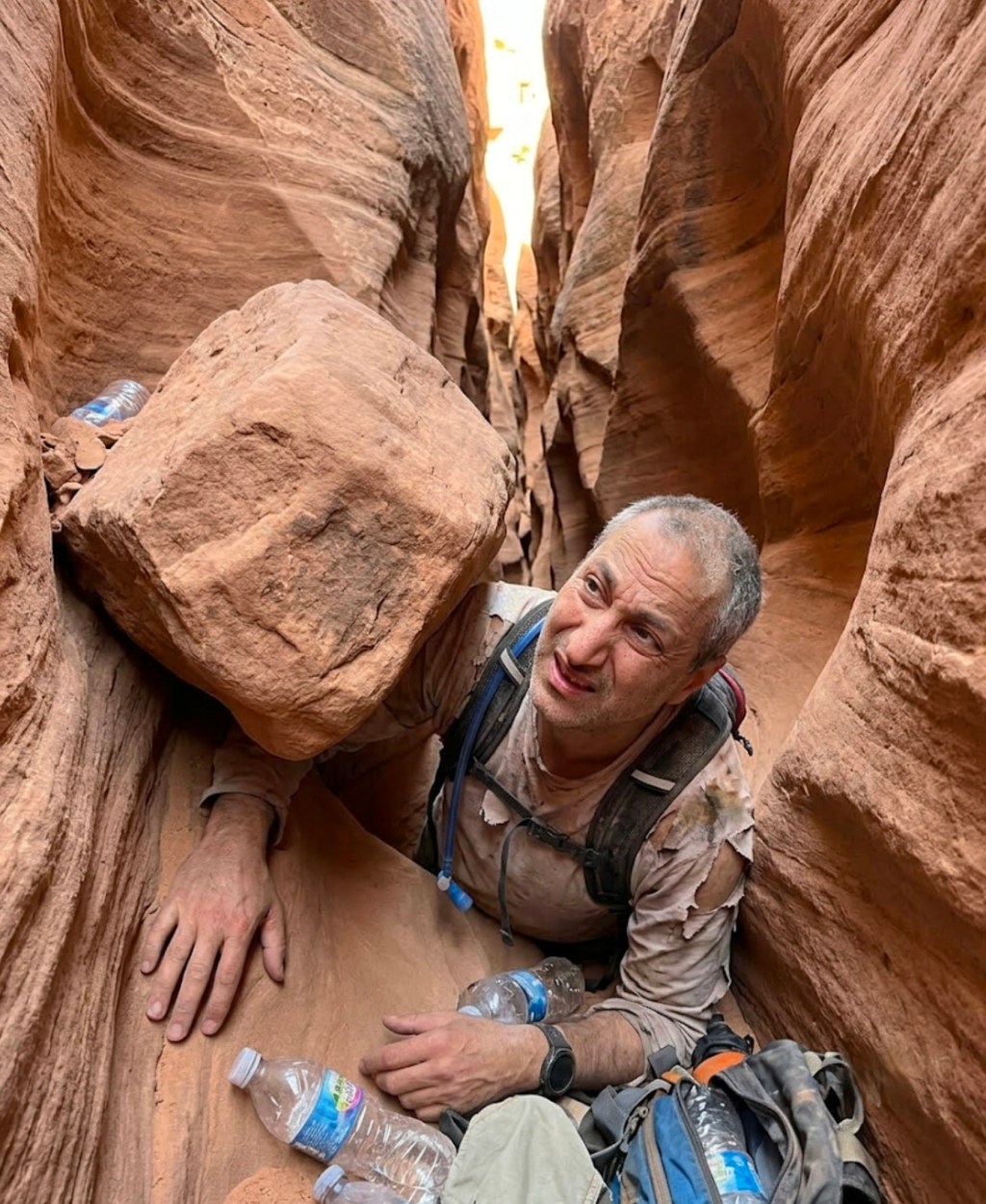
In the film, Aron Ralston is trapped beneath a boulder in an isolated canyon, stripped of all ego and control. In his hour of deepest darkness, he experiences a visual flash—a sudden, clear vision of a little boy in a striped shirt sitting on a couch. It wasn’t a memory; it was a temporal bridge to his unborn son, a premonition of a future that hadn’t happened yet. That vision gave him the exact anchor he needed to endure the impossible, cut himself free, and survive. Years later, that exact moment came to pass down to the smallest detail.
Watching Ralston’s story, the resonance was immediate. Both of our experiences speak to the exact same phenomenon: the moment when the linear boundary of time dissolves, delivering an undeniable glimpse of what lies ahead when we need it most.
Surviving that storm in Austria did far more than keep me physically alive; it completely dismantled my former worldview. When a premonition manifests in physical reality with 1:1 precision, the arguments for a purely materialist universe fall away. You cannot remain an atheist when you have personally experienced the future reaching back to touch your present.
That moment on the mountain marked the end of my life as a skeptic and the beginning of my path as a spiritual seeker. 127 Hours reminds us that survival isn’t just about physical endurance—it is about the sacred moments when grace breaks through the ordinary world, flashing like light to show us the way home.


Leave a Reply