
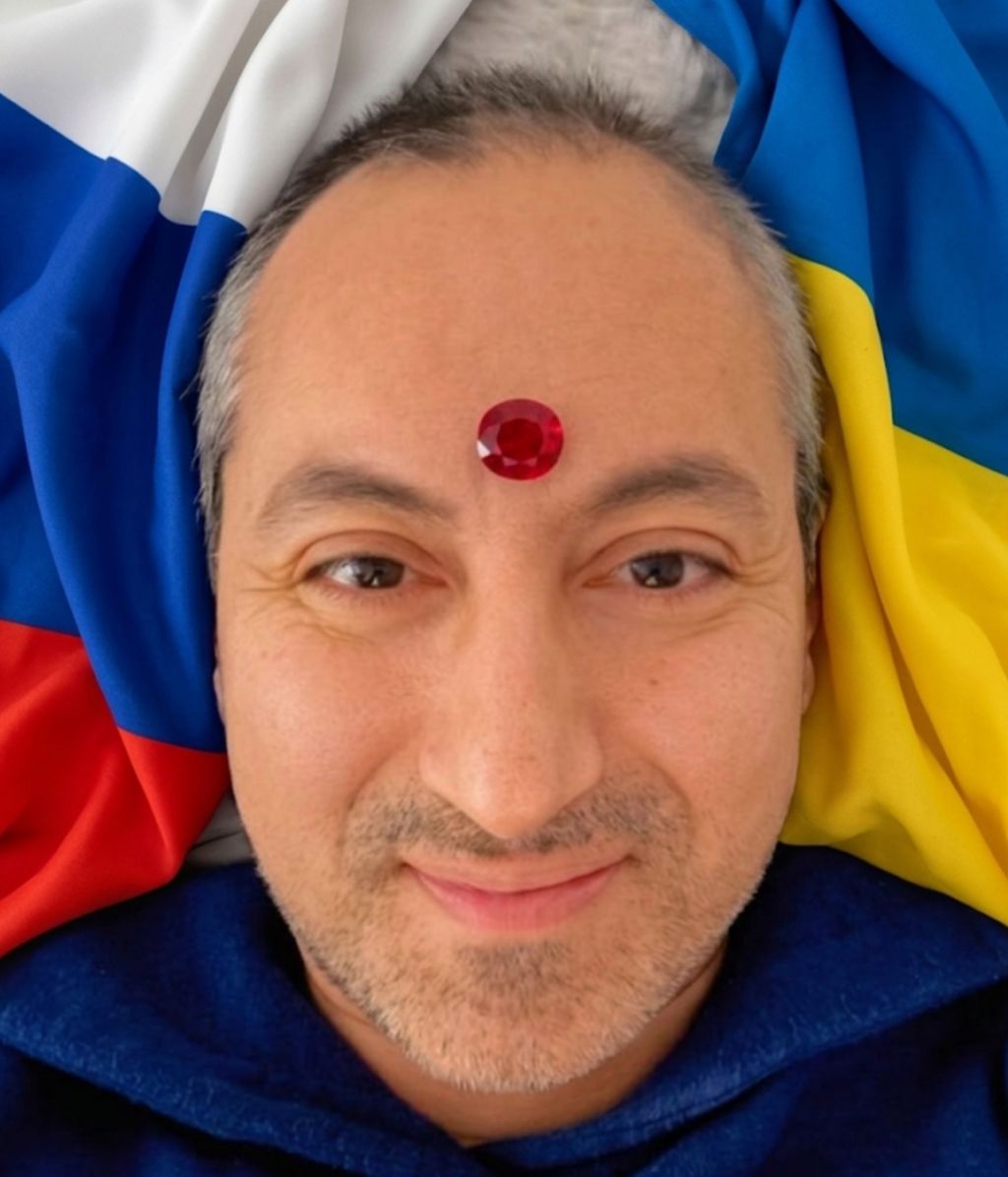
This War Will Last Roughly 60 Years with Russia Controlling Half of Ukraine
The Prediction : Russia-Ukraine War will endure for roughly sixty years, culminating in a semi-permanent partition where Russia controls approximately half of Ukraine’s pre-2014 territory.
Most analysts project the conflict through the lens of short- to medium-term operational exhaustion. However, transposing this conflict into a multi-generational, structural war transforms it from a localized interstate dispute into a foundational fixture of 21st-century global geopolitics.
I. The Drivers of Perpetual Attrition
A conflict cannot endure for six decades without deep-seated structural drivers that prevent both absolute victory and absolute capitulation. The Russia-Ukraine War is sustained by a profound asymmetry of objectives and an equilibrium of external dependencies.
The Existential Incompatibility: For Russia, the subjugation of Ukraine is anchored in historical myth-making and strategic depth. It is viewed as an existential prerequisite for great-power status. For Ukraine, resistance is an existential battle against cultural and physical eradication. Because neither state can compromise on its core premise without triggering internal collapse, the political space for a permanent settlement is non-existent.
The “Porcupine vs. Bear” Equilibrium: Western strategic doctrine has settled into an equilibrium: providing Ukraine with enough military architecture to function as a “steel porcupine”—inflicting massive costs on Russian advances—but withholding the overwhelming offensive capabilities required to completely expel Russian forces from deeply fortified positions. Conversely, while Russia possesses the demographic mass and a highly militarized war economy, its rate of advance is measured in meters per day, rendering a total conquest of Ukraine logistically unfeasible.
The Technology-Defense Dominance: Modern battlefield dynamics—defined by ubiquitous drone reconnaissance, advanced electronic warfare, and integrated air defense—overwhelmingly favor the defender. The high cost of offensive maneuvers ensures that any territorial gains are marginal and economically ruinous, cementing a grinding war of attrition that spans decades rather than years.
II. The Half-State Geography: Anatomy of a Sixty-Year Partition
The projection of Russia controlling half of Ukraine suggests a partition line frozen by structural exhaustion. Geographically and logistically, this division would likely crystallize along the Dnieper River axis, extending outward to absorb the industrialized east and the entirety of the Black Sea littoral.
III. The Generational Mutation: Society and Economy Under Permanent War
A war lasting sixty years ceases to be an exceptional event; it becomes the organizing principle of society. Both states would undergo radical domestic transformations to sustain a multi-generational war footing.
1. The “Israelification” of Ukraine
Faced with a permanent existential threat on an unyielding border, Western Ukraine would undergo an evolution similar to Israel’s historical defense posture. Society would become highly militarized, with mandatory universal conscription across genders and a permanent civil defense infrastructure. The economy would adapt to prioritize domestic defense tech, turning the rump state into an advanced laboratory for autonomous warfare, backed by continuous Western financial underwriting.
2. The “Iranization” of Russia
To sustain a sixty-year conflict against a hostile Western bloc, Russia would fully institutionalize its wartime economy. Economic growth would be structurally tied to military production, run by a state-directed neopatrimonial elite. Culturally, the state would rely on an institutionalized narrative of permanent siege, using the educational system and state apparatus to condition successive generations for perpetual confrontation with the West.
IV. Historical Precedents for Multi-Generational Conflicts
While a sixty-year war seems anomalous in the context of modern European history, it aligns closely with several historical precedents where ideological, territorial, and systemic rivalries prevented resolution.
The Low-Intensity Hundred Years’ War (1337–1453): A series of hostilities punctuated by brief, unstable truces. Like the hypothetical sixty-year Ukraine war, it was driven by irreconcilable dynastic and territorial claims, persisting through generations as a structural norm rather than an acute crisis.
The Dutch War of Independence / Eighty Years’ War (1568–1648): A multi-generational struggle where a smaller, highly motivated population utilized defensive geography, economic resilience, and external alliances to resist a massive imperial power, eventually forcing a permanent partition.
The Korean Peninsula (1953–Present): The closest modern analogue. The Korean War never formally ended; it froze along an ultra-fortified Line of Contact (LOC). For over seven decades, both states have evolved into radically different social systems, maintained in a state of permanent mobilization, backed by opposing global superpowers.
V. Strategic Conclusions
The scenario of a sixty-year war resulting in a split Ukraine describes a world where the conflict is managed rather than solved. A partition of this scale would establish a permanent, heavily militarized fault line running through Eastern Europe.
For Russia, controlling half of Ukraine would yield a pyrrhic victory—gaining a ruined, deeply hostile territory rich in raw minerals but isolated by global trade walls and drained by decades of low-intensity insurgency. For the remaining Ukrainian state, survival would depend on deep integration with the Western security apparatus, turning the country into Europe’s primary defensive shield. Ultimately, a sixty-year timeline reminds us that when the core objectives of two nations are completely irreconcilable, time becomes just another dimension of the battlefield.


 Zonkatron
Leave a comment