
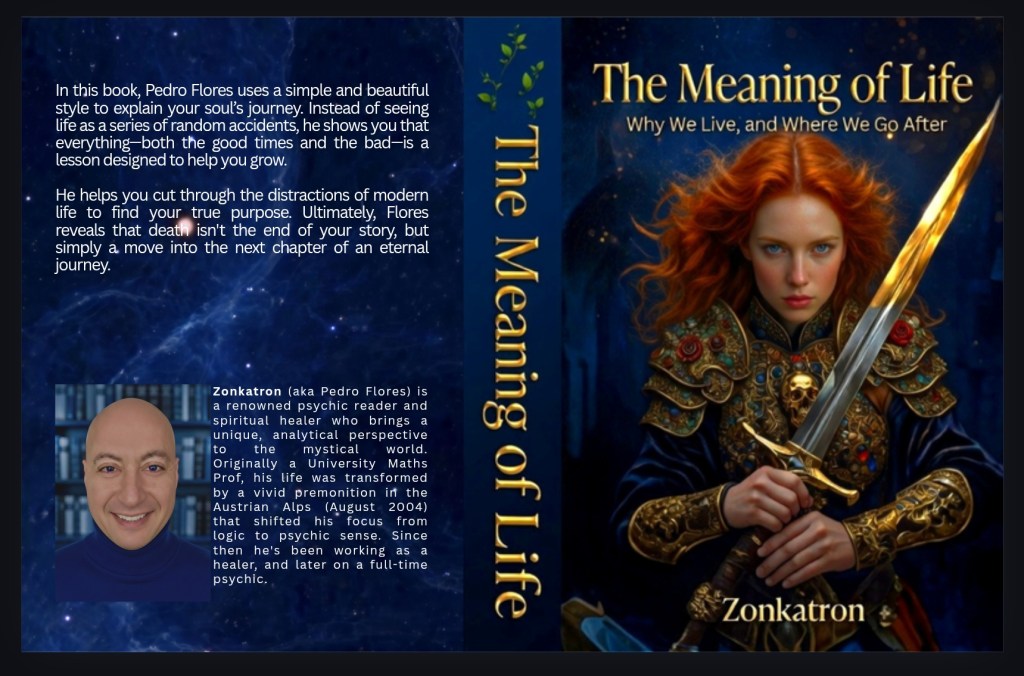
The idea that life serves as a “school for the soul”—often called the Soul-Making Theodicy—suggests that our experiences, especially challenges and suffering, are designed to refine our character and lead us toward spiritual maturity.
Here are 10 philosophers and theologians who have championed this perspective:
1. Irenaeus of Lyons (c. 130–202 AD)
The “father” of the soul-making theodicy. Unlike later theologians who focused on “original sin,” Irenaeus argued that humans were created imperfect and immature. Life is the necessary environment for us to grow from the “image” of God into the “likeness” of God through free will and experience.
2. Plato (c. 427–347 BC)
In works like The Republic and Phaedrus, Plato describes the material world as a shadow of the true realm of Forms. He viewed the soul as an eternal entity that enters the physical body to learn, recall innate truths, and eventually transcend the cycle of rebirth through the pursuit of wisdom.
3. John Hick (1922–2012)
A modern giant of this philosophy, Hick popularized the term “soul-making.” He argued that a world without pain or challenge would be a “hedonistic paradise” where moral growth is impossible. For Hick, the world is purposefully “religiously ambiguous” to allow humans to choose to develop into “children of God.”
4. Plotinus (c. 204–270 AD)
The founder of Neoplatonism, Plotinus taught that the soul’s journey involves descending into the physical world to experience “otherness” before eventually returning to “The One.” This descent is a trial that ultimately strengthens the soul’s understanding of its divine origin.
5. Ralph Waldo Emerson (1803–1882)
As a Transcendentalist, Emerson believed that every event in a person’s life is an opportunity for the “Over-Soul” to realize itself. He famously suggested that “the world exists for the education of each man,” viewing nature and circumstance as the ultimate classroom.
6. Pierre Teilhard de Chardin (1881–1955)
A Jesuit priest and paleontologist, Teilhard de Chardin viewed evolution itself as a spiritual process. He believed that the universe is moving toward an “Omega Point,” and that our individual lives are part of a collective “Christogenesis,” or the spiritualization of matter through conscious effort.
7. Origen of Alexandria (c. 184–253 AD)
Origen proposed that souls existed before the world was created. He viewed the physical universe as a temporary “reformatory” or school where fallen souls are disciplined and educated through various lifetimes until they are purified enough to return to God.
8. Friedrich Schiller (1759–1805)
While more of a poet-philosopher, Schiller argued in his Aesthetic Education of Man that humans must pass through “the state of nature” and “the state of reason” to reach a higher moral state. He saw the struggles of life as the friction necessary to polish the human spirit into a work of art.
9. Georg Wilhelm Friedrich Hegel (1770–1831)
Hegel viewed history as the biography of the “World Spirit” (Geist) coming to know itself. In his view, the trials, conflicts, and “slaughter-bench” of history are the necessary means by which the Spirit (and by extension, the individual soul) achieves self-consciousness and freedom.
10. Jalāl al-Dīn Rūmī (1207–1273)
The Sufi mystic and philosopher taught that the soul is in a state of exile from its divine source. He viewed life’s difficulties as “the stick that beats the rug”—the blows don’t exist to punish the rug, but to shake out the dust. For Rūmī, every suffering is a lesson intended to burn away the ego.
✅
While the Soul-Making Theodicy (primarily associated with John Hick) is a philosophical argument, it shares a deep, complex relationship with various world religions. It is essentially a religious response to the “Problem of Evil”—the question of why a good God allows suffering.
Here is how the soul-making perspective compares and contrasts with the major world religions:
1. Christianity: The Great Divergence
The Soul-Making Theodicy is often called the Irenaean Theodicy, named after the early Church Father Irenaeus. However, it sits in tension with the more dominant “Augustinian” tradition.
Augustinian View (Traditional): Humans were created perfect in Eden, “fell” due to sin, and the world became a place of punishment and redemption. Evil is a result of human failure.
Soul-Making View: Humans were created imperfect (as “immature” beings). The world is not a fallen paradise but a purposeful “vale of soul-making” designed to facilitate growth.
The Conflict: Many traditional Christians find this theodicy difficult because it can downplay the “Fall of Man” and the necessity of Christ’s atonement for sin, shifting the focus from salvation from sin to evolution of character.
2. Hinduism and Buddhism: Karma as the Teacher
In Eastern traditions, the world is often viewed as a school, though the mechanism is different.
Similarities: Both Soul-Making and Dharmic religions believe that life’s challenges are not random. In Hinduism and Buddhism, the material world (Maya or Samsara) is a training ground where the soul (Atman) or consciousness learns to detach from the ego.
The Difference: Soul-making usually assumes a single life (in Hick’s view) or a linear progression toward God. Hinduism and Buddhism use Karma—a precise law of cause and effect—to ensure the “lessons” are learned over millions of lifetimes until enlightenment is reached.
3. Islam: Life as a Trial (Bala)
The Quran frequently describes life as a test or a trial to see “which of you is best in deed” (Quran 67:2).
Suffering as Refinement: Much like the Soul-Making theodicy, Islamic philosophy suggests that suffering purifies the believer and humbles the ego.
Sufism: The mystical branch of Islam (represented by thinkers like Rumi) aligns very closely with soul-making, viewing the “polishing of the heart” as the primary goal of existence.
Comparison Table: Soul-Making vs. Traditional Religious Views


 Zonkatron
Leave a reply to starstrucksweetse1807e6585 Cancel reply