
Why Your Gut Remembers What Your Mind Wants to Forget
We’ve all heard the phrase “gut feeling.” We feel “butterflies” when we’re nervous and “nauseated” by bad news. But for millions of people living with Irritable Bowel Syndrome (IBS), the connection between the mind and the gut is more than just a metaphor—it is a daily, often painful, biological reality.
Recent breakthrough research is now proving that IBS isn’t just about what you eat. It’s about what you’ve lived through. Here is a deep dive into the science of how stress and trauma reshape our digestive systems.
1. The “Double Hit”: Childhood Trauma and Adult Stress
One of the most significant findings in recent literature is the interaction effect between different stages of life. Research shows that childhood emotional abuse and neglect act as a “first hit” to the nervous system. This early trauma doesn’t always cause immediate illness, but it “primes” the gut.
When that same individual faces “negative events” in adulthood—like job loss or relationship strain—their gut is significantly more likely to overreact. Essentially, childhood trauma lowers your biological “stress ceiling,” making adult life much harder on your digestive tract than it is for those without that history.
2. A Shift in the Ecosystem (The Microbiome)
Stress doesn’t just make you feel tense; it physically alters the environment inside your intestines. Studies using rodent models have shown that chronic stress lead to a measurable shift in the gut microbiome.
Under pressure, the “good” bacteria that help us digest food and regulate mood begin to dwindle, while pro-inflammatory bacteria flourish. This creates a vicious cycle: stress ruins the microbiome, and a damaged microbiome sends “distress signals” back to the brain, increasing anxiety.
3. The Science of “Social Defeat”
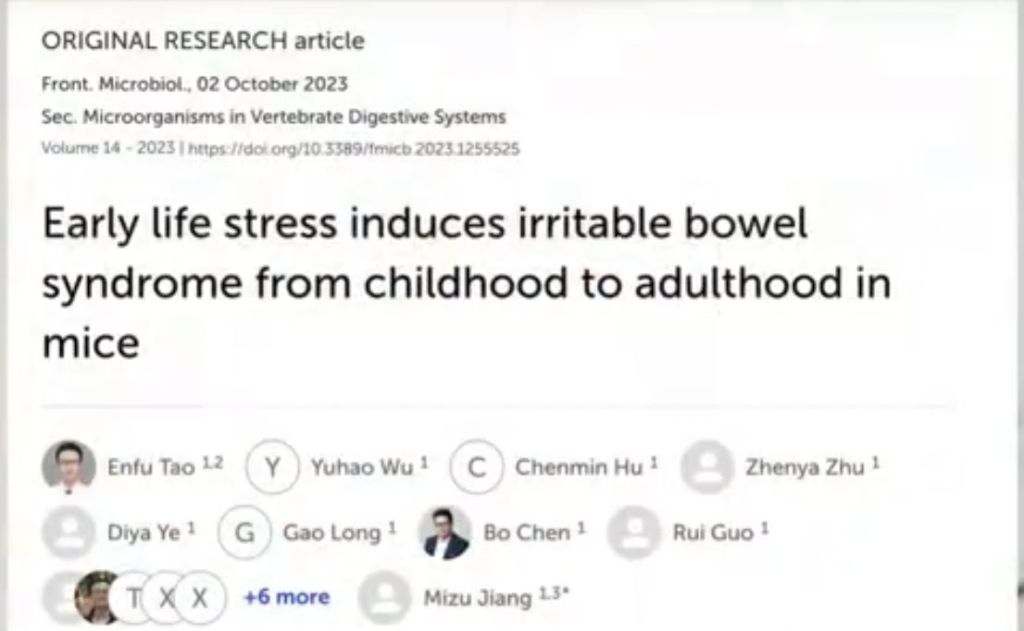
Perhaps the most heartbreaking research involves “social defeat” stress. In studies where juvenile subjects were exposed to social aggression (the biological equivalent of bullying), they grew up to develop visceral hypersensitivity.
This is a condition where the nerves in the colon become hyper-aware. In a healthy person, the movement of gas or food through the intestines is a quiet, unnoticed process. In someone with visceral hypersensitivity, the brain interprets these normal movements as intense pain. The trauma literally rewired their nerves to be “too loud.”
4. Is the Brain the Secret to Healing the Gut?
If the brain is driving the dysfunction in the gut, can we treat the gut by treating the brain? The research suggests yes. Some studies have experimented with rTMS (Repetitive Transcranial Magnetic Stimulation) to stimulate specific brain pathways.
The results showed that by calming the brain’s stress response, researchers could actually improve the health of the gut microbiome and reduce inflammation. This suggests that the future of IBS treatment might involve as much therapy and neurology as it does diet and probiotics.
The Takeaway
If you struggle with chronic digestive issues, the research offers a powerful message: It is not “all in your head,” but it might be “in your history.” Understanding that your gut is a sensitive instrument that mirrors your life’s stress can be the first step toward healing. Managing IBS often requires a holistic approach that honors both the body and the mind.

 Zonkatron
Leave a reply to starstrucksweetse1807e6585 Cancel reply