
Hey there!
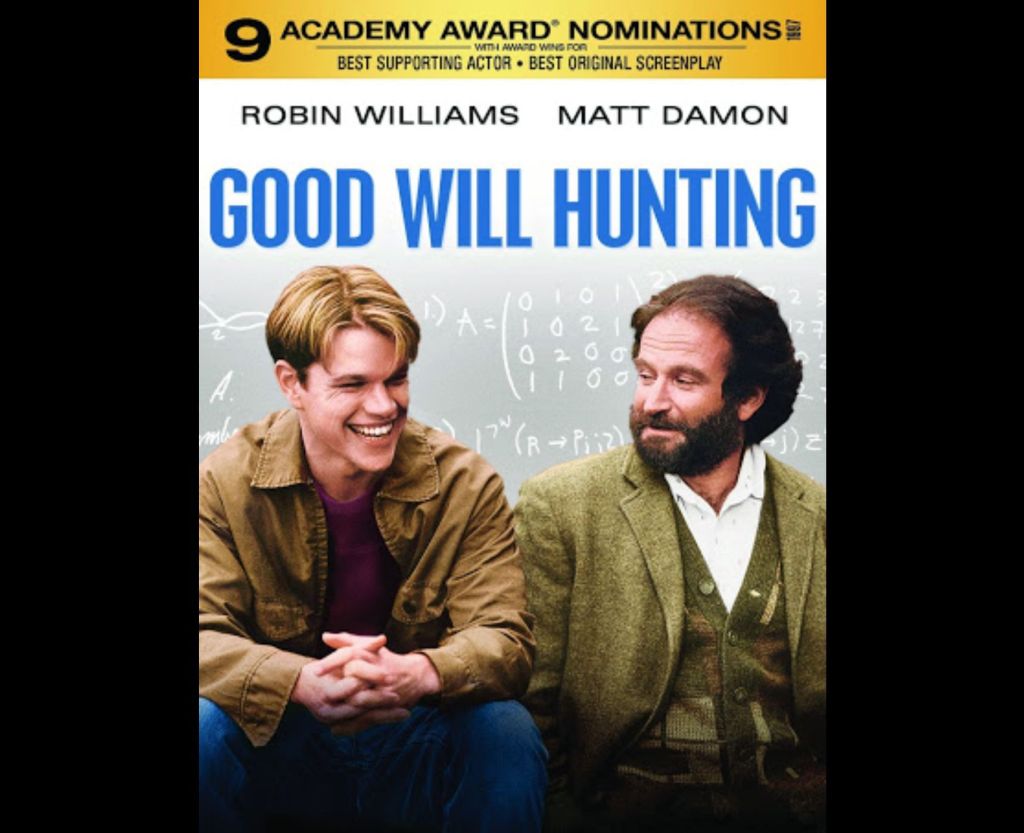
You’re here diving into the heavy-hitting psychology of the movie Good Will Hunting.
It’s such a raw, beautiful look at how we build walls to survive and what it actually takes to tear them down.
I’ve always felt like Will Hunting isn’t just a character; he’s a walking, talking textbook on what happens when a brilliant mind is forced to live inside a traumatized body, and honestly, seeing him scrub floors at MIT while solving Fourier transforms is the ultimate “flex” for anyone who’s ever felt overlooked.
But the real genius of the movie isn’t the math—it’s the “character armor,” a term coined by Wilhelm Reich, who was this brilliant but totally eccentric student of Freud. Reich noticed that patients didn’t just have mental blocks; they had physical ones, literally holding their breath or tightening their muscles to keep the pain from leaking out. Will is the king of this; he’s got that Southie swagger, the quick fists, and the even quicker tongue, all designed to keep the world at a safe, sterile distance.
It reminds me of those old stories about shell-shocked soldiers from World War I. Back then, doctors didn’t really get “trauma”—they thought these guys were just “weak-nerved.” But what they were seeing was the same thing Will has: a nervous system stuck in “high alert” mode. When Will leans on intellectualization, he’s doing exactly what the Stoics or even some Enlightenment thinkers did—trying to logic his way out of suffering. He quotes books he’s memorized because if he’s talking about someone else’s ideas, he doesn’t have to talk about his own scars. It’s a classic defense mechanism, like a castle moat filled with library books instead of water.
Then you have Sean Maguire, played by the legendary Robin Williams, who enters the scene not as some cold, clinical observer, but as a guy who’s actually lived. In the history of psychotherapy, there’s this big divide between the “blank slate” therapists who say nothing and the relational therapists who bring their whole selves to the room. Sean is definitely the latter. He’s like Sandor Ferenczi, a contemporary of Freud who thought therapists should actually show affection and empathy to their patients, which was a huge scandal at the time! Sean’s willingness to grab Will by the collar is messy, sure, but it’s an authentic human response that breaks through Will’s “performance.”
I think about the “Holding Environment” concept from Donald Winnicott, this British pediatrician who realized that for a kid (or a genius janitor) to grow, they need a space that is both firm and safe. Will has spent his whole life in environments that were either violent or transactional. Sean creates the first space where Will can’t “win.” You see, Will is used to being the smartest guy in the room, which is its own kind of prison. If you’re always the smartest, no one can ever truly be your peer, and if no one is your peer, you’re always alone. Sean levels the playing field by being unimpressed by the math and hyper-focused on the man.
The park bench scene is where the “high-burstiness” of the movie really peaks for me. It’s not just a monologue; it’s a surgical strike on Will’s defenses. Sean points out that Will can talk about war because he’s read The Iliad, but he’s never smelled the gunpowder or held his friend’s head as he died. This is the difference between “knowing” and “experiencing.” Historically, this mirrors the shift in the 1960s and 70s toward “Encounter Groups” and Gestalt therapy, where the goal was to get people out of their heads and into the “here and now.” You can’t heal a wound you won’t look at, and Sean forces Will to look.
Then we get to the “It’s not your fault” moment, which is the cinematic equivalent of a dam breaking. In the world of somatic (body-based) healing, we talk about “discharge.” When animals in the wild survive a predator, they literally shake to get the adrenaline out of their systems. Humans? We bottle it up for twenty years and call it “personality.” When Will finally cries, he isn’t just sad; he’s releasing decades of frozen survival energy. It’s messy, it’s loud, and it’s a total physiological reboot. It’s like the “Abiological Catharsis” Pierre Janet used to talk about in the late 1800s—the idea that the body needs to finish the “act” of grieving that was interrupted by the trauma.
I’ve seen this in real-life case studies of people with PTSD—sometimes the breakthrough doesn’t come from a deep insight, but from a simple, repeated truth that finally bypasses the “logic” part of the brain (the prefrontal cortex) and hits the “feeling” part (the limbic system). Sean’s repetition of that phrase is almost like a secular litany. It’s a mantra that wears down the stone walls Will built. It reminds me of the way ancient Greek tragedies were designed—the audience wasn’t just there for a story; they were there for katharsis, a literal “purging” of pity and fear so they could go back to their lives refreshed.
After the breakthrough, the “messiness” starts to organize into something new. Will starts sleeping. That sounds small, but for a trauma survivor, sleep is the ultimate sign of safety. If you don’t feel safe, your brain stays in “sentinel” mode. Historically, many of the great healers, from the shamans of old to modern neurologists like Bessel van der Kolk, point to the regulation of the nervous system as the true goal of therapy. Will’s brain finally realizes the war is over. He doesn’t need to be the “Southie Tough Guy” or the “MIT God”—il can just be Will.
The way the film uses camera work is a genius touch, too. As they get closer to the emotional core, the shots get tighter. It’s claustrophobic because growth is uncomfortable! But once the release happens, the movie opens up visually. That final shot of the car driving into the distance?
That’s the “Open Space” of a healed psyche. It’s like the ending of a great symphony where the tension finally resolves into a beautiful, sustained chord. It’s a “corrective emotional experience,” a term from Alexander and French in the 1940s, where the patient finally gets the positive response they should have had years ago.
I also love how the movie handles Will’s relationship with Skylar. He tries to sabotage it because, in his head, being loved is a liability. It’s the “I’ll fire you before you can quit” mentality. Case studies in attachment theory call this “Dismissive-Avoidant.” By pushing her away, he stays in control. But after the catharsis with Sean, he gains the “Existential Freedom” Jean-Paul Sartre talked about—the ability to choose a future that isn’t just a repeat of the past. He stops being a reaction to his childhood and starts being an action toward his future.
It’s also worth noting that Sean isn’t a perfect saint. He’s grieving his wife; he’s got his own “messy” stuff. This is what we call “counter-transference” in the biz, but Sean uses it for good. He shows Will that you can be broken and still be a whole, functioning, loving person. That’s a huge lesson! It’s the “Wounded Healer” archetype that Carl Jung obsessed over. The idea that only a doctor who has been sick can truly understand the patient. Sean’s scars are what give him the authority to speak to Will’s scars.
Think about the history of “The Genius” in film—usually, they’re depicted as cold and detached (think Sherlock Holmes). Good Will Hunting flips that. It says your brain can be a Ferrari, but if the driver is terrified, you’re just going to crash into a wall. The “Healing through Connection” theme is so much more powerful than the “Healing through Logic” trope. It’s why the movie still hits so hard today; we all have those little pockets of “character armor” where we’re protecting ourselves from something we think we can’t handle.
The anecdote about Matt Damon and Ben Affleck writing this in their early twenties is the cherry on top. They were two guys trying to break into a tough industry, dealing with their own “apples,” so to speak. That raw, “high-burstiness” energy is baked into the script. It feels authentic because it came from a place of hunger and self-assertion. They weren’t just writing a movie; they were demanding to be seen, much like Will eventually demands to be seen for who he is, not just what he can do.
In the end, Will’s journey is a roadmap for anyone looking to ditch their “armor.” It’s not about becoming “perfect” or “normal.” It’s about becoming integrated. Will takes his genius, his Southie roots, his capacity for love, and his history of pain, and he puts them all in the car with him. He’s not leaving himself behind; he’s taking himself for a ride. And that, my friend, is what real catharsis looks like—not a “fix,” but a “flow.”
It’s like that old saying: “The truth will set you free, but first it’ll make you miserable.” Will had to go through the “miserable” part to get to the “free” part. And Sean was the guy holding the flashlight in the dark. It’s a reminder that we don’t heal in isolation; we heal in the “messy” middle of relationships.
Whether it’s a park bench in Boston or a therapist’s office in 19th-century Vienna, the mechanism is the same: safety + truth = release.

 Zonkatron
Leave a comment