
My Fifteen Minutes of Fame by Zonkatron (Mystic W)
By Zonkatron (Mystic W)
In May 2021, the world was a chaotic mess of digital noise and anxiety, but I felt this specific, heavy vibration about the future of our borders. I hopped on TikTok— put my neck on the line with a date that felt like a lightning bolt: August 10, 2026.
I told everyone that the virus was going to hit New Zealand hard on that specific day, ending our “fortress” status. I knew the backlash would be massive, but I didn’t care because the vision was too loud to ignore, echoing the way Nostradamus used to drop cryptic quatrains that everyone hated until they actually started coming true.
The outrage was instant and it was incandescent; New Zealanders were proud of being COVID-free, and here I was, this “Mystic W” character, poking the bear. My notifications exploded like a digital supernova, and suddenly I wasn’t just a random psychic on TikTok; I was a national villain with over a million followers who checked my page just to tell me how much they loathed my “fear-mongering.”
It’s a classic case of “shooting the messenger,” a historical tradition that goes back to Cassandra of Troy, who was cursed to tell the truth and never be believed. The more they hated me, the more the algorithm pushed me into every living room from Auckland to Invercargill.
Then came the actual day, August 10, and the tension in the air was so thick you could cut it with a knife.
News broke that port workers in Tauranga had tested positive, and for a second, the whole country held its breath, wondering if the wall had finally cracked. It was a chaotic, “grey area” moment where nobody knew if the virus had leaped into the community or stayed contained at the wharf. I sat there watching the comments fly, feeling like I was standing in the middle of a hurricane, waiting for the other shoe to drop while the rest of the country tried to pretend everything was fine.
The media didn’t just report on me; they went for the jugular, calling me a “dangerous conspiracy theorist” and a “fraud” because the country didn’t immediately go into a Level 4 lockdown that very afternoon.
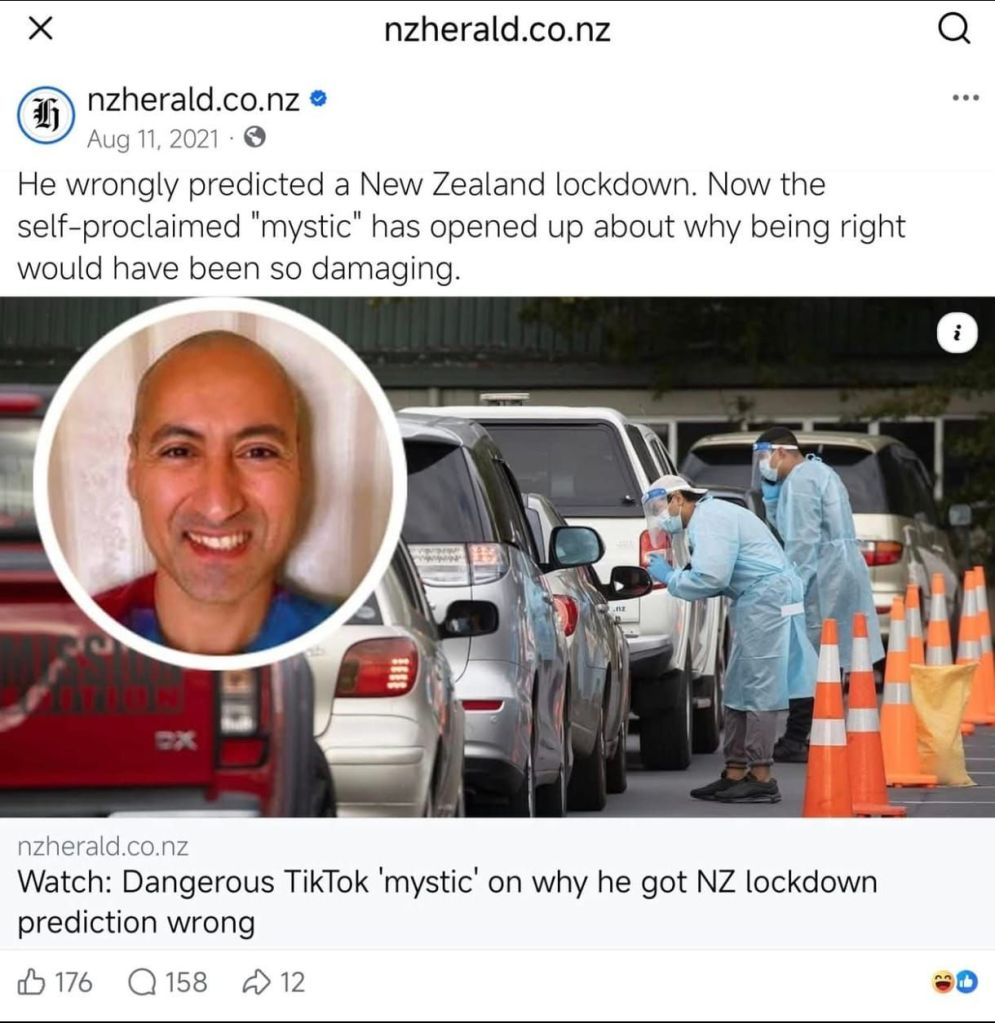
They used my face as a punching bag to reassure the public, acting like I was some glitch in the system that needed to be erased. It reminded me of how the press treated the early meteorologists or even Ignaz Semmelweis, the doctor who suggested hand-washing—anyone who suggests a reality that people aren’t ready to face gets branded as a lunatic. The government even stepped in, issuing formal warnings for people to ignore the “rumors” of imminent lockdowns.
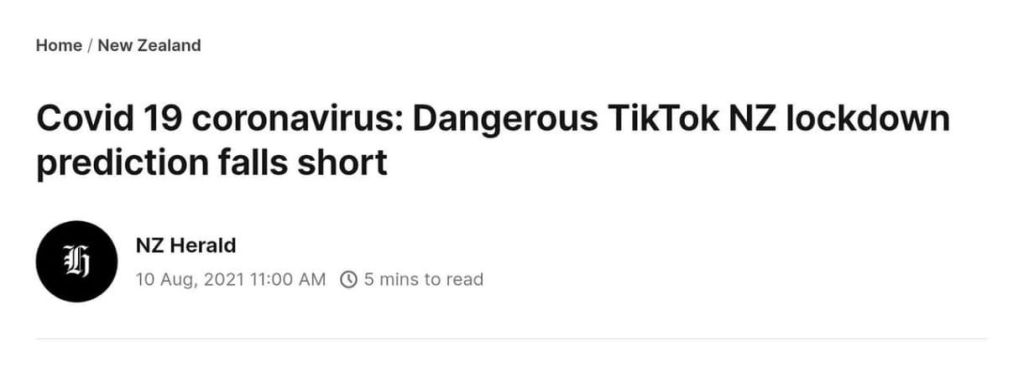
But that negative press was like pouring gasoline on a bonfire; I gained another 500,000 followers in a single week because people love a spectacle, even if they’re just watching to see the car crash. I was being mocked on the six o’clock news, my TikTok handle “Mystic W” was being dragged through the dirt, and yet my follower count kept ticking up like a Geiger counter in a reactor. There’s a psychological phenomenon where people can’t look away from a “prophet” they think is failing, but deep down, a part of them was terrified I might actually be right.
Then, August 16 arrived—only six days after my predicted date—and the hammer finally fell. The government announced a total national lockdown because a community case had been found, and suddenly, the “conspiracy theorist” didn’t look so crazy anymore. Six days! In the grand scheme of time and cosmic energy, being off by 144 hours is practically a bullseye, especially when you consider how many “experts” were saying it would never happen again. It was like when Edgar Cayce predicted the stock market crash of 1929; people laughed until the tickers stopped moving, and then the silence was deafening.
The shift in the comments section was the messiest thing I’ve ever seen—it went from “you’re a liar” to “how did you know?” in a matter of minutes. People were terrified, stuck in their homes, and suddenly my TikTok wasn’t a joke anymore; it was a source of eerie fascination.
I watched the media pivot from calling me a danger to quietly mentioning the “coincidence” of my timing, though they’d never give me the full credit.
It’s the same way history treats the “Mad Monk” types—they acknowledge the results but they hate the source because it challenges their organized view of how the world works.
 Zonkatron
Leave a comment