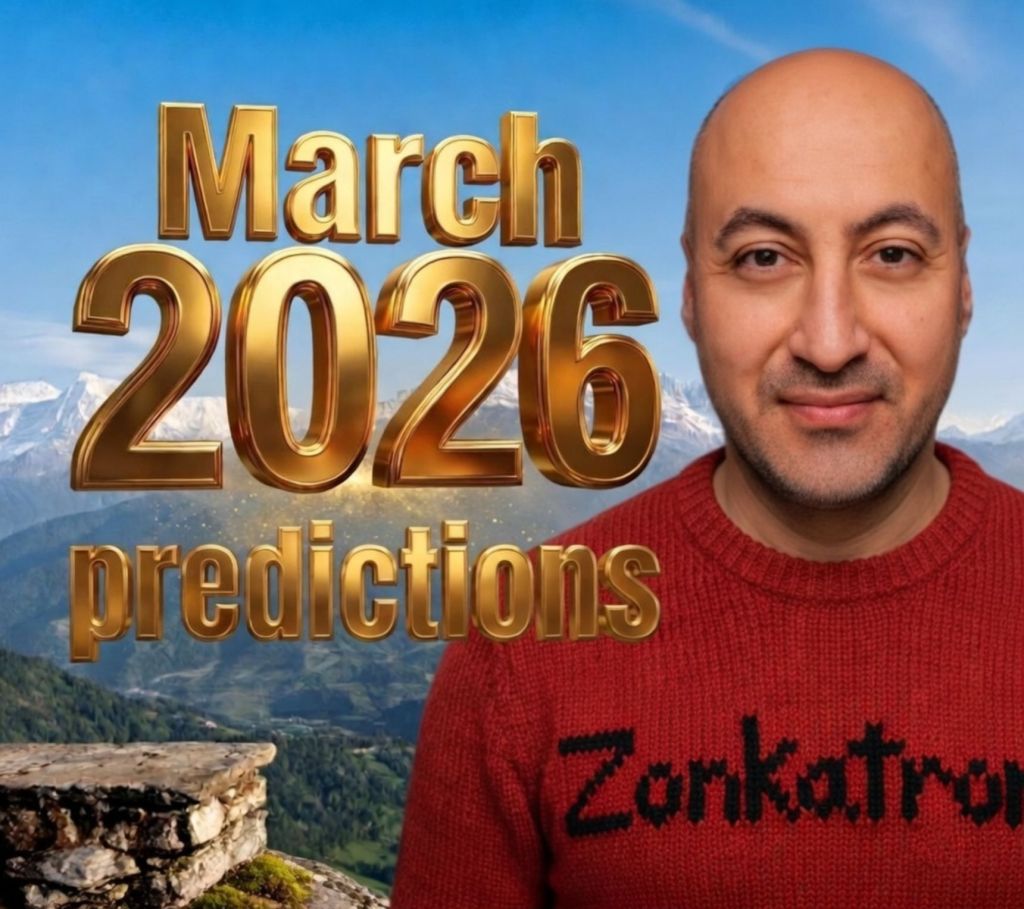
1. First, let’s talk about the Iranian regime. I know the headlines are screaming about immediate collapse, but my analysis shows this system isn’t going anywhere until at least 2038. History is my witness here. Look at the Soviet Union; people were predicting its downfall every single year from 1950 onwards, yet it took decades of internal rot before the wall actually came down. Entrenched power doesn’t just “poof” away because of a few bad months; it has deep roots that take a generation to pull up.
2. However, don’t mistake that long-term survival for constant high-level warfare. My data points to a significant ceasefire within the next 10 weeks. Think of it like the “pauses” we saw during the Lebanese Civil War in the 70s. Both sides eventually get “war fatigue.” They need to fix their tanks, feed their people, and move money around. This 10-week window is a breather—not a peace treaty, but a tactical reset that will calm the markets temporarily.
3. Now, let’s address the “tech bros” crying about my take on humanoid robots. You’ve seen the glossy videos of robots doing backflips, but I’m telling you, the dream of a robot in every home is delayed by at least 10 to 20 years. We’ve been here before. Remember in 2015 when everyone said we’d have Level 5 autonomous cars by 2020? It’s 2026, and I still have to keep my hands on the wheel in a rainstorm. Hardware is harder than software, and “the last mile” of robotics is a technical mountain we haven’t climbed yet.
4. The same goes for the Moon. I’m calling a 10-to-20-year delay on the next human landing. We love the Apollo-era nostalgia, but we forget that after 1972, we basically quit for half a century. Space is a vacuum that sucks up money and spit-shined PR faster than we can build rockets. Between radiation shielding issues and the sheer bureaucracy of government-private partnerships, we are looking at the 2040s before a human boot makes a fresh print in the lunar dust.
5. Moving over to the UK, I see a lot of “doom-scrolling” about a supposed civil war. I’m telling you right now: it’s not happening. The British social fabric is like an old wool sweater—it’s frayed, it’s got holes, and it smells a bit damp, but it’s incredibly hard to actually tear apart. History shows that the UK “muddles through.” Even during the “Winter of Discontent” or the peak of the 80s riots, the institutions held. People there prefer a grumble and a cup of tea over a full-scale revolution.
6. That doesn’t mean the tension isn’t real, specifically regarding illegal immigration. But I see this resolving by 2036. Why ten years? Because that’s how long it takes for technology and policy to actually sync up. By the mid-2030s, AI-driven border logistics and new international legal frameworks will make the “small boats” crisis a relic of the past. We saw similar shifts with the introduction of biometric passports after 9/11; it took a decade, but the entire way we travel changed forever.
7. I use TikTok to reach you because that’s where the “vibe shift” happens first. When I post these tech futures, I’m trying to break the cycle of “instant gratification” thinking. We’ve become addicted to the idea that everything happens now. If an AI can write a poem in five seconds, we assume a robot can build a house in five days. I’m here to be your reality check. Real progress—the kind that changes the physical world—moves at the speed of atoms, not bits.
8. Let’s look at a case study: the Segway. In 2001, they said it would change how cities were built. It didn’t. It took 20 years for the “e-scooter” revolution to actually happen. That’s the 20-year lag I’m talking about with humanoid robots. We have the idea now, but we don’t have the infrastructure or the battery density to make it a daily reality. I’m betting on the “lag,” because history always bets on the lag.
9. When I talk about Iran staying unchanged until 2038, I’m looking at the demographics of their leadership. Systems like that are often tied to a specific generation. Until that generation physically ages out—which aligns with that late-2030s window—the core power structure will remain rigid. It’s a biological countdown as much as a political one.
10. People ask me, “Zonkatron, why so pessimistic about the Moon?” It’s not pessimism; it’s engineering. We’re trying to go back with 21st-century safety standards on a 20th-century budget. One “near-miss” or one budget cut in a recession year pushes the timeline back three years instantly. If you compound those risks over a decade, my 20-year delay starts to look like a very generous estimate.
11. My “UK avoids civil war” take is based on the “Silent Majority” theory. For every person shouting on a street corner or in a comment section, there are ten thousand people just trying to get their kids to school and keep their heating on. Conflict requires an enormous amount of energy that the current UK population simply doesn’t want to expend. They are exhausted, not explosive.
12. The immigration resolution by 2036 will likely involve “Externalization.” We’re already seeing the seeds of this with deals in North Africa and Albania. By 2036, the processing of claims will happen entirely offshore, powered by automated legal AI. It won’t be “pretty,” and it will be controversial, but the “issue” as a political firebrand will be extinguished because the visuals of the crisis will disappear.
13. Think of my 10-week ceasefire prediction as a “market correction” for violence. In any conflict, there is a point where the cost of the next bullet exceeds the value of the ground it buys. We are hitting that ceiling in the current global hotspots. Expect a flurry of “diplomatic triumphs” in the news very soon—just don’t expect them to last more than a season.
14. I’ve noticed that my followers are split between “Doomers” and “Utopians.” My content is for the “Realists.” If you want to know what the world looks like in early 2026, look at the 1950s. We had the jet engine, but most people still took the train. We had the TV, but most people still listened to the radio. We are in a “hybrid era” where the old world is refusing to die and the new world is struggling to be born.
15. My humanoid robot prediction also factors in the “Uncanny Valley” and social pushback. Even if we could build them tomorrow, would we let them walk our dogs? There will be massive labor strikes and “human-only” zones. This social friction adds at least five years to any rollout. History shows that when machines threaten jobs, the machines get “smashed” (metaphorically or literally) until a deal is struck.
16. Let’s talk about the “Tech Futures” I discuss on TikTok. I’m seeing a pivot toward “Quiet Tech.” Instead of flashy robots, we’ll see smarter insulation, better water filtration, and invisible AI. The stuff that doesn’t make for a “cool” video but actually keeps society running. This is the stuff that will actually be “on time,” while the humanoid robots stay in the lab.
17. Regarding the 2038 date for Iran, consider the “Meiji Restoration” in Japan or the “Reform and Opening” in China. These shifts didn’t happen overnight; they were the result of decades of internal pressure finally reaching a tipping point. I’m pinpointing 2038 because that is when the “Digital Natives” in that region will finally hold the levers of bureaucratic power.
18. The UK’s immigration resolution will also be driven by a change in the labor market. By 2036, the “need” for low-skilled labor will be radically different due to basic task automation (not humanoid robots, just better kiosks). When the economic “pull factor” changes, the migration patterns change. It’s a boring economic solution to a high-emotion political problem.
19. To those who say I’m “too bold” with my dates: specific dates help us measure the truth. If the ceasefire doesn’t happen in 10 weeks, we know the “war fatigue” hasn’t set in yet. If the Moon landing happens in 2028, I’ll eat my hat. But I’m betting on the friction of reality. Reality is “sticky.” It doesn’t like to move as fast as a fiber-optic cable.
20. So, that’s the Zonkatron outlook for early 2026. Stability in the UK, a temporary hush in the Middle East, a long wait for the Iranian “spring,” and a “rain check” on our sci-fi dreams of Moon bases and robot maids. We’re living in the “Long Middle.” It’s not the end of the world, but it’s not the “Jetsons” either. It’s just… life.

 Zonkatron
Leave a comment